Previous in Forum: TRIHYBRIDStealth Visits My College   Next in Forum: mr
Close
Close
Close
26 comments
Rate Comments: Nested
Associate

Join Date: Dec 2006
Location: Doha Qatar
Posts: 43

Incandescent Bulbs Emit More Mercury than CFLs

08/27/2010 2:38 PM

For those who supported the Filament Bulbs Over CFLs, due to mercury vapors in the CFL lamps, in my past discussion. I found the follow resource in reply to your statement.

Please read this:

http://www.energystar.gov/ia/partners/promotions/change_light/downloads/Fact_Sheet_Mercury.pdf

__________________
Please save the power for Next Generation- Do ur bit
Register to Reply
Interested in this topic? By joining CR4 you can "subscribe" to
this discussion and receive notification when new comments are added.

"Almost" Good Answers:

Check out these comments that don't yet have enough votes to be "official" good answers and, if you agree with them, vote them!
Guru
Engineering Fields - Optical Engineering - Member Engineering Fields - Engineering Physics - Member Engineering Fields - Systems Engineering - Member

Join Date: Apr 2010
Location: Trantor
Posts: 5363
Good Answers: 647
#1

Re: Incandescent Bulbs Emit More Mercury than CFLs

08/27/2010 5:08 PM

Propaganda to try to convince people that CFLs are safer than incandescent lamps with regard to mercury.

The 'estimate' given in the report that the 'average' CFL contains 4 mg of mercury is ridiculously low. I'll bet they used an estimate of the Hg vapor and ignored the Hg amalgam that is used to generate the vapor. I'll bet, too, that they carefully selected the lamp size and/or manufacturer for this 'average' claim.

The Hg 'produced' by incandescent lamps is, of course, not produced by the lamps at all; it is the 'estimate' of the Hg released into the environment by some 'average' coal-fired power plant generating the electricity used. Note that they don't give any data about the power plant. It is unknown if the estimated Hg release is just from coal-fired power plants, or if oil, gas, nuclear and hydro were also used in the estimate, and did this estimate of Hg release include the Hg contained within the 'scrubbers' used to clean-up the emissions.

And side from the numerous DANGER warnings at the end of the article about what to do when a CFL is broken, there is no mention of the phosphor powder in the lamp which contains heavy metals that can harm the environment.

__________________
Whiskey, women -- and astrophysics. Because sometimes a problem can't be solved with just whiskey and women.
Register to Reply
Guru

Join Date: Oct 2008
Posts: 42355
Good Answers: 1693
#2
In reply to #1

Re: Incandescent Bulbs Emit More Mercury than CFLs

08/27/2010 5:42 PM

Are you suggesting that this is a well orchestrated conspiracy to falsely induce people to use CFL lighting?

Are you suggesting that it is better to continue to use incandescent lighting?

Believe me, no one is more cynical than I am, but.......................I fail to grasp your point.

Register to Reply
Guru
Engineering Fields - Optical Engineering - Member Engineering Fields - Engineering Physics - Member Engineering Fields - Systems Engineering - Member

Join Date: Apr 2010
Location: Trantor
Posts: 5363
Good Answers: 647
#3
In reply to #2

Re: Incandescent Bulbs Emit More Mercury than CFLs

08/27/2010 6:26 PM

Conspiracy? No, of course not. Just flat out propaganda.

This article reads as if someone at EnergyStar realized that the mercury argument needed a response, so they selected a set of data to 'prove' that incandescent lamps 'really' caused more Hg to be released into the environment.

I use CFLs in my home. They definitely run cooler than the ILs they replaced. They appear to have longer life, in that I don't seem to be replacing lamps as often. I don't care for the buzzing noise and it annoys me that they take a minute or two to get to full brightness, but I haven't had the electronic noise that some people have had. Overall I'm OK with them.

__________________
Whiskey, women -- and astrophysics. Because sometimes a problem can't be solved with just whiskey and women.
Register to Reply
Guru

Join Date: Oct 2008
Posts: 42355
Good Answers: 1693
#4
In reply to #3

Re: Incandescent Bulbs Emit More Mercury than CFLs

08/27/2010 6:53 PM

Cool. You know what it is. I know what it is. Lot's of CR4 knows.

It was written for people who may not have superior reading and comprehensive skills that other people may posses that would allow them to do the research on their own.

Register to Reply
Anonymous Poster
#17
In reply to #4

Re: Incandescent Bulbs Emit More Mercury than CFLs

08/30/2010 12:30 PM

well its simple thinking what is cost of simple incandescent lamp and margins available in $ terms on sale of each bulb and margins available for CFL if you think and work out the commercial gains achieved by any lamp manufacturer and selling margines on CFL Lamps , i bet no old bulb manufacturers would like to manufactures grand old bulb any more and sing the song energy efficiency of CFL lamps and the the issue of Mercury pollution,disposal of CFL lamp problem etc are issues generated to confuse the dumb end user and insure manufacturer will double or treble his ROI in earliest possible time frame and collect huge tax credits and drive already fragile economy towards even worse and its strange no documented data is available on pollutants generated in manufacturing CFL Lamps compared with old poor incandescent Bulbs can some body enlighten me please

murali

Register to Reply
Guru

Join Date: Nov 2009
Location: Izmir, Turkey
Posts: 2142
Good Answers: 31
#18
In reply to #17

Re: Incandescent Bulbs Emit More Mercury than CFLs

08/30/2010 1:15 PM

Quote, 'issues generated to confuse the dumb end user'.

Then don't be a dumb end user but a smart one! Buy good quality CFLs for the appropriate places, LEDs for others and incandescent lamps where they alone will function.

Best choice is to use new T5 or T8 fluorescent tube lamps where they fit into the lighting scheme. Use electronic ballasts to do away with the buzz and to get instant full lumens.

Register to Reply Score 1 for Good Answer
Guru
New Zealand - Member - Kiwi Popular Science - Weaponology - New Member Engineering Fields - Power Engineering - New Member Engineering Fields - Electrical Engineering - New Member

Join Date: Sep 2006
Location: Auckland, New Zealand
Posts: 8777
Good Answers: 376
#5
In reply to #3

Re: Incandescent Bulbs Emit More Mercury than CFLs

08/27/2010 11:48 PM

This article reads as if someone at EnergyStar realized that the mercury argument needed a response, so they selected a set of data to 'prove' that incandescent lamps 'really' caused more Hg to be released into the environment.

No, it's actually just marketing and consumer advice. CFLs have their advantages and disadvantages (as myself and others have said over the years). I wish they would get the CFL electronics fixed though, my house uses expensive-brand, quality CFLs for every fitting and they are less reliable than incandescent equivalents!

Superior reliability, now THEREs flat out propaganda that the manufacturers still haven't been able to get the practical CFL reliability anywhere near the theoretical.

Jack - A former Electrical Test Laboratory Technician of (among other things) CFLs.

__________________
jack of all trades
Register to Reply
Commentator

Join Date: Feb 2006
Posts: 55
#11
In reply to #5

Re: Incandescent Bulbs Emit More Mercury than CFLs

08/30/2010 12:19 AM

CFLs are power saving! is there any data available to prove the same authenticated with documents declaring .i am yet to have the confirmation form reputed manufacturers regarding the life of CFL lamps,Harmonics developed and power factor of these so called energy saving CFLs only response i get is the data published by manufacturers is at ideal test conditions and subject to change due to continues open ended development/research the manufacturers have under taken to save the world from global warming and give us lead certification

crm

Register to Reply
Guru
Safety - Hazmat - New Member Engineering Fields - Mining Engineering - New Member Engineering Fields - Construction Engineering - New Member Hobbies - Hunting - New Member

Join Date: Dec 2006
Location: Scottsdale, AZ
Posts: 1014
Good Answers: 12
#12
In reply to #5

Re: Incandescent Bulbs Emit More Mercury than CFLs

08/30/2010 10:04 AM

Average life of a CFL in my house ~8 years so far I haven't lost any yet. I have over 60 in lights and fans in my second floor and about another 70 on the first floor. I also have about 20 LEDs their average life span so far ~6 months. I already had to replace 7 of them. I also have outdoor CFLs in spot lights that are over 10 years old. Quality seems pretty good to be. LED's suck but I guess not everything is going to work.

__________________
John J Baker
Register to Reply
Anonymous Poster
#6
In reply to #1

Re: Incandescent Bulbs Emit More Mercury than CFLs

08/28/2010 7:25 AM

green wash or brain wash by CFL manafacturers can some body come forth

crm

Register to Reply
Guru

Join Date: Nov 2009
Location: Izmir, Turkey
Posts: 2142
Good Answers: 31
#7

Re: Incandescent Bulbs Emit More Mercury than CFLs

08/28/2010 12:46 PM

How in the world anyone can claim that quality CFLs are shorter life than an incandescent I have no idea. I have yet to change one in three years. The only two possibilities I can think of are:

1) They are buying from the bargain bin - buy cheap stuff and you normally get what you pay for.

2) They have some kind of electrical problem in their home.

I can't believe they make noise - old fluorescent types did but new ones? I listened to too many compressors for too many years and don't hear those sounds at all but my wife hears everything and she is not complaining.

A minute or two to get to full brightness - not the new ones - again it is an old story.

The mercury produced released by power plants - the truth - no more and no less.

The hazards of mercury are overblown - worked around the stuff for many years - of course maybe that is the cause of my excellent health at 65 despite living a hard life style.

I was always careful to take plenty of vitamin C everyday - all three of them. Coffee, Cigarettes and Caffeine.

Register to Reply Score 1 for Good Answer
Guru
Engineering Fields - Optical Engineering - Member Engineering Fields - Engineering Physics - Member Engineering Fields - Systems Engineering - Member

Join Date: Apr 2010
Location: Trantor
Posts: 5363
Good Answers: 647
#8
In reply to #7

Re: Incandescent Bulbs Emit More Mercury than CFLs

08/28/2010 6:36 PM

I can't believe they make noise - old fluorescent types did but new ones? I listened to too many compressors for too many years and don't hear those sounds at all but my wife hears everything and she is not complaining.

I clearly hear the ones in my bathroom bzzzzzzzzzzzzzzz. I have the same ones in other rooms, but the other rooms are noisier so the CFL buzzz is not as noticeable.

A minute or two to get to full brightness - not the new ones - again it is an old story.

Yeah, these are new ones. Installed less than a year ago. I seldom bother turning on the light in the linen closet anymore; there's enough spill-over light from the bathroom that I can usually get what I need without the CFL in there. Besides it's the physics of CFLs; they are most efficient and brightest once they've warmed up to about 35C.

The mercury produced released by power plants - the truth - no more and no less.

As reported in the article, a half-truth. The calculation only uses coal-fired power plants, so the Hg release 'due to' ILs is exaggerated.

__________________
Whiskey, women -- and astrophysics. Because sometimes a problem can't be solved with just whiskey and women.
Register to Reply
Guru

Join Date: Jan 2010
Posts: 2446
Good Answers: 60
#9

Re: Incandescent Bulbs Emit More Mercury than CFLs

08/29/2010 1:18 AM
Register to Reply
Power-User

Join Date: Jan 2009
Posts: 250
Good Answers: 7
#15
In reply to #9

Re: Incandescent Bulbs Emit More Mercury than CFLs

08/30/2010 11:52 AM

Dear peterg7lyg,

nice links, the 1st. one (Lum. efficacy) seems to confirm an old suspicion of mine: in compact f. lamps some of the produced light never comes out because of the bending and twisting of the tube on itself. So the old straight tubes still have a higher useful yield, even though the difference is not that big acc. to the table. I think they are still nice over benches etc. for shadowless lighting.

Look for the newer electronic circuits with pre-warming of filaments! You'll get longer lives, as it was the case with starters x quick start.

brgds

Snel

Register to Reply
Guru

Join Date: Jan 2010
Posts: 2446
Good Answers: 60
#10

Re: Incandescent Bulbs Emit More Mercury than CFLs

08/29/2010 1:25 AM

mercury content

http://www.google.co.uk/search?q=mercury+content+of+light+bulbs&sourceid=ie7&rls=com.microsoft:en-gb:IE-SearchBox&ie=&oe=&rlz=1I7GZEU_en&redir_esc=&ei=oO15TMyTKYqQjAev-eGWBg

incandesent and CFL the reason behind using the newer CFL is simple they use less energy.

and if you find they dont produce a white enough light try the daylight ones they produce a white light

When purchasing your new light bulbs why not consider buying energy saving daylight bulbs, these have the same colour light as natural sunlight (6400K / 864 and 6500K / 865) and are better for the eyes and can help against SAD.

Buy from us today for the very best offers and deals on low energy saving daylight lamps with UK delivery from £2.99.

Did you know that by replacing your old incandescent light bulbs with energy saving ones you can save almost 80% on your home or office electric lighting bill.
http://www.energysavingdaylightbulbs.co.uk/

What is the difference between a low energy simulated daylight compact fluorescent lamp and the standard warm white bulb we have been using for years? How do they save electricity? What do Lumens and colour temperature mean?

Without being too technical, I thought a brief overview and clarification of the main terms used might be a helpful guide to enlighten you.

For well over a hundred years, most of our homes have been lit by incandescent bulbs. These standard light bulbs are basically a thin wire filament connected to two feed wires, encased in a sealed glass globe. The filament is brought to white heat by an electric current passing through it. Being basically the same principle as an electric fire, its little wonder that these bulbs get very hot. In fact over 90% of the electricity used produces heat with less than 10% producing light, a huge waste of energy and your money.

In today's society, our choice of lighting involves many more considerations than ever before. The main two being the environment and financial, which can be tackled together with one solution.

Traditional incandescent bulbs produce light through heat. This wastes huge amounts of energy and contributes to high electricity bills. The desirable solution is for the electricity used to provide light without producing a lot of heat which is wasted.

Fluorescent strip lights produce light more efficiently and therefore more economically. These have been around for many years and are ideal for shops, offices and maybe your kitchen but few people would want them throughout their homes.

Over the past decade or so, the fluorescent principle has been developed into bulbs which fit standard light fittings. These are known as Compact Fluorescent Lamps (C.F.L). There are various shapes and sizes but most people now choose the spiral shape as it is more decorative and compact than the straight stick type. Basically it is a narrow fluorescent tube, generally about 12mm diameter, formed into 3 or 4 loops.

Compact Fluorescent Lamps work much like fluorescent strip lights. They consist of a glass tube coated with phosphors and filled with a low pressure mix of gasses and an electronic ballast to control the current to the electrodes, causing the gasses to glow and excite the phosphors which emit the light.

So, whilst a 100 watt incandescent bulb burns 100 watts of electricity, most of which is used to produce heat, a compact fluorescent lamp will produce the same amount of light by using about 20 watts of electricity. It is important to understand the difference between power used and light produced. Watts are how much power (ie electricity) you are using.

Light produced is measured in Lumens which is an extension of the old foot-candle method of measuring the brightness of a candle one foot away and a Lumen is equal to one foot-candle falling on an area of one square foot. It follows therefore that the brightness of any given source of light depends on the light emitted from the bulb and how far away the measurement is taken. To say that a bulb is 1800 Lumens is meaningless without qualifying the base unit and distance. The generally accepted industry standard is to express the measurement per watt, taken at 1 metre. Most CFL's are in the region of 60Lpw@1m, meaning 60 Lumens per watt at 1 metre. Some ads quote a Lumens rating which has been taken at 50cm or even 25cm, which will be much higher.

The latest development in the technology of CFL's is a daylight rated bulb. So what is the difference between warm / soft / cool white and daylight? The colour of light is determined by its wavelength, from the long wavelength red spectrum to the short wavelength blue. The two ratings commonly used are colour temperature and colour rendition index.

Colour temperature is expressed in Kelvins and is based on the temperature a black metal body would need to be heated to produce a given light. As CFL's do not heat a black body source (ie a filament) the comparison is theoretical and referred to as Correlated Colour Temperature (CCT). Visible light ranges from 1500k to 9000k, representing a reddish hue -to- orange -to- yellow -to- white -to- blue. Traditional warm white is 2700k (quite a yellow tint), cool white is 4200k (slightly off-white) and daylight ranges from 5000k to 6500k, beyond which starts to tint blue.

Colour rendering is a system that mathematically compares how accurately eight specified pastel colours appear under different light sources when compared with a standard source, normally considered to be daylight. Put another way: if you are in a shop looking at say a grey item of clothing, you may take it outside and find that it is in fact beige. In theory, the maximum CRI is 100 but most compact fluorescent daylight bulbs rate between 76 and 84. CRI does have it limitations but as a general rule, the higher the CRI, the more realistic colours will appear.

A brief word on 'Full Spectrum'. This is not a technical term, it is a marketing expression, used to describe an electric light source which emulates natural daylight. But daylight does not have a fixed spectrum as it varies with position on earth, time of year and day, colour of the sky (clear or cloudy?) and ground reflection (city, field, ocean, snow?) and air polution.

There can't really be a blueprint for the best type of lighting for each given room in any house because lifestyles vary from home to home and people use rooms for a different combination of activities. To provide the right type and amount of light for the activities and atmosphere in each room will probably call for a combination of different lamps.

In the interests of energy efficiency and saving money for yourself, always try to use fluorescent tubes or compact fluorescent bulbs for the lights you use most. Warm white (2700k) are the cheapest and may suit general background lighting. Cool white (4200k) where a clearer light is needed. Daylight (5000k to 6500k) where a really clean light is needed.

Typical situations which will benefit from indoor simulated daylight include:

      • S.A.D. Relief of Seasonal Affective Disorder
      • Photography - Art - Crafts - Hobbies - Close Intricate work
      • Where realistic colour definition is needed

Final tip: When some people start using daylight bulbs, they get the impression that the light is not bright enough. This is because the bulbs are not as fierce and dazzling as incandescent bulbs, also they can take up to 30 seconds to reach full glow.

To demonstrate the difference in the quality of the light, try this experiment. Turn on a daylight bulb and leave the room and go into a room with an incandescent light. After a couple of minutes, return to the room with the daylight bulbs and the difference will be very evident.

More information can be found in the booklet 'Indoor Daylight' written by Denis Knockton and available exclusively from ebay shop UKRMART or my UKRDESIGN website www.ukrdesign.co.uk.

http://www.google.co.uk/search?q=daylight+cfl+bulbs&sourceid=ie7&rls=com.microsoft:en-gb:IE-SearchBox&ie=&oe=&rlz=1I7GZEU_en&redir_esc=&ei=YO55TNjzKoqQjAfF-eGWBg

Register to Reply
Anonymous Poster
#13

Re: Incandescent Bulbs Emit More Mercury than CFLs

08/30/2010 11:07 AM

if you are located in USA you should be aware of Energy star fraud and a letter by ARI chairman cribbing about loss of credibility of ARI certifications of ARI certified products due to US government taking actions directly against Air conditioning equipment manufacturers declaring wrong energy saving data and declaring energy star ratings ( for the sake of tax credits)and collecting fines form fraudsters selling fraudulent products with energy star label now how do we trust energy star label of CFL lamps?

crm

Register to Reply
Guru

Join Date: Nov 2009
Location: Izmir, Turkey
Posts: 2142
Good Answers: 31
#16
In reply to #13

Re: Incandescent Bulbs Emit More Mercury than CFLs

08/30/2010 11:57 AM

Don't trust girl scout cookies either!

Register to Reply
Power-User

Join Date: Apr 2005
Location: Averill Park, NY
Posts: 250
Good Answers: 4
#14

Re: Incandescent Bulbs Emit More Mercury than CFLs

08/30/2010 11:22 AM

Save your pennies and buy LEDLight Bulbs,

http://www.ctingonsumersearch.com/light-bulbs/led-light-bulbs

I am not suggesting you break your piggy bank to be the first kid on the block to sport these high efficiency light bulbs, but this definately looks like the wave of the future.

http://www.homedepot.com/Electrical-Light-Bulbs-LED/h_d1/N-5yc1vZ1xqdZbm79/R-202188260/h_d2/ProductDisplay?langId=-1&storeId=10051&catalogId=10053

__________________
"There isn't a scientific community. It's a culture. It is a very undisciplined organization." ~ Francois Rabelais
Register to Reply
Anonymous Poster
#19

Re: Incandescent Bulbs Emit More Mercury than CFLs
08/31/2010 6:18 AM

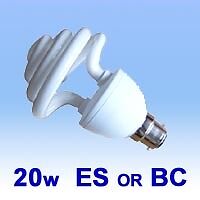
As an experiment I changed the 3 CFLs in the dining room with 40W tungsten lamps. Instant light, much brighter, nice welcoming, warm colour - and a bit of heat! It's getting chilly in the mornings & evenings here in the UK as we descend into winter. So what's wrong with putting 100W or so more heat into a room to add to the heating slightly? All this energy saving going on with the lighting means the heating is turned up more in the winter. And in the summer? The lights aren't on for long anyway! There are a few places where CFLs make sense - the porch, for example, where the heat would be wasted outside, and in the outside light. The one kind of CFL I think really does work well are the GE Genura induction lamps, designed to replace reflector lamps. These really do work well - they are really as bright as a 100W tungsten lamp, warm up very fast and are very long lived. Go on, try changing back to tungsten - you won't be replacing those CFLs again! John

Register to Reply
Guru
Safety - Hazmat - New Member Engineering Fields - Mining Engineering - New Member Engineering Fields - Construction Engineering - New Member Hobbies - Hunting - New Member

Join Date: Dec 2006
Location: Scottsdale, AZ
Posts: 1014
Good Answers: 12
#20
In reply to #19

Re: Incandescent Bulbs Emit More Mercury than CFLs

08/31/2010 8:43 AM

I have CFLs through out my house for over 8 years with-out replacing any. They are just as bright, light to full brightness with minimal time (5-10 seconds), and the bonus feature a savings of over $150 a month in electric. They have more than paid for themselves already. So no I don't think I'm switching back. Besides if I want warmth in the winterI won't be huddling under a dining room lamp. I'll be hang out by my pellet stove in the living room, in my shorts drinking a beer, watching NFL Ticket from my Lazy-Boy.

__________________
John J Baker
Register to Reply
Guru

Join Date: Nov 2009
Location: Izmir, Turkey
Posts: 2142
Good Answers: 31
#21
In reply to #19

Re: Incandescent Bulbs Emit More Mercury than CFLs

08/31/2010 11:15 AM

Sorry Guest,

Heat release from lamps in a house is considered as something like 85% waste as it is on the ceiling. In a high rise building it is less of a waste. Studies have been done on this.

You can get instant light with a CFL with new quality lamps.

Should you take time to learn about color temperatures you can get several different shades in CFL's.

The tungsten is just an expensive and wasteful incandescent.

Your apparent dislike of CFL's has no basis in fact.

Register to Reply
Anonymous Poster
#22

Re: Incandescent Bulbs Emit More Mercury than CFLs

09/03/2010 4:06 AM

We use CFLs. They work great. 23 watts CFL versus 100 watts for incandescent. It really helps on the electric bill. They take perhaps 30 seconds or a minute to put out full light, but that isn't a problem at all - the instantaneous amount of light from new CFLs is much higher than the old CFLs of the early days. The old ones used to buzz, but no problems with the new ones. I would not even consider incandescent bulbs for most uses. If you REALLY need instant light, like for when you want to look out the front door peep hole when the door bell rings, then incandescents would be OK especially if you don't leave the light on much, but I use CFL even for the porch light. For any light left on very much the CFL will save you significant money on your electric bill. We have some incandescents left over that haven't burnt out yet, but only in lights that aren't on much. All the reading lights are CFLs.

I wonder if incandescents will become rare and worth money as collectors items in 25 years?

I have a few 1.5 watt LED lights, and love the low power draw, but the light output isn't great. I think they will improve and be the wave of the future.

CFL's and mercury? That whole arguement is a pile of crap. Don't break them and when they die return them to the hazardous waste trash site and there isn't any mercury release.

Besides, mercury dangers are overblown. I used to play with large quantities of it that we used in manometers at my goobermint job. It was cool to let a puddle roll around in your hand. Sometimes we'd drop a container of it and it would be all over the shop floor. Just sweep as much up as possible. No problems.

Register to Reply
Active Contributor

Join Date: Aug 2010
Posts: 13
Good Answers: 1
#23

Re: Incandescent Bulbs Emit More Mercury than CFLs

09/05/2010 12:26 AM

Shawn had it right. LED will be the much better answer. One problem with CFL is the exploitation of workers in poorer countries. The mercury in the lights is a problem in the factories I think, and also a disposal problem for the end user. There is a lot of energy that goes into making a CFL, but that is a pollution displacement device; the poorer country gets the pollution. So since you are pushing these bad devices I am concerned that you want to profit off of your countrymen for a buck. Or what is your real motivation? You do not seem to be for the LED future, so I am assuming the worst.

Why are you really pushing this bad politics agenda? It is almost as bad as global warming. What happens when we have to decide on global temperature control? Where some will benefit by cooling and others by warming?

Register to Reply
Guru

Join Date: Nov 2009
Location: Izmir, Turkey
Posts: 2142
Good Answers: 31
#24
In reply to #23

Re: Incandescent Bulbs Emit More Mercury than CFLs

09/05/2010 12:38 AM

Pure unadulterated BS! LEDs will be accepted as better only when they come down in price to reasonable levels.

LEDs will be made in the same places as CFLs are. The energy consumed in manufacture? I don't know and don't care as I expect it is similar in both cases.

The mercury is a problem in the factories you think? Where did you hear that? Possibly at www.ultragreenidiot.com? If mercury is handled properly it is as safe as many other materials used. The amount in each lamp is very small!

The only one pushing bad politics is YOU!

Register to Reply
Active Contributor

Join Date: Aug 2010
Posts: 13
Good Answers: 1
#25
In reply to #24

Re: Incandescent Bulbs Emit More Mercury than CFLs

09/05/2010 12:54 AM

I stated that LED's will be better, not that they are now. Besides the cost the reliability is poor. The white LED's are really similar to fluorescent, they radiate a higher energy and fluoresce down to white light.

I do care about the people where the CFL's are made, they are the sort of places that do not handle mercury safely. The factory safety issue with LED will be much less and therefore can be better for the worker.

This is a politics issue, not an engineering one. I think that pollution and worker health are things that are OK for politics to put an aberration into the market. I consider that good politics. But that I agree is an opinion. The line must be drawn somewhere. The original poster drew it too far in my opinion. I must have drawn it too far for you.

I think this lighting thing is where engineering can make an improvement in the world. I think it is for pollution, and not so much for global warming.

Register to Reply
Guru

Join Date: Nov 2009
Location: Izmir, Turkey
Posts: 2142
Good Answers: 31
#26
In reply to #25

Re: Incandescent Bulbs Emit More Mercury than CFLs

09/05/2010 1:52 AM

The original poster referred to a document based on science - not on feelings.

I am afraid you do not understand much about manufacturing or engineering but specialize in politics.

There are thousands of areas where engineering can make an improvement in the world. This is only one. I understand that the word mercury sets off many but there are many sources of mercury. The CFL releases less into the environment due to less power consumption - therefore less generation.

Solar PV or concentrators are not yet a solution and at present provide so little power as to not be noticeable. When the storage issue is solved they will be ever more important possibly.

Register to Reply
Register to Reply 26 comments

"Almost" Good Answers:

Check out these comments that don't yet have enough votes to be "official" good answers and, if you agree with them, vote them!
Copy to Clipboard

Users who posted comments:

Anonymous Poster (5); bakerjohn (2); jack of all trades (1); jsolar (2); lyn (2); murali (1); peterg7lyq (2); russ123 (6); Shawn (1); Snel (1); Usbport (3)

Previous in Forum: TRIHYBRIDStealth Visits My College   Next in Forum: mr

Advertisement