|
The word Stem Cell causes a stir in most people. It's been a hot topic in the scientific, medical, government and religious arenas for many years. Stem cells are the body's "master cells". They are able to form all adult cell types and this ability may provide a source to replace or repair cells that are lost or impaired as a result of disease. The ethical dilemma comes from the use of embryonic stem cells, which are derived from embryos, which are then terminated. The cells are not derived from eggs fertilized in a woman's body, rather they are derived from embryos that develop from eggs that have been fertilized in vitro. The cells were then donated for research with consent from the donors.

Image Credit: damianmsk.hubpages.com
The Science
Embryonic stem cells are not the only source of stem cells. Stem cells can also be collected from adult patients and umbilical cord blood. Adult stem cells are cells already located in adipose or fatty tissue, bone marrow, and blood. They respond to damaged and dying cells in the body and have the ability to differentiate and renew themselves endlessly.
Umbilical cord stem cells, also known as hematopoietic stem cells, are found in the blood of the umbilical cord during and shortly after delivery. The cord blood can be frozen and stored for use at a later date. They are being heavily researched because they are easier and less controversial to collect and use.
The Discovery
In the Jan. 18th issue of the journal ACS Chemical Neuroscience, a study was published which explained how umbilical cord stem cells have been converted into other types of cells. "This is the first time this has been done with non-embryonic stem cells," says James Hickman, a University of Central Florida bioengineer and leader of the research group in charge of this project.
One of the biggest challenges to working with stem cells is figuring out the chemical or other trigger that will make them convert to the desired cell type. The study's lead author, Hedvika Davis, wanted to transform the stem cells into oligodendrocytes- critical structural cells that insulate nerves in the brain and spinal cord. After researching past studies, she found that oligodendrocytes bind with the hormone norephinphrine, but when implementing the hormone in her testing, she found the conversion was not enough. The hormone caused the stem cell to convert into oligodendrocytes but the cells did not reach a level similar to what's found in the human nervous system. The next step was to study the effects of the physical environment the cells were differentiating in. To do this, Davis maintained the norephinphrine stimulus and then placed a glass slide on top of the microscope slide the cells were growing on to more closely resemble the restrictions cells face in the body. This change proved to be successful because the cells turned into fully mature oligodendrocytes.

Image Credit: American Chemical Society
The bigger picture discovery is that stem cells are not only responsive to chemical stimulus, but that their growth and differentiation is noticeably shaped by the surrounding environment.
What this means….
There were two main options the group hopes to pursue through further research of oligodendrocytes. First, the cells could be injected into the body at the point of spinal cord injury to promote repair. The second is improving the condition of patient suffering from multiple sclerosis. Multiple sclerosis (MS) is an autoimmune disease that affects the brain and spinal cord. In the disease, the myelin sheath (the protective covering on nerve cells) is damaged, causing the nerve signals to slow down or stop. Oligodendrocytes produce myelin, so the injection of new, healthy oligodendrocytes might improve the condition of patients suffering from MS.
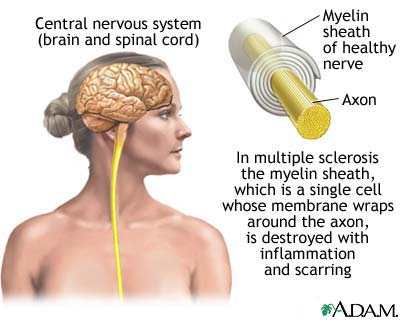
The team also hopes to develop the technique needed to grow oligodendrocytes in the lab in order to better understand the loss and restoration of myelin and for testing potential new treatments. "We want to do both," Hickman said, "We want to use a model system to understand what's going on and also to look for possible therapies to repair some of the damage, and we think there is great potential in both directions."
Discovering a way to effectively use umbilical cord stem cells to differentiate into a new type of cell could be a great leap forward in the area of stem cell research. There are still hurdles to overcome, such as the limited supply of cells in one sample may not be enough to transplant into an adult. But the cells can be collected before or after the baby is born and can be frozen and stored for later use. They can also be used by members of the same family easily and safely. One of the most critical advantages of using umbilical stem cells is their easy, safe, and uncontroversial nature. Scientists are able to do incredible research on something that would otherwise be discarded.
There is a huge potential for stem cells to be used as a treatment or cure for a wide range of diseases. I can't speculate on the government regulations or religious aspect of this research, but as a Biomedical enthusiast, I am eager to hear of new developments in this expanding science. and I am pretty excited to hear about the next discovery.
Resources
A first: Brain support cells from umbilical cord stem cells
What is cord blood?
| 


 Re: A Breakthrough For Umbilical Cord Stem Cells


