Biomedical Engineering Blog

Biomedical Engineering

The Biomedical Engineering blog is the place for conversation and discussion about topics related to engineering principles of the medical field. Here, you'll find everything from discussions about emerging medical technologies to advances in medical research. The blog's owner, Chelsey H, is a graduate of Rensselaer Polytechnic Institute (RPI) with a degree in Biomedical Engineering.

Previous in Blog: How Cold Affects You- Part 1   Next in Blog: A Breakthrough For Umbilical Cord Stem Cells
Close
Close
Close
12 comments
Rate Comments: Nested

How Cold Affects You- Part 2

Posted January 16, 2012 8:30 AM by Chelsey H

The first real snow storm of the winter (not counting the freak pre-Halloween storm) finally hit upstate New York late last week. I hope you all heeded my words from last week's Part 1 to this blog and spent some time outside to re-energize and burn extra calories. I'm joking- I hope you all stayed safe and warm. The worst part about snow storms is that I'm too old for snow days!

What winter means to me. Image Credit: worldofvieta.tumblr.com

This week is part 2- The Dangers Of Being Cold

(I will try to remain unbiased as I present this part of the blog)

Humans aren't built to live in a cold environment. To survive in cold weather, enough body heat needs to be generated by burning appropriate food and that heat needs to be trapped by suitable clothing and shelter. When a normal person starts to feel cold, usually around 25°C or 77°F, physiological responses such as shivering and diverting blood away from the extremities kick in. Nerve cells that transmit impulses work slower in the cold which is why it's more difficult to fix the zipper or button on your coat. Your blood vessels also constrict, increasing blood pressure. In order to adjust, your body reduces fluid volume by getting rid of water in urine (So from what I understand: you have a racing heart, cold fingers that can't work zippers, and you have to go to the bathroom. I'm starting to feel justified).

Dehydration

You can still sweat when it's cold outside, especially when you overdress in an attempt to stay warm. Fluid is also lost through humidified breath in cold weather and the body produces less concentrated urine. These factors can all lead to dehydration. Dehydration can impair your body's ability to retain heat as well as cause headaches, cramps and elevated heart rate. It's important to continue to drink fluid while working or exercising in the cold. But don't eat snow, it will drop your body's core temperature and extra energy will be used to keep warm.

Frostbite and Hypothermia

The maintenance of body temperature becomes difficult when the air is moving or damp. Wind chill can dramatically reduce the time it takes for skin damage to occur. For instance, in calm conditions at -29°C (-20°F) a well clothed person is in little danger, but a light wind of 10 mph gives the same effect as a temperature of -44°C (-47°F ). At this temperature exposed flesh can freeze in a minute or so.

Image Credit: manfredkaiser.com

Frost nip is a precursor to frostbite. Frost nip is caused by lack of blood flow to parts of the body, such as end of the nose, tops of ears or fingers, because they are losing too much heat. It can freeze the surface layers of the skin and lead to symptoms like those of a sun burn. Although there is no permanent damage, if left unattended it will lead to frostbite.
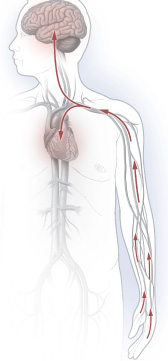
Blood circulation in cold weather. Image Credit: Harvard Health

Frostbite means that skin has fallen below freezing and ice crystals form within the live cells of the skin, killing them in the process. When the area is rewarmed, it swells, blisters, and turns blue-purple to black. It then forms a hardened black carapace. If you're lucky, the dead layer with fall off and new skin will replace it, but it's painful. If you're not so lucky, the frostbite will affect the deeper layers of muscle and bone. This usually results in permanent damage or amputation.

Shivering is an involuntary movement used to create heat. Extreme shivering can increase heat production by up to five times but this function also requires high-energy foods and can divert blood away from the core causing heat loss to accelerate. Hypothermia sets in when the body loses heat faster than is produces it. When the body temperature falls below 78°F, death is likely. There are two types of hypothermia: acute and chronic. Acute is caused by sudden immersion in cold water. Cold water can cool the body 25 times faster than air. Chronic hypothermia can develop with exposures of 12 hours to several days.

Flu and High Blood Pressure

Cold weather and respiratory disease go hand in hand. The flu virus thrives in dry, colder temperatures and there is also evidence that the cold suppresses the immune system. Research suggests that cold weather increases the systolic blood pressure significantly in those 80 and older.

BUT, the common cold is NOT linked to being cold! (Oh what our mother's would say)

What does this lead to?

Due to conditions such as hypothermia, influenza and pneumonia, the mortality rate is about 15% higher than on a summer day. There are also indirect factors that lead to deaths such as injury from falls, accidents, carbon monoxide poisoning and house fires. These events can all be to cold conditions. Cold hands and feet could mean less coordination, less feeling and less motor control. This means that you could be clumsier and accidentally hurt yourself, especially since there is also a decrease in flexibility leading to a higher risk of strain injuries. There are some ideas that up to 70% of the wintertime deaths can be traced back to heart attacks, strokes and other cardiovascular causes of death.

Who is the most at risk?

Non-white elderly men are the most at risk, while white women are the least at risk. I'm almost always complaining about having cold hands and feet and it turns out that it's because women have a higher gradient of temperature from the skin to the body core and a higher level of subcutaneous fat. This means that women are more able to maintain a constant body core temperature in cold conditions even though they are more at risk for frost bite in their extremities.

Since your body keeps heat around the heart and brain, wear a hat to keep the heat from escaping.

While the sex and race of a person is important to understanding their susceptibility to cold, age has the highest influence. Elderly people are the most at risk for injury or death from cold. This is most likely due to shivering and vasoconstriction to reduce blood to the appendages.

Adaptation helps too. Those who live in colder cities and parts of the world have a higher tolerance for what "cold" means because their metabolism changes to adapt.

So there you have it, the good and the bad about the winter time and being cold. Whether you decide to venture outside for some winter time exercise or stay inside with a good book, please remember to stay safe and warm this season.

Resources

Out in the cold

How Humans Deal With and Survive Extreme Cold

Reply

Interested in this topic? By joining CR4 you can "subscribe" to
this discussion and receive notification when new comments are added.
Guru

Join Date: Jul 2007
Location: Minnesota
Posts: 529
Good Answers: 15
#1

Re: How Cold Affects You- Part 2

01/16/2012 8:55 AM

When a normal person starts to feel cold, usually around 25°C or 77°F

I respectfully disagree with that statement. For those of us that enjoy the 4 seasons, when spring and then summer comes, most people start to wear shorts and t shirts when the temperature gets around 21° C or 70° F.

I see people wear shorts every month of the year outside, even when there is snow on the ground it is below 0°F (-18° C). ( not many and they're often out only a few minutes. From the car to the gym or to school)

__________________
downhill slide to 112 (damn memor.)
Reply
Power-User

Join Date: Aug 2011
Posts: 272
Good Answers: 1
#2
In reply to #1

Re: How Cold Affects You- Part 2

01/16/2012 9:16 AM

I agree that everyone is different and who can really define what "normal" is. There are many factors to account for in determining if a person will feel cold such as the amount of subcutaneous fat they have, their age, and their gender. Also, it's all relative....today 77F would feel hot, but in August, with a breeze, it may be a little chilly.

Like I said, I tend to be cold and I would be caught dead in shorts when it's 0F outside!

__________________
“Everybody is a genius. But if you judge a fish by its ability to climb a tree, it will live its whole life believing that it is stupid.” Albert Einstein
Reply
Guru
United Kingdom - Member - Indeterminate Engineering Fields - Control Engineering - New Member

Join Date: Jan 2007
Location: In the bothy, 7 chains down the line from Dodman's Lane level crossing, in the nation formerly known as Great Britain. Kettle's on.
Posts: 32175
Good Answers: 839
#3
In reply to #2

Re: How Cold Affects You- Part 2

01/16/2012 9:59 AM

Of course, all these comments are only applicable to those living north of 23degN...

__________________
"Did you get my e-mail?" - "The biggest problem in communication is the illusion that it has taken place" - George Bernard Shaw, 1856
Reply
Guru
Engineering Fields - Optical Engineering - Member Engineering Fields - Engineering Physics - Member Engineering Fields - Systems Engineering - Member

Join Date: Apr 2010
Location: Trantor
Posts: 5363
Good Answers: 647
#4

Re: How Cold Affects You- Part 2

01/16/2012 8:52 PM

I also wonder about the statement that a normal person starts to feel cold at 77F. I agree that there is a seasonal aspect to what seems cold or hot to me, but even in the hottest days in summer (here in Georgia) I keep my house at 78F because I can't stand it any warmer than that. If I had my druthers, I'd keep the AC at 73F.

I can confirm the info about shivering to stay warm. Years ago when I still lived in Florida I had to take a business trip to Canada in January. It was 80F in Florida when I left, but it was -20F in Canada when I arrived there. My luggage (with my winter coat) got lost temporarily and I only had a light sweater to wear over my clothes. My rental car was somewhere out in the lot, and I was shivering so badly when I got to it I could barely put the key in the ignition. I started the car with my arms and legs shivering and my teeth chattering uncontrollably, and sat there for 20 minutes waiting for the car to warm up enough for me to be able to hold the steering wheel and drive.

__________________
Whiskey, women -- and astrophysics. Because sometimes a problem can't be solved with just whiskey and women.
Reply
Guru
Canada - Member - New Member Popular Science - Cosmology - New Member Hobbies - Musician - New Member

Join Date: Dec 2010
Location: Up North
Posts: 540
Good Answers: 30
#6
In reply to #4

Re: How Cold Affects You- Part 2

01/17/2012 8:18 AM

Unfortunate story, but one I can readily attest to.

I once had a supplier from Texas come to where I worked. He planned to come in February, which can be the coldest month of the year up here. I prepped him before hand: parka, toque, scarf, long underwear. He didn't know what 3 of those items were or where he could get them.

The day he arrived, it was -38°C with a wind chill that made it feel like -48°. The look in his eyes when that first blast of chilly air hit his lungs was priceless. The poor man nearly froze to death and never came back in the winter.

__________________
Steve of the North...since 1962.
Reply
Guru

Join Date: Jun 2011
Location: Phnom Penh
Posts: 4019
Good Answers: 102
#5

Re: How Cold Affects You- Part 2

01/16/2012 11:20 PM

I have been cold enough to shiver uncontrollably at 27C.

Open boat, pouring rain and tearing up a river at a clip. I was really glad to get off that craft when it made it to the jetty after 2hours++ of being deafened by the engine and being battered as the boat was pushed pretty hard through the chop and wake of other craft.

I was very grateful to have a working heater in my truck. Only takes a minute or so to start getting warm air blowing in the tropics.

Once I warmed up I started to sweat and then needed the aircon running flat out on cold.

My truck is my sanctuary.

Getting soaked and shivering on a motorbike makes for extreme discomfort and difficulty in coordination. No quality relief available till you get to where you are going. I have resorted to donning plastic bags (aka trash) to get some relief enroute.

Being lightly attired and engaging in physical work at 14C is very comfortable if there is no wind chill.

Then there's unbearable heat to contend with.....

__________________
Difficulty is not an obstacle it is merely an attribute.
Reply
Guru
Canada - Member - New Member Popular Science - Cosmology - New Member Hobbies - Musician - New Member

Join Date: Dec 2010
Location: Up North
Posts: 540
Good Answers: 30
#7

Re: How Cold Affects You- Part 2

01/17/2012 8:36 AM

-26°C here this morning, with a wind chill that makes it feel like -36°C. Brrr. Cold, but not insanely cold yet. But we have February to get through.

Being a Northerner, I know all about this topic. I froze my ears playing outdoor hockey as a child. Playing in an arena was a luxury we got to enjoy only once or twice a season. We played and practiced outdoors, no matter how cold it got.

Wearing layers of clothing is important. Shedding a layer when you're warm or adding a layer when you're cold can greatly enhance your enjoyment of your chosen outdoor activity.

No matter how tantalizing it may be, don't lick that metal pipe.

Why does your nose feel "thick" when you push on it?

My six year old daughter is a petite 45 lbs. Her lips can turn blue swimming in a deep lake during the summer, so we watch her like a hawk in the winter too.

__________________
Steve of the North...since 1962.
Reply
Guru
Hobbies - Fishing - Old Salt Hobbies - CNC - New Member United States - US - Statue of Liberty - New Member

Join Date: Mar 2007
Location: Rosedale, Maryland USA
Posts: 5197
Good Answers: 266
#8

Re: How Cold Affects You- Part 2

01/17/2012 10:55 AM

The Inuit peoples have done well to dispel most of what theory there is in this article. Most of which is based on western modern man and his creature comforts. The Inuit would be displeased to hear their not normal.

__________________
Life is not a journey to the grave with the intention of arriving in a pretty, pristine body but rather to come sliding in sideways, all used up and exclaiming, "Wow, what a ride!"
Reply
Guru

Join Date: Oct 2007
Location: Tulare, CA
Posts: 1783
Good Answers: 35
#9
In reply to #8

Re: How Cold Affects You- Part 2

01/17/2012 1:03 PM

The Inuit are adapted to the cold. They don't require Vitamin C like you and I. If you were to take an Inuit from their homelands and move him to Texas and run around like he normally would it would just about kill him from over heating.

Some of the comments made here sound like people that have experienced heat exhaustion.

__________________
Why is there never enough time to do it right the first time but always enough time to do it over?
Reply
Guru
Hobbies - Fishing - Old Salt Hobbies - CNC - New Member United States - US - Statue of Liberty - New Member

Join Date: Mar 2007
Location: Rosedale, Maryland USA
Posts: 5197
Good Answers: 266
#10
In reply to #9

Re: How Cold Affects You- Part 2

01/17/2012 2:35 PM

"Humans aren't built to live in a cold environment."

Are you saying that the Inuit are not human?

What I'm trying to say is that mankind can and does learn to adapt to adverse weather conditions. Because of these adaptations we all do not fit into a precise category on how our bodies react to the cold. To those that have lived in colder climates 77°F might seem balmy to down right hot.

Yes been to Texas and did the heat exhaustion thing. But was not because of the temperature. I had just spent 3 years prior in Florida. And here where I grew up extremes of 100 in the summer to -10 in the winter. Just didn't realize how much I was sweating. I was use to a more humid environment where when you sweat your body is drenched in it.

__________________
Life is not a journey to the grave with the intention of arriving in a pretty, pristine body but rather to come sliding in sideways, all used up and exclaiming, "Wow, what a ride!"
Reply
Guru

Join Date: Oct 2007
Location: Tulare, CA
Posts: 1783
Good Answers: 35
#12
In reply to #10

Re: How Cold Affects You- Part 2

01/17/2012 3:26 PM

I support what you're saying.

That sentence that you're quoting aren't my words.

Humans are the most adaptable mammals on the planet. We're all over the place.

__________________
Why is there never enough time to do it right the first time but always enough time to do it over?
Reply
Guru

Join Date: May 2010
Location: in optimism
Posts: 4050
Good Answers: 130
#11

Re: How Cold Affects You- Part 2

01/17/2012 3:19 PM

I think that should read 'when a naked person starts to notice cold'.

Conventionally auditoriums and concert halls are air conditioned to around 22 C as this is regarded as 'comfort zone' for dressed folk.

But in general terms, there are a number of anthropological studies that link the faster evolution of intelligence to colder latitudes.

There is some debate as to whether this is due to the tougher survival conditions, mean brain temperature and so blood flow requirements and/or the higher need to plan, store and hunt and consequently higher consumption of meat.

__________________
There is no sin except stupidity. (Oscar Wilde, Irish dramatist, novelist, & poet (1854 - 1900))
Reply
Reply to Blog Entry 12 comments
Copy to Clipboard

Users who posted comments:

34point5 (1); Chelsey H (1); ddk (1); Janissaries (2); ozzb (2); PWSlack (1); Steve of the North (2); Usbport (1); Wal (1)

Previous in Blog: How Cold Affects You- Part 1   Next in Blog: A Breakthrough For Umbilical Cord Stem Cells

Advertisement