|
 Sometimes there really are instances where an invention
comes along and it becomes near impossible to replace it. Either the invention
has reached its zenith of development, or practical technology severely limits
the progress of the device. For example:
an airplane will always have wings because physics requires so; a wingless
airplane is no longer an airplane. Wheels operate untouched, at over 3,000
years old and still going strong. An example of technology restricting
development can be found in the keyboard at your very fingertips; while a more
efficient means of character input is foreseeable, that doesn't mean it's
imminent. Sometimes there really are instances where an invention
comes along and it becomes near impossible to replace it. Either the invention
has reached its zenith of development, or practical technology severely limits
the progress of the device. For example:
an airplane will always have wings because physics requires so; a wingless
airplane is no longer an airplane. Wheels operate untouched, at over 3,000
years old and still going strong. An example of technology restricting
development can be found in the keyboard at your very fingertips; while a more
efficient means of character input is foreseeable, that doesn't mean it's
imminent.
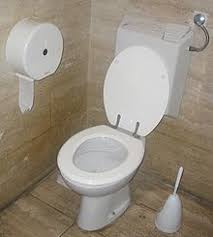 And there are objects which for some reason, be it
disinterest or foulness (and in this instance literally), that have designs
that remain stagnant for years, despite obvious advancements. And there are objects which for some reason, be it
disinterest or foulness (and in this instance literally), that have designs
that remain stagnant for years, despite obvious advancements.
By now you've probably surmised I'm talking about the
toilet. I'll do my best not to be indecent and in exchange I expect your
absolute best playground behavior (I
understand, this is CR4). In truth,
sewage systems have been a major facilitator in civil engineering and refusing
its consideration is uncomfortable in several ways.
So today we take a small look at
toilets: their types, designs, and future.
Before toilets, urban humans repulsively disposed of waste
in city streets (there was a time where an outhouse was preferable).
Though the business was taken care of indoors, the waste was disposed of in
alleys and gutters. Today we know such poor sanitation led to disease on epidemic
levels, and the reform of handling filth has been called the "greatest medical advance[ment]
since 1840."
 English poet and "saucy Godson" to Queen Elizabeth I, Sir John Harington, is
inventor of the first flush toilet. His invention had a flush valve to control
water in the tank and a wash-down design to clear the bowl. Though he installed
one in Richmond Palace and the device earned her favor, the Queen refused to
use it. It would be another 290 years until
Thomas Crapper (yes, that's really his name) perfected the design and was able
to mass produce the flush toilet. Otherwise, flush toilets have remained principally
unimproved since the early 1900s, when a vortex mechanism was invented to help
keep toilet bowls clean. The only notable exception would be in 1980 when Bruce
Thompson invented a dual-flush toilet for water-conscious Aussies. And the
video-series Smarter Every Day invented a method to prevent 'splash back'. English poet and "saucy Godson" to Queen Elizabeth I, Sir John Harington, is
inventor of the first flush toilet. His invention had a flush valve to control
water in the tank and a wash-down design to clear the bowl. Though he installed
one in Richmond Palace and the device earned her favor, the Queen refused to
use it. It would be another 290 years until
Thomas Crapper (yes, that's really his name) perfected the design and was able
to mass produce the flush toilet. Otherwise, flush toilets have remained principally
unimproved since the early 1900s, when a vortex mechanism was invented to help
keep toilet bowls clean. The only notable exception would be in 1980 when Bruce
Thompson invented a dual-flush toilet for water-conscious Aussies. And the
video-series Smarter Every Day invented a method to prevent 'splash back'.
Though much of the western hemisphere utilizes the flush
toilet, much more of the world sticks to the squat toilet. Used somewhat
differently, they still incorporate  water ballasts, piping, and drainage. These
toilets are particularly prominent in the Middle East, Far East, and Southern
Asia. Frequent travelers debate about the comfort levels of both designs, but
some medical researchers argue that sitting toilets may actually be bad for
your health: sitting and reading a newspaper
results in a daily dose of current events and unnecessary strain on the colon,
possibly leading to diverticulosis. water ballasts, piping, and drainage. These
toilets are particularly prominent in the Middle East, Far East, and Southern
Asia. Frequent travelers debate about the comfort levels of both designs, but
some medical researchers argue that sitting toilets may actually be bad for
your health: sitting and reading a newspaper
results in a daily dose of current events and unnecessary strain on the colon,
possibly leading to diverticulosis.
.jpg) Of course, Japan has added many electronic features to
toilets: retractable bidets located in the bowl clean each user; seats are often
electrically warmed; hot or cool air may keep an operator's toosh dry or fresh.
Some Japanese companies are working on toilets that can analyze stool samples
and provide medical stats, such as blood sugar and body fat. Of course, Japan has added many electronic features to
toilets: retractable bidets located in the bowl clean each user; seats are often
electrically warmed; hot or cool air may keep an operator's toosh dry or fresh.
Some Japanese companies are working on toilets that can analyze stool samples
and provide medical stats, such as blood sugar and body fat.
Perhaps the area that needs the most attention is making
sanitized waste removal available in third world nations without sewage
protocols. The World Toilet Organization estimates that 2.5 billion (billion, with a 'B') do
not have access to a clean toilet, and in some developing countries up to
40% of illnesses are directly attributed to poor waste removal. (Though it's
not just poorly sanitized toilets that kill, right
Elvis?) As such, a number of
advocacy groups have been established to increase awareness. In 2011, the Bill
& Melinda Gates Foundation donated $265 million to spur innovation in
sanitation. Reinvent the Toilet is a science expo that awards up to $100,000
for sustainable toilet designs. 2012's top prize went to a group from the
California Institute of Technology that prototyped a toilet that uses solar power
to break down solid waste to hydrogen gas, treated water, and inert, organic
material.
While billions of people need
sewage removal in general, millions in R&D has been spent  on an area of
waste management where users are apathetic, and often confused. An effective
female urinal has eluded manufacturers for decades. Urinals do not require any level of skin
contact and are flushed with considerably less water than a toilet. American
Standard produced a female urinal from 1950 to 1974, but the design required
the same space and water as a typical flush toilet; it never caught on. Many
designs require a woman to remove their pants and awkwardly back over the
urinal. At outdoor sporting and concert events, organizers have attempted to
alleviate lines by providing female urination alternatives. Devices such as the
P-mate and WizBiz (yes, apparently it's required to have a punny name) have
been distributed at these events, and they are essentially hygienic funnels
that allow women to pee standing up. Finally, some portable female
urinals have caught on in Europe, but have yet to
gain acclaim in North America. on an area of
waste management where users are apathetic, and often confused. An effective
female urinal has eluded manufacturers for decades. Urinals do not require any level of skin
contact and are flushed with considerably less water than a toilet. American
Standard produced a female urinal from 1950 to 1974, but the design required
the same space and water as a typical flush toilet; it never caught on. Many
designs require a woman to remove their pants and awkwardly back over the
urinal. At outdoor sporting and concert events, organizers have attempted to
alleviate lines by providing female urination alternatives. Devices such as the
P-mate and WizBiz (yes, apparently it's required to have a punny name) have
been distributed at these events, and they are essentially hygienic funnels
that allow women to pee standing up. Finally, some portable female
urinals have caught on in Europe, but have yet to
gain acclaim in North America.
I'd say toilets are in definitive need of an engineering
overhaul. It
could also be that toilets are just bad luck: take a look at the
list of people who have bit the big one while doing their business. Heck, toilets sunk a submarine!
Some people sit; some squat. Some women stand just like men.
Yet almost 1/3 of the  world does not have access to any type of sanitary sewage
removal and that is by far where most of the toilet innovation should be
focused. Yes, reducing urination discrimination is great, but something tells
me more women would rather have the world's sewage problem solved than having
the ability to pee standing up. It's an issue of business versus social issues,
as it often is when innovation goes stale. world does not have access to any type of sanitary sewage
removal and that is by far where most of the toilet innovation should be
focused. Yes, reducing urination discrimination is great, but something tells
me more women would rather have the world's sewage problem solved than having
the ability to pee standing up. It's an issue of business versus social issues,
as it often is when innovation goes stale.
Resources
Images credits: Dave Harman blog; Wikipedia; Jane Austen; Inventor Spot; Faucet Depot; Sinba Design; Paperblog)
Bloomberg - To Seriously Improve Global Health, Reinvent the Toilet
Wikipedia - Urinal; Human defecation postures; Dual-flush toilet; John Harington; Toilets in Japan; Flush toilet; Female urination devices
Washington Post - Gates Foundation makes poop a priority, puts toilet innovation front and center
| 

 3
3

 Re: Which Toilet Deserves Your Business?


Good Answers:
"Almost" Good Answers: