|
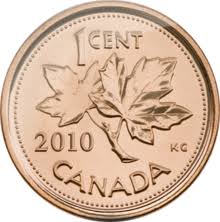 In what may have been international news last week, the
Royal Canadian Mint officially struck the penny from distribution. Of course,
that doesn't make the penny obsolete; it remains legal tender. Cash transactions
are rounded to the nearest nickel and non-cash purchases are still designated
in one-cent increments. The Canadian penny will exist in perpetuity, or at
least until the RCM can collect and melt the 35 billion pennies in circulation. In what may have been international news last week, the
Royal Canadian Mint officially struck the penny from distribution. Of course,
that doesn't make the penny obsolete; it remains legal tender. Cash transactions
are rounded to the nearest nickel and non-cash purchases are still designated
in one-cent increments. The Canadian penny will exist in perpetuity, or at
least until the RCM can collect and melt the 35 billion pennies in circulation.
The argument exists that the American taxpayer would see a
similar benefit if the American penny is eliminated. Between material and
production costs, it costs the U.S Mint two pennies to make one penny, and if
melted down to its raw materials, one penny is worth about two and a half
pennies. Just like in Canada, American citizens find the penny mostly useless. Similarly,
Britain's pound sterling relies on the penny for denominations of 1/100 of a
pound; the cost to make 1p is 1.5 pence. Pennies are often left at cash
registers or on the sidewalk, hoarded away by the hundreds, or exchanged for
larger denominations. Wise but rare is
the consumer who completely utilizes a coin purse.
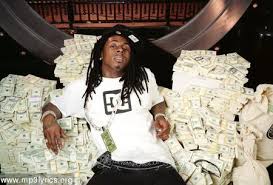 As Abba
sings: "There never seems to be a
single penny left for me; That's too-ooo baddd!" In fact, money is a recurring muse for many
musicians, ranging from classic rock (Pink Floyd's 'Money') to rap (Puffy's
'All About the Benjamins').
Yet these lyrics only speak to the physical representation of money, not its
theoretical concept. As the world moves into international and alternative
currencies, rappers may lose some street cred if they start rhyming about
digital transactions and pennies. As Abba
sings: "There never seems to be a
single penny left for me; That's too-ooo baddd!" In fact, money is a recurring muse for many
musicians, ranging from classic rock (Pink Floyd's 'Money') to rap (Puffy's
'All About the Benjamins').
Yet these lyrics only speak to the physical representation of money, not its
theoretical concept. As the world moves into international and alternative
currencies, rappers may lose some street cred if they start rhyming about
digital transactions and pennies.
So where is the penny -- and
currency as a whole -- headed?  Before we go further, let's review the dollar
system with the graphic on the right. I'll note that the only significant
difference between the American and Canadian dollar systems is Canada's two
dollar coin, or 'toonie', another nuance of Canadian currency. And for a review
of the current minting process, here's a video of the stamping process
used to manufacture coins. Before we go further, let's review the dollar
system with the graphic on the right. I'll note that the only significant
difference between the American and Canadian dollar systems is Canada's two
dollar coin, or 'toonie', another nuance of Canadian currency. And for a review
of the current minting process, here's a video of the stamping process
used to manufacture coins.
While technology that supports cash flow rapidly changes,
the institution of money does not. Barter and item trading is the oldest means
of exchanging goods, but by 2,000 B.C. receipts for items in storage began to
serve as a means for representing items in trade. These receipts were irregular
metal ingots, with the commodity and its value represented by the grade of 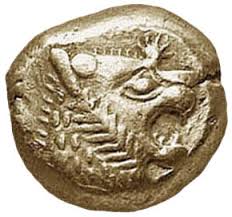 the
metal and any inscribed symbols. The items that represent exchangeable goods
and services vary by culture. Native Africans relied on ivory, livestock, beads,
and weapons, while Native Americans sold Manhattan to the Dutch for 60 guilders
(about $24 USD), a currency for which they had no use. The first coins were pressed in the Kingdom
of Lydia, sometime around the 12th Century B.C. Paper money first
appeared in the 7th Century in China as a receipt for a sum of coins. Around
the same time, economists and merchants in the Middle East began establishing
credit, cheques, banking accounts, trusts and loans. the
metal and any inscribed symbols. The items that represent exchangeable goods
and services vary by culture. Native Africans relied on ivory, livestock, beads,
and weapons, while Native Americans sold Manhattan to the Dutch for 60 guilders
(about $24 USD), a currency for which they had no use. The first coins were pressed in the Kingdom
of Lydia, sometime around the 12th Century B.C. Paper money first
appeared in the 7th Century in China as a receipt for a sum of coins. Around
the same time, economists and merchants in the Middle East began establishing
credit, cheques, banking accounts, trusts and loans.
Of course the ideology behind all of this currency was that
it was a bearer slip, and it could be redeemed at government reserves for an
equal amount of gold and silver (or in earlier times, grain and livestock).
There were significant disadvantages to this system, as governments could print
more currency than what they had in stock, diminishing the return value. In the
early 20th Century, banks and reserves continued to keep a precious
metal standard to back up banknotes, but eventually decided it could better
manage financial crises with fiat money, or money that has no intrinsic value.
Representative of the U.S.'s conservative attitude regarding currency, it was
one of the last nations to eliminate its gold standard, which it did in 1971.
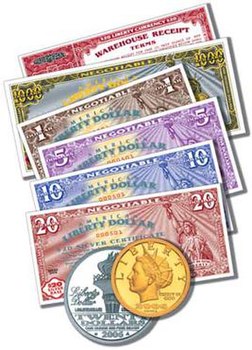 This brings us to recent attempts to revive the gold
standard. From 1998 to 2009, Liberty Services, began creating
Liberty Dollars, a private currency redeemable from the company for amounts of
precious metals. Despite U.S Treasury officials declaring the tender legal, the
assets of the company were seized and the creator was later arrested and
convicted on several charges. This brings us to recent attempts to revive the gold
standard. From 1998 to 2009, Liberty Services, began creating
Liberty Dollars, a private currency redeemable from the company for amounts of
precious metals. Despite U.S Treasury officials declaring the tender legal, the
assets of the company were seized and the creator was later arrested and
convicted on several charges.
Many other alternative currencies exist today. The most
widely used would be the
bitcoin, a digital currency based on an open source protocol. No bank or central reserve can regulate this
currency. This currency is accepted across international websites and is held
in the owner's encrypted file wallet. They are transferred using bitcoin keys,
a string of numbers and letters exceeding 30 characters. Websites from Wikileaks to Domino's
have begun accepting bitcoins, which can be exchanged for $16--$25 USD,
depending on rates. Since bitcoins can be divvied into 100,000,000 satoyoshis
it can be broken to better meet purchase prices. This is essential since there
is a hard cap on how many bitcoins will be created; by 2140, all 21 million
bitcoins will have been generated and the value of a full bitcoin will be much higher. Its open source and peer-to-peer nature
assure of its adaptability, but many remain
skeptical of the bitcoin's real purchase power.
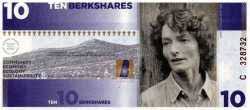 In the recent worldwide economic turmoil, many communities
have attempted to insulate themselves from a volatile economy by creating local
currency. Typically, the currency is exchanged at a one-to-one rate and the
local currency is accepted a number of community businesses. This fosters local
business and in instances where businesses agree to return the local currency
as a depreciated rate, can be used to fund community projects. Recent examples
include the Toronto
dollar and the BerkShare. In the recent worldwide economic turmoil, many communities
have attempted to insulate themselves from a volatile economy by creating local
currency. Typically, the currency is exchanged at a one-to-one rate and the
local currency is accepted a number of community businesses. This fosters local
business and in instances where businesses agree to return the local currency
as a depreciated rate, can be used to fund community projects. Recent examples
include the Toronto
dollar and the BerkShare.
 Contrasting the recidivism back to the gold standard, some
companies are attempting to eliminate physical money altogether. Square is known as the company who created
the card swiper for smartphones, but their latest idea eliminates cards and
cash altogether. Their app, called Square Wallet, allows users to pay just by
saying their name. After creating a login and linking a financial account, the
app recommend nearby merchants who accept the Square Wallet, and after saying
your name and accessing the app, your photo will appear on the cash register.
Transactions take seconds. Google and PayPal have launched similar services,
but Square is considered the easiest
to use. Square can also has options for tipping and withholding loyalty
cards. In a similar vein, Twitpay has become a chance to conduct transactions
simply by linking a PayPal with a Twitter account. Contrasting the recidivism back to the gold standard, some
companies are attempting to eliminate physical money altogether. Square is known as the company who created
the card swiper for smartphones, but their latest idea eliminates cards and
cash altogether. Their app, called Square Wallet, allows users to pay just by
saying their name. After creating a login and linking a financial account, the
app recommend nearby merchants who accept the Square Wallet, and after saying
your name and accessing the app, your photo will appear on the cash register.
Transactions take seconds. Google and PayPal have launched similar services,
but Square is considered the easiest
to use. Square can also has options for tipping and withholding loyalty
cards. In a similar vein, Twitpay has become a chance to conduct transactions
simply by linking a PayPal with a Twitter account.
Will electronic transactions replace cash in our lifetimes?
Seemingly not. In the 1950s  credit cards were predicted to be the end of cash,
but today 8 of 10 transactions still require the physical exchange of bills and
coins. Cash's 2,700 years of existence is owed to its simple technology and
high gratification. Anyone can possess cash--you don't need a bank account--and
futurist Dr. Michio Kaku explains it as the Cave Man Principle: when technology
(high tech) clashes with primitive desires (high touch), people are more
content with a physical interaction. credit cards were predicted to be the end of cash,
but today 8 of 10 transactions still require the physical exchange of bills and
coins. Cash's 2,700 years of existence is owed to its simple technology and
high gratification. Anyone can possess cash--you don't need a bank account--and
futurist Dr. Michio Kaku explains it as the Cave Man Principle: when technology
(high tech) clashes with primitive desires (high touch), people are more
content with a physical interaction.
A sentimental argument is used to keep the American penny in
circulation as well: a 2012 poll found 67% of Americans favored keeping the
penny despite its limited power. It probably helps that one of the country's
most popular presidents, Abraham Lincoln, graces the obverse. Charities also depend on pennies
for thousands of dollars of contributions. It would also increase the demand
for nickels, which cost 11 cents to make, and thereby generate a bigger
manufacturing deficit.
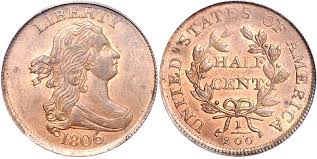 When the half-penny was eliminated from American
currency, it had more purchasing power than a dime today. Yet the U.S.
government in 1857 thought it was prudent move. If this were a private company
looking to maximize profitability, I can guarantee the penny would have been
discontinued upon its first proposal in 1989. Of course the mint could use a
lesser grade metal (pennies are mostly zinc), but they seem resistant to that idea. When the half-penny was eliminated from American
currency, it had more purchasing power than a dime today. Yet the U.S.
government in 1857 thought it was prudent move. If this were a private company
looking to maximize profitability, I can guarantee the penny would have been
discontinued upon its first proposal in 1989. Of course the mint could use a
lesser grade metal (pennies are mostly zinc), but they seem resistant to that idea.
I personally feel we could get rid of the penny. It's not
like rappers are singing about pennies, and especially if it can spare me from hearing
Christopher Walken's autotuned "Pennies from Heaven." What do you think?
Resources
(Image credit: Wikipedia; The Awl; Reid Gold; World Changing; Tom McConnon; Coffee Shop Investor; USA Coinbook)
Wikipedia - Bitcoin; Alternative currency; Gold standard; Penny debate in the United States
The Next Web - The Future of Money...
The New Yorker - Penny Dreadful
World Future Society - The Future of Money in a Mobi-Digital World
| 


 Re: Canada Eliminated the Penny; Is Cash Next?