|
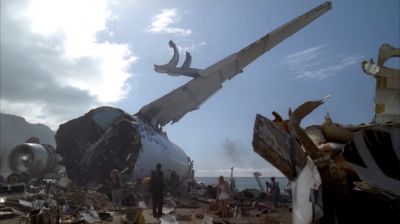 After posting pictures of blimp butts last week I was hesitant to submit another post to the aerospace blog. But I'm beginning to settle in here and current events seem to require a place on CR4 for technical minds to hypothesize and argue about what could have happened to Malaysia Airlines Flight 370. After posting pictures of blimp butts last week I was hesitant to submit another post to the aerospace blog. But I'm beginning to settle in here and current events seem to require a place on CR4 for technical minds to hypothesize and argue about what could have happened to Malaysia Airlines Flight 370.
I can't imagine anyone here is unaware of the specifics of this news story, but we'll touch on them so we can all agree on the background information. It's almost like a story ripped off of Lost.
The aircraft model was a Boeing 777, a design which entered commercial service in 1995 and was regarded to have an exemplary safety record. It would be 13 years until a Boeing 777 would record a incident and last July's crash landing of Asiana Flight 214 would be the first 777 incident involving a fatality. This particular aircraft, identified as  Boeing 777-2H6ER, had no serious repairs or malfunctions in its recent history, though a pilot did strike another plane with a wingtip while taxiing at a Chinese airport in 2012. 2H6ER underwent maintenance on February 23, 2014 and no issues were reported. Boeing 777-2H6ER, had no serious repairs or malfunctions in its recent history, though a pilot did strike another plane with a wingtip while taxiing at a Chinese airport in 2012. 2H6ER underwent maintenance on February 23, 2014 and no issues were reported.
Flight 370 departed Kuala Lumpur on Saturday, March 8 at 00:41 local time. Six hours later it was scheduled to land at Beijing Capital International Airport, with a flight plan that would take it over the Gulf of Thailand, Vietnam, and the South China Sea. Forty to fifty minutes after take-off, radio contact with the plane was lost. At that time another aircraft in the area was asked to radio Flight 370 and it was greeted by the cabin, but could not communicate due to radio interference. The plane remained on radar and other systems until 02:40, which is long enough to have passed over Vietnam, but Chinese officials note that the plane never entered their airspace. After 02:40, no trace of the plane has been found.
The crew did not send a distress call and no aircraft mechanical problems were ever reported. The pilot was an experienced captain who had been flying since 1981 and was also a company simulator instructor. The first officer had been flying since 2007, and transitioned to flying 777s in February. Some radar reports indicate the plane had turned around shortly before crashing, but this hasn't been confirmed yet.
So far 35 ships and 34 aircraft from nine countries have joined the search-and-rescue efforts. Oil slicks found near suspected crash sites belong to cargo vessels. Not a single item of debris has been found, meaning the plane is likely still intact, or at least in a few pieces.
Here is where we speculate. What happened to this plane? How could there be no debris field? Why wasn't there a mayday? Here are some leading theories.
· Structural failure. The fuselage would have to breakup quite quickly to prevent the pilots from reporting an incident, but aluminum is susceptible to corrosion, especially in high humidity areas such as the South Pacific. The 2H6ER did not reveal any material fatigue during its last inspection. If structural failure is to blame, then the pressurization system may have severed the craft in half, which would account for both the absence of mayday calls and debris field, but necessarily a fuel slick.
· Pilot disorientation. It isn't known why the pilot and first officer may have reversed course and attempted to return to Kuala Lumpur. The pilots likely never realized they were crashing, or for some reason were incapacitated.
· Pilot suicide. In 1999, a Boeing 767 was intentionally crashed by the Egyptian Air first officer at the helm. Investigators found the first officer and pilot had made contrasting steering decisions, that the first officer had recently been demoted by a company official who was on the plane, and that he had odd statements and reactions throughout the flight. Had one of the crew members taken sole possession of Flight 370's controls, this scenario is increasingly likely.
· Poor weather. Planes are meant to weather most storms, but bad weather can potentially compromise instruments, such as airspeed indicators. While the pilots thought they had control of the situation, poor visibility and inaccurate readings led their decision-making astray. This is what happened with Air France Flight 447 in June 2009.
· Hijacking. It's been revealed that two Iranian passengers boarded Flight 370 using stolen European passports, and two other related passports had been deemed "suspicious," But they were eventually ruled-out as threats.. A hijacking gone awry isn't suspected either, as an on-board attack would have left plenty of chances for passengers and crew to reach out to authorities and loved ones. There are reports that the phones of some passengers are still connected to cell networks, but have gone unanswered.
· Terrorism. Just as it's unlikely the plane was hijacked, it doesn't appear to have been bombed either. An explosion in mid-air would leave a large debris field which in all probability would be spotted. An underground Chinese organization has claimed responsibility, but officials have never heard of this group and their motives are uncertain, far removed from more operational ideological activists.
· Military intervention. For similar reasons as the bomb hypothesis, it seems unlikely a foreign military would shoot down a passenger plane composed mostly of Chinese and Malaysian nationals. A military interception and escort is more likely, but why target a passenger plane?
 Of course, other theories abound. From less credible ones, such as engine failure (the plane could fly on one engine, each engine has several fail safes, and a 777 can glide for twenty minutes) to abstract ones, such as Chinese military conspiracies and extraterrestrials. One thing we do know, this isn't your average plane crash-there is a significant variable that investigators and the media are overlooking, and it may just shock the world. Of course, other theories abound. From less credible ones, such as engine failure (the plane could fly on one engine, each engine has several fail safes, and a 777 can glide for twenty minutes) to abstract ones, such as Chinese military conspiracies and extraterrestrials. One thing we do know, this isn't your average plane crash-there is a significant variable that investigators and the media are overlooking, and it may just shock the world.
It's easy to dissociate the crash from reality when it happened on the other side of the world, so when discussing this below please remember the most important aspect: 239 people perished.
| 


 Re: Missing! Reward! 210-Foot, 328-Ton Airliner


"Almost" Good Answers: