|
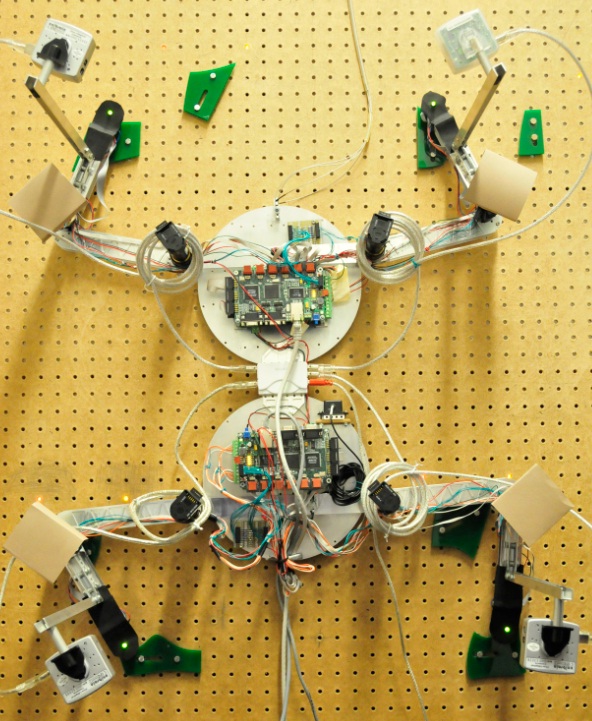 As
the name clearly suggests, we are talking about robots that can climb walls. The
concept of robots is not new, but the real improvement in this field happened in
the last decade when the scientists decided to go beyond making robots that can
just shake their head, hands, and legs. They are making robots than can
climb the walls and do what a machine can do i.e. minimizing the human
efforts. As
the name clearly suggests, we are talking about robots that can climb walls. The
concept of robots is not new, but the real improvement in this field happened in
the last decade when the scientists decided to go beyond making robots that can
just shake their head, hands, and legs. They are making robots than can
climb the walls and do what a machine can do i.e. minimizing the human
efforts.
The
climbing robot needs to be lightweight and it should easily adhere to the
vertical surface. If it lacks either of the criteria it is going to fall down.
Many
locomotive principles were proposed in order to make the vertical movement easy
and fall-free, namely magnetic force, suction force, thrust force and gripping
force type. But after a lot of research and mechanical findings, the vacuum
type principle was found most suitable in which the legs/hands of a robot can
act as vacuum ducts and they can stick to the walls easily.
So,
what's the point of a wall climbing robot? It minimizes the human effort
because of its small size and non-human body. It is designed to operate in
those places where the direct access by a human being can be very dangerous and
expensive.
Here
are some areas of application:
- Inspection of bridges.
- Transportation of goods and loads inside the buildings.
- Testing in industrial structures such as power plants and pipelines.
- For security purpose like reconnaissance in
anti-terrorist activities.
- Cleaning operations in tall buildings, ship hulls and boiler walls.
If
you don't want to give your job up to a robot just yet, you can always consider
gecko
gloves!
image credit
| 


 Re: Wall Climbing Robots


