3D Printing Blog

3D Printing

Wondering what's new with additive manufacturing? Check out this blog!

Previous in Blog: Start-up Raises $23 Million to 3D Print Sports Cars  
Close
Close
Close
3 comments
Rate Comments: Nested

Additive Manufacturing: Advantages and Disadvantages

Posted October 06, 2019 12:01 AM by ahorner_22

As technology is changing, there are many new manufacturing processes that can elevate operations. Additive manufacturing is completely changing traditional practices while also saving time and money in the process.

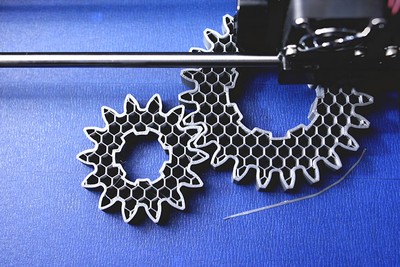
Additive manufacturing, also referred to as 3D printing, is a process that takes a digital design and creates a tangible object. CAD software is used to create a design that is uploaded into an additive machine. This machine is then able to produce an object layer by layer with the use of heat lasers or electron beams.

Many industries are working with additive machines due to advantages with customization, durability, and lightness. One of the most important advantages around additive manufacturing is its allowance for mass customization.

Another benefit is that stronger parts can be produced. An object can be formed from one whole entity rather than an assortment of various pieces. This eliminates “stress points” that non-additive parts contain.

Reliability and convenience are a considerable upside for additive manufacturing. This method allows for the reduction of traditional manufacturing. A specific part can be produced instantaneously.

While many advancements are happening in additive manufacturing, it still has its disadvantages. One of the disadvantages is the limitations when it comes to the size of the object being produced.

Speed is much faster than outsourcing and waiting for a shipment to arrive. However, speed within the machine itself is rather slow when manufacturing the object itself.

While investing in additive manufacturing, the upfront cost of the equipment is expensive. While the payout is cost efficient, the initial investment isn’t.

While additive manufacturing may be costly and offer limitations, it is a highly specialized process that can’t be found anywhere else. This is advancing the way the manufacturing process works by bringing efficiency and adaptability to many different industries.

Reply

Interested in this topic? By joining CR4 you can "subscribe" to
this discussion and receive notification when new comments are added.
Guru

Join Date: Jul 2017
Posts: 520
Good Answers: 14
#1

Re: Additive Manufacturing: Advantages and Disadvantages... Cat Replication

10/07/2019 4:16 AM

Replication Leverage and Cast Iron Cats

First, your post is an excellent introduction and initial description
of direct additive manufacturing as it is widely being used today.
Thanks for composing it. I would like to also explore something that
expands the horizon for those who cannot afford additive manufacturing
as you describe it because the commercial machines may not produce parts
in the materials required or in the sizes used at an acceptable cost.
Some manufacturers can greatly leverage the technology if they consider
additive manufacturing not as a means for generating the part itself but
as means of manufacturing molds, tools, and dies for parts using a concept
I call "replication leverage."

As you correctly observe:
"One of the disadvantages is the limitations when it comes to the size of
the object being produced."

And you additionally note that:
"However, speed within the machine itself is rather slow when
manufacturing the object itself."

Manufacturing feasibility is highly sensitive to both of these and many
manufacturers may find that the slow creation of each part is prohibitive
if they must use additive manufacturing to create a large number of the
same part for each item or for a large number of items containing the part
or both. Now a large number of manufacturers use additive manufacturing
for prototype development only. They get happy with a part they produce
using additive manufacturing and then they send the data they used off to
a mold or die maker and purchase a high dollar custom die which can produce
the part required by the item to be sold using classical, high-volume,
manufacturing techniques rather than additive manufacturing.

What I am proposing to these manufacturers is that they consider filling
that role of die maker for themselves. As an admittedly targeted example
lets suppose I am a manufacturer of rectangular cast iron stoves with
fancy dimensional detail in the 20"x16" cast iron front door of my stove.
Traditionally, I have hired wood carvers to carve a full sized wooden
replica of the door with all the detail that my artists draw for them on
the face of that wooden door. I then use the wooden door as a mold for
damp greensand to get that pattern replicated in the mold for the cast iron
door. I look at the possibility of direct additive manufacturing of the
door and immediately discard the thought because of the cost of the 3D
printer which I would need to produce a 20" wide object. I note the two
days it would take to 3D print each door. I look at the metallurgy of
the sintered metal the 3D printer uses and wonder if it will hold up as
well as my cast iron doors do. I cross this new technology off of my list
of purchases and guffaw at anyone who proposes it to me from then on
because 3D printed stove doors fail all three tests. Failing any one test
excludes the additive manufacturing technique from helping me produce the
stove doors on the stoves I sell as part of my business.

I have made a big error. I can, instead of producing the stove door directly
with additive manufacturing think of it as more like the woodcarvers I hire.
I can buy a 3D printer which produces a plastic part with a five inch square
active area for not tens of thousands but a few hundred dollars. I can then
produce four inch square parts with dovetail or tongue and groove or dowels
and holes on their edges. I can plot plastic parts with the elaborate detail
and assemble 5x4 of them on a piece of plywood with screws and/or glue to make,
not the door itself, but the template to be used at the bottom of a box I will
fill with green sand to form the detail of the door in the traditional cast
iron forming process. I can now use CAD to produce mix-and-match detail parts
for pattern diversity and retain my original cast iron material for my product.
My artists now get to use software to generate their art, they live in some
artist's heaven somewhere in Santa Fe and they send me their work product as
email attachments. I plot and assemble the mold subassemblies myself in far
less time than it took my woodcarvers to produce it on 3D printers which I
now run overnight if I want to manufacture some new design from my artists.
I have also started doing some of the artwork myself to further reduce the
turnaround time for doors customized for particular purchasers, some of whom
have provided me with digital images of their cat who sleeps in front of the
stove. Now the cat also appears in the dimensional artwork on the stove door
for far less cost than would have been required for the woodcarving alone.
_______________
thewildotter

Reply
Member

Join Date: Apr 2020
Posts: 7
#2

Re: Additive Manufacturing: Advantages and Disadvantages

04/18/2020 10:31 AM

I don't think AM should be compared with certain other manufacturing processes. Its use is completely unique and offers a means for manufacturing parts that cant be manufactured in any other way.

Its aim is to manufacture specialized and geometrically complex parts of high value. Other manufacturing processes with similar aims are inferior to AM as they have high material waste and long manufacturing lead times (largely due to tool and fixture design and development).

Currently, in my opinion, the only real barrier to full adoption of metal AM in high-value industries is the lack of process understanding and historical quality data.

Reply
Participant

Join Date: Jun 2020
Posts: 2
#3

Re: Additive Manufacturing: Advantages and Disadvantages

10/09/2020 5:06 AM

no matter what development we got, we also hurt the earth. But at the same time, we enjoy the benefit of technology development.

Reply
Reply to Blog Entry 3 comments
Copy to Clipboard

Users who posted comments:

DuncanWilliam (1); songshun (1); thewildotter (1)

Previous in Blog: Start-up Raises $23 Million to 3D Print Sports Cars  

Advertisement