I was asked by to look into our power bill why the KW being used seemed to be so high relative to our production level. So I built a meter map of all the meters in the plant and a diagram of where those distribution points are fed from and the downstream equipment being fed.
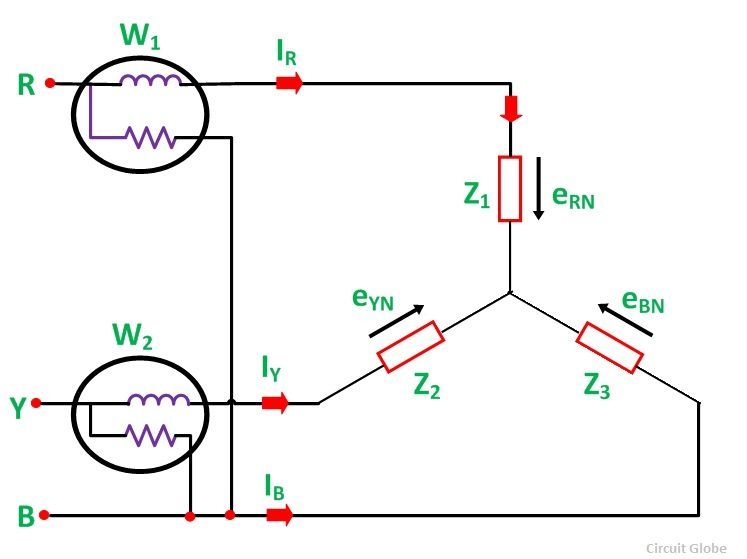
What I found was our main service from utility had only (2) CT's and (2) VT's on power pole. Our incoming power is 13.8KV and feeds 3 main transformers in our plant (2) 12.5MVA's and (1)5MVA transformer. Each of these units had a secondary meter on its load side. Then each distribution breaker also had a meter for loads it supplied.
If I start with meters on distribution breakers and add them all together and read these meters back up to the main that fed them I don't really have any internal issue they are typically within 1% of what the supply meter shows.
But when I add up the meters for the main transformers above and compare them to the utility bill the Utility Bill is almost always 350,000 - 450,000KW a month higher even after I even increase my meters by 3% for any Iron and I2R losses in the transformer even though I don't expect these to be greater than 1-1.5%
So considering the power company's metering is only looking at current on 2 lines and only using 2 PT's as well. I have been arguing with them about the way their metering is set up. We just had them install a new meter in series with new metering CT's and VT's this time on 3 phases / lines.
My question to you guys is how off could recorded power be if power company was using just 2 CT's and PT's? Even though we operate many 3 phase loads with largest loads being 3000HP Could they have been reading an imbalance leg with higher current thus calculating our power incorrectly by this magnitude.
The irritating part is I got contacted by them today their meter team for got to pull the CT shorts on new metering so I have to do another power outage for them.


 4
4 3 Phase Utility Power Metering
 Re: 3 Phase Utility Power Metering


Good Answers:
"Almost" Good Answers: