Previous in Forum: Commutation Compensation Winding in DC Motor   Next in Forum: Co2 What?
Close
Close
Close
26 comments
Rate Comments: Nested
Member

Join Date: Oct 2018
Posts: 9
Good Answers: 1

Dry Type Transformer Failure

10/23/2018 3:33 PM

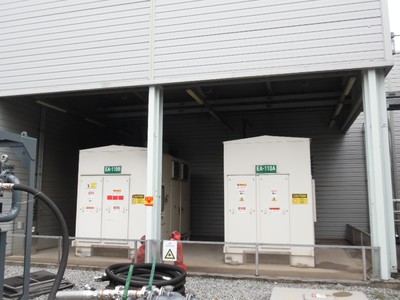
I have a situation where a vendor is refusing to provide warranty repair for a failure of transformer after 15 months in operation - 2000KVA 6.6KV Delta/330VAC Delta-Wye Dual secondary Dry type VPI transformer in a NEMA 3R forced air cooled enclosure.

suggesting customer did not follow cleaning recommendations every 60 days (Customer had good house keeping and performed cleaning every 90 days instead). causing dirt built up.

Customer maintenance engineers noticed flash over/arcing from phase 3 Primary terminals to enclosure steel (distance from winding terminal to enclosure steel measured to be less than 6 inches. Other units at the same site had 3M, 130C 15KV insulation tape on HV primary terminals. ( See photos)

Over current relays on transformer primary tripped the unit.

Attached photos Can you provide your opinion about proximate cause of failure?

Photo Un-insulated HV Terminal & Insulated HV Terminal

Arcing between HV terminal and enclosure door

Register to Reply
Interested in this topic? By joining CR4 you can "subscribe" to
this discussion and receive notification when new comments are added.

Good Answers:

These comments received enough positive votes to make them "good answers".

"Almost" Good Answers:

Check out these comments that don't yet have enough votes to be "official" good answers and, if you agree with them, vote them!
Guru

Join Date: Mar 2007
Location: by the beach in Florida
Posts: 33392
Good Answers: 1817
#1

Re: Dry type Transformer failure

10/23/2018 4:04 PM

Arcing can have many causes...it's really hard to identify the cause without a complete forensic investigation...even then the results may be inconclusive....A voltage monitor with readout at the time of failure and leading up to it, may be able to shed some light, and a video of the failure would be ideal...Moisture may be a contributing factor in some cases, so particular attention to this factor is necessary...

__________________
All living things seek to control their own destiny....this is the purpose of life
Register to Reply
3
Guru
Engineering Fields - Electrical Engineering - Been there, done that. Engineering Fields - Control Engineering - New Member

Join Date: Dec 2008
Location: Long Island NY
Posts: 15602
Good Answers: 982
#2

Re: Dry type Transformer failure

10/23/2018 4:27 PM

The manufacturer recommended a specific maintenance protocol. You violated this protocol and thus negated any warranty. You now own a dead transformer. Fire the bean counter that changed the maintenance protocol and purchase a new transformer with their salary.

At the same time, a substation transformer with a cleaning protocol seems like a poor choice of transformers. Particularly one requiring cleaning six times a year. That is a lot of scheduled downtime.

__________________
"Don't disturb my circles." translation of Archimedes last words
Register to Reply Good Answer (Score 3)
Guru

Join Date: Oct 2008
Posts: 42355
Good Answers: 1693
#3

Re: Dry type Transformer failure

10/23/2018 5:42 PM

Redfred is correct. The customer violated the terms of the warranty on the 61st day after they had accepted and commissioned the transformer.

The customer is at fault, period.

If they (customer) had negotiated a longer cleaning interval with the supplier, IN WRITING, signed by both parties, then and only then would the supplier be liable.

Register to Reply
Member

Join Date: Oct 2018
Posts: 9
Good Answers: 1
#12
In reply to #3

Re: Dry type Transformer failure

10/24/2018 1:36 PM

Hello redfred and lyn,

In lawyers terms you both may be right that on 61st day the customer violated the terms of warranty.

This did not spell out in language of warranty terms as such but in the instruction manual of Rectifier - transformer system it said following giving leeway to plant engineer to determine the maintenance/cleaning frequency. 60 days cleaning and inspection was recommendations NOT requirement.

Periodic preventive maintenance will extend the life of the equipment and reduce thenecessity of shutdown due to component failure. While high grade components are utilizedand operated in a conservative manner, environmental conditions vary in the various plantsand the frequency of maintenance should be determined by the Plant Engineer. A minimum shutdown for total preventative maintenance is every sixty (60) days for cleanup and inspection is recommended. This should be performed under the direct supervision of a qualified person designated by the Plant Engineer.

Register to Reply Score 1 for Good Answer
Guru
Technical Fields - Technical Writing - New Member Engineering Fields - Piping Design Engineering - New Member

Join Date: May 2009
Location: Richland, WA, USA
Posts: 21017
Good Answers: 795
#4

Re: Dry type Transformer failure

10/23/2018 6:35 PM

The lawyers' forum, CR5, is just down the hall.

__________________
In vino veritas; in cervisia carmen; in aqua E. coli.
Register to Reply Score 1 for Good Answer
Guru

Join Date: Apr 2007
Posts: 577
Good Answers: 10
#5

Re: Dry type Transformer failure

10/23/2018 11:04 PM

I always prefer to use oil immersed type of transformer. Dry type of transformer are difficult to maintain and in most of the cases it always fail. My plant had a dry type transformer rated at 800KVA fail without any warning and even the plant are not in operation. I just replace it with the spare oil immersed transformer.

__________________
Management is just like a bunch of Monkey sitting on a tall tree. Some climb to the highest branch and some at the lowest branch. The highest Monkey look down and see a lot of happy faces but the lower Monkey looks up and see nothing but all the....
Register to Reply
2
Guru
New Zealand - Member - Kiwi Popular Science - Weaponology - New Member Engineering Fields - Power Engineering - New Member Engineering Fields - Electrical Engineering - New Member

Join Date: Sep 2006
Location: Auckland, New Zealand
Posts: 8777
Good Answers: 376
#6

Re: Dry type Transformer failure
10/23/2018 11:13 PM

Am I missing something here, why is the H3 buswork and terminals not insulated if everything else is supposed to be?

I take it this was the point it arced over (it's a little hard to see from the photos)? Did it track across the transformer surface?

What environment is this in that dust is such an issue, and is the dust conductive?

Given the limited information I would suspect dust build up, the dust absorbing moisture resulting in a tracking issue and resulting fault current.

Can you provide more information.

__________________
jack of all trades
Register to Reply Good Answer (Score 2)
Member

Join Date: Oct 2018
Posts: 9
Good Answers: 1
#10
In reply to #6

Re: Dry type Transformer failure

10/24/2018 1:20 PM

Hello Jack of all trade ...

Thanks for your response. The H3 connection is phase 3 - 6.6 KV Primary terminal the winding terminal end to H3 is tapped with 3M insulating tape but H3 connection is left uninsulated. This is our question to the manufacturer.

The transformer coil end termination in the failed unit was not wrapped by 3M 15KV tape which is only 150 mm less than 6 inches away from transformer enclosure which caused corona jump from 6.6KV terminal to transformer metal enclosure as you can see on the black oxidized surface of the enclosure door. It jumped in the air not tracked over the transformer.

Register to Reply
Guru
Engineering Fields - Electrical Engineering - Been there, done that. Engineering Fields - Control Engineering - New Member

Join Date: Dec 2008
Location: Long Island NY
Posts: 15602
Good Answers: 982
#17
In reply to #10

Re: Dry type Transformer failure

10/25/2018 10:06 AM

Unless a transformer manufacturer employee was the installer or they contracted the installer the installation technique has no bearing on the transformer warranty.

From what I see it does look like the transformer was faulty but a much more in-depth, hands-on forensic analysis of this transformer and the feeds into it is required to say for certain what actually happened. For all I know, everything inside this box may have been built to code but a nearby lightning strike blew this part of the transformer to pieces because a counterfeit lightning arrester was installed elsewhere.

__________________
"Don't disturb my circles." translation of Archimedes last words
Register to Reply
Member

Join Date: Oct 2018
Posts: 9
Good Answers: 1
#19
In reply to #17

Re: Dry type Transformer failure

10/25/2018 1:05 PM

Redfred - The transformer is part of Rectifier assembly the complete assembly Rectifier-Transformer and associated surge protection, harmonic filters and rectifier controls was manufactured and assembled by same manufacturer. There is surge arresters at HV terminals of the transformer input connections.

Register to Reply
Guru
Engineering Fields - Electrical Engineering - Been there, done that. Engineering Fields - Control Engineering - New Member

Join Date: Dec 2008
Location: Long Island NY
Posts: 15602
Good Answers: 982
#21
In reply to #19

Re: Dry type Transformer failure

10/25/2018 3:26 PM

Since the rectifier-transformer manufacturer is standing by their (IMHO) absurd but documented maintenance procedure to not keep you as a happy customer, you should follow their advice. Stop being their customer. Find another manufacturer with a product that does not require such frequent downtime to maintain your operations. I don't lose electric power to my home every two months.

__________________
"Don't disturb my circles." translation of Archimedes last words
Register to Reply
Member

Join Date: Oct 2018
Posts: 9
Good Answers: 1
#11
In reply to #6

Re: Dry type Transformer failure

10/24/2018 1:36 PM

There was no specific test of conductivity of dust performed. As such the plant housekeeping is excellent with transformer enclosure sitting on large finished concrete pad under a shed roof. But being outdoor it may collect dust flying in the air. See photo.

Register to Reply
Power-User

Join Date: Jan 2010
Location: Hyderabad
Posts: 343
Good Answers: 22
#7

Re: Dry type Transformer failure

10/24/2018 12:00 AM

How can there be uninsulated and exposed parts in dry type transformer, Is it allowed?

Do you have an enclosure surrounding the transformer to prevent unauthorised entry so that no one gets electrocuted?

How about rodents, insects etc., is the enclosure designed to prevent entry of these?

Probably the procurement spec is poorly written to allow entry of such a poor design transformer in to the plant.

__________________
Raghunath
Register to Reply
Member

Join Date: Oct 2018
Posts: 9
Good Answers: 1
#9
In reply to #7

Re: Dry type Transformer failure

10/24/2018 1:07 PM

Hello Raghun - Transformer is housed in NEMA 3R enclosure with louvers and filters for forced air cooling. The NEMA 3R enclosure is sitting under a canopy shed roof about 10 Ft higher than transformer enclosure.

The transformer HV (6.6KV) terminals some are insulated and some are not this is our issue with the manufacturer. The distance to the uninsulated HV terminal and enclosure surface is barely 6 inches.

If you can see the enclosure door the arcing point is clearly visible on the door of enclosure with black oxydation discoloration.

Register to Reply
Power-User

Join Date: Sep 2007
Location: Brampton, ON, Canada
Posts: 218
Good Answers: 3
#8

Re: Dry Type Transformer Failure

10/24/2018 6:42 AM

I find it very hard to believe that this transformer failed because of dirt build up in 15 months. From the pictures provided you can see the other transformers in the plant do not have any significant dust build up on them at all. It's equivalent to saying the suspension failure in your car was due to you not changing the engine oil on time.

Register to Reply
Guru
New Zealand - Member - Kiwi Popular Science - Weaponology - New Member Engineering Fields - Power Engineering - New Member Engineering Fields - Electrical Engineering - New Member

Join Date: Sep 2006
Location: Auckland, New Zealand
Posts: 8777
Good Answers: 376
#13
In reply to #8

Re: Dry Type Transformer Failure

10/24/2018 2:40 PM

Agreed, given the available information I find it very hard to believe that dust build up alone was the cause unless perhaps there are serious humidity or air pollution issues.

I would advise ignoring cleaning and potential dust buildup as the problem for the moment and go back and re-evaluate the situation (a reality check if you will). I suspect something else is the issue (such as creepage and clearance issues on uninsulated live terminals).

__________________
jack of all trades
Register to Reply Score 1 for Good Answer
Guru

Join Date: Jul 2016
Posts: 1369
Good Answers: 105
#14

Re: Dry Type Transformer Failure

10/24/2018 7:02 PM

The air gap allowed between a phase conductor and ground is determined by the BIL rating of the transformer primary. At 6.6kV, in the 8.7kV class, it should be designed for 45kV if designed to US Standards. At that rating, surge arresters are ALWAYS applied, which then will protect the insulation. Your other equipment in the system is typically rated for 95kV BIL, so your transformer is the weak link. In recent years, VPI transformer would typically be designed for 95kV, to ensure insulation coordination.

The 95kV BIL that your wiring connections should be designed to results in air & surface clearances between 6" and 7". For these levels, there normally is no distinction between effectively grounded or ungrounded operation. However, your installation could deliver higher than expected voltages if the grounding point for the 6.6kV system has significant reactance/resistance, allowing line to ground voltage to rise to line to line voltage.

So unless you find some caveat in the supply documents requiring a solidly grounded system at 6.6kV, which already indicates the equipment supplier is working way outside their comfort zone, I think your event was solely a result of poor design.

Register to Reply Score 1 for Good Answer
Member

Join Date: Oct 2018
Posts: 9
Good Answers: 1
#15
In reply to #14

Re: Dry Type Transformer Failure

10/24/2018 9:27 PM

6.6 KV Primary is Delta connected line to line voltage (This project is in Korea) so I am not sure if the voltages could be higher than 6.6KV

Register to Reply
Guru

Join Date: Jul 2016
Posts: 1369
Good Answers: 105
#16
In reply to #15

Re: Dry Type Transformer Failure

10/25/2018 12:43 AM

During normal conditions, the voltage to the case is 3.8Kv. If you don’t have a good solid ground for that power system, a ground fault on Phase 1 or 2 will elevate Phase 3 to 6.6kV to ground.

Sharp edges or corners close to the H3 connection can also make it easy to ionize the air and flash over. All of these conditions are to be expected in normal service, and should have been accounted for in the transformer mechanical design.

check your BIL rating, you should see a 95kV for your equipment class. If not, surge arresters were required to ensure the weak point is the arrester, not an air gap in the terminal box

Register to Reply
Member

Join Date: Oct 2018
Posts: 9
Good Answers: 1
#20
In reply to #16

Re: Dry Type Transformer Failure

10/25/2018 1:08 PM

rwilliams - The transformer primary if 6.6 KV Delta connected so grounded or otherwise there is 6.6KV across each phase. Additionally there are surge arresters provided at incoming terminals

Register to Reply
Guru

Join Date: Jul 2016
Posts: 1369
Good Answers: 105
#23
In reply to #20

Re: Dry Type Transformer Failure

10/25/2018 11:31 PM

The flashover occurred between H3 and ground. One possible explanation for a sudden increase in potential to Earth/Ground between H3 and your metal case is a ground fault on your 6.6kV system phase 1 or two. This momentarily elevates the potential of H3 to Ground/Earth from nominal 3.8kV to 6.6kV rms, with a full wave offset possible, as described in BIL test criteria.

Switching surges, other events outside the transformer, as well as an event from a failure inside the transformer could have triggered the event. In all cases, this sort of failure is far more likely to be a design failure, as the transformer installation should be well protected by design from external events.

I missed where you mentioned there were surge arresters. One of the key design parameters for surge arresters is to be connected as closely as practical to the transformer windings, to reduce the potential of the reflected wave as the impulse encounters the relatively high impedance of the transformer windings. The surge arrester rating should be confirmed, and you need to check whether they conducted enough energy to fail, assuming not gap type arresters, but MOV or thyrite type.

The arresters should have been the fail point long before you flash over in the terminal box.

Register to Reply
Guru

Join Date: Oct 2012
Location: 100 miles North from the World Center
Posts: 879
Good Answers: 42
#18

Re: Dry Type Transformer Failure

10/25/2018 11:43 AM

In my opinion, at 6.6 kV and 6 inches distance no arcing is possible. Let's say was a switching overvoltage of 50 kV peak . This could be the breakdown voltage at 50/3=17 mm distance.

At 6 inches it has to be about 300 kV for air break down.

I think it was a forgotten object-like a dust cloth -between the door and the 6.6 kV bare bar.

__________________
Julius
Register to Reply
Guru

Join Date: Jul 2016
Posts: 1369
Good Answers: 105
#22
In reply to #18

Re: Dry Type Transformer Failure

10/25/2018 11:11 PM

Equipment in this class is routinely designed for 95kV BIL, and this 6" clearance is marginal or short at best. The shape of the impressed wave is important, rate of rise adds to the ionization potential at the flashover point.

The development of the test standard that meets the BIL level at 95kV is treated in ANSI/IEEE C57.12.01, C57.12.10

There is an interesting discussion of this here: https://w3.usa.siemens.com/us/internet-dms/btlv/PowerDistributionComm/PowerDistribution/docs_MV/TechTopics/ANSI_MV_TechTopics47_EN.pdf

These standards have been empirically developed, based on many field failures, so more than some theoretical design standard developed in a laboratory somewhere.

Register to Reply
Power-User

Join Date: Jan 2010
Location: Hyderabad
Posts: 343
Good Answers: 22
#24
In reply to #18

Re: Dry Type Transformer Failure

10/26/2018 12:38 AM

I too think so.

It is some foreign object or a rodent that managed entry in to the enclosure is responsible for flashover.

__________________
Raghunath
Register to Reply
Guru
Engineering Fields - Electrical Engineering - Been there, done that. Engineering Fields - Control Engineering - New Member

Join Date: Dec 2008
Location: Long Island NY
Posts: 15602
Good Answers: 982
#25
In reply to #24

Re: Dry Type Transformer Failure

10/26/2018 10:08 AM

This sounds like the most plausible source of flashover. A foreign body or rodent will still mean no warranty repair.

__________________
"Don't disturb my circles." translation of Archimedes last words
Register to Reply
Guru
United Kingdom - Member - Indeterminate Engineering Fields - Control Engineering - New Member

Join Date: Jan 2007
Location: In the bothy, 7 chains down the line from Dodman's Lane level crossing, in the nation formerly known as Great Britain. Kettle's on.
Posts: 32175
Good Answers: 839
#26

Re: Dry Type Transformer Failure

08/21/2024 8:37 AM

Found it: <...performed cleaning every 90 days instead...>. That's the cause of the failure to <...warranty repair...>.

__________________
"Did you get my e-mail?" - "The biggest problem in communication is the illusion that it has taken place" - George Bernard Shaw, 1856
Register to Reply
Register to Reply 26 comments

Good Answers:

These comments received enough positive votes to make them "good answers".

"Almost" Good Answers:

Check out these comments that don't yet have enough votes to be "official" good answers and, if you agree with them, vote them!
Copy to Clipboard

Users who posted comments:

7anoter4 (1); jack of all trades (2); lyn (1); Poison (1); Power2engineer (7); PWSlack (1); raghun (2); redfred (4); rwilliams (4); Simon Wan (1); SolarEagle (1); Tornado (1)

Previous in Forum: Commutation Compensation Winding in DC Motor   Next in Forum: Co2 What?

Advertisement