Previous in Forum: Analyzer Fast Loop Flow Calculation.   Next in Forum: Test & Measurment
Close
Close
Close
17 comments
Rate Comments: Nested
Anonymous Poster

Helium

01/07/2008 10:56 AM

Why does helium show up as LEL on a gas monitor?

Reply
Interested in this topic? By joining CR4 you can "subscribe" to
this discussion and receive notification when new comments are added.

"Almost" Good Answers:

Check out these comments that don't yet have enough votes to be "official" good answers and, if you agree with them, vote them!
Guru
Engineering Fields - Electrical Engineering - New Member

Join Date: Sep 2006
Location: El Lago, Texas, USA
Posts: 2639
Good Answers: 65
#1

Re: Helium

01/07/2008 11:43 AM

I don't know, but when I inhale helium and talk it makes me LOL.

Reply Score 1 for Off Topic
Guru

Join Date: Dec 2005
Location: Etats Unis
Posts: 1871
Good Answers: 45
#8
In reply to #1

Re: Helium

01/08/2008 12:22 AM

You think that's funny, try sulfur hexafluoride. It's about 5x denser than air.

__________________
The hardest thing to overcome, is not knowing that you don't know.
Reply Off Topic (Score 5)
Guru
Engineering Fields - Electrical Engineering - New Member

Join Date: Sep 2006
Location: El Lago, Texas, USA
Posts: 2639
Good Answers: 65
#9
In reply to #8

Re: Helium

01/08/2008 10:16 AM

I'm allergic to sulfur - I'll stick with my nitrous oxide.

Reply Off Topic (Score 5)
Guru

Join Date: Dec 2005
Location: Etats Unis
Posts: 1871
Good Answers: 45
#11
In reply to #9

Re: Helium

01/09/2008 12:27 AM

It is chemically inert and odorless. Doesn't support combustion or life. Also, fairly expensive.

__________________
The hardest thing to overcome, is not knowing that you don't know.
Reply Off Topic (Score 5)
Guru
United Kingdom - Member - Indeterminate Engineering Fields - Control Engineering - New Member

Join Date: Jan 2007
Location: In the bothy, 7 chains down the line from Dodman's Lane level crossing, in the nation formerly known as Great Britain. Kettle's on.
Posts: 32175
Good Answers: 839
#2

Re: Helium

01/07/2008 11:46 AM

Is it truly the LEL alarm, or is it really a 'low oxygen' alarm?

__________________
"Did you get my e-mail?" - "The biggest problem in communication is the illusion that it has taken place" - George Bernard Shaw, 1856
Reply
Guru

Join Date: Jul 2007
Location: 30°30'N, 97°45'W, Elv: 597 ft.
Posts: 2410
Good Answers: 10
#3

Re: Helium

01/07/2008 12:22 PM

We used to test fore lines with a helium leak detector using mass spectrometry. The angle which the helium passed through the device at a molecular level caused a positive indication of a leak. The internal environment was under a high vac and the helium administered to the external so as to be pulled in to system if a leak was present. Forgive my poor description.

However we could also saturate a joint (weld or mechanical) with IPA which would also display as a leak, though with less sensitivity. It seems that the IPA would slip through the moly shield at a similar angle to the He molecules.

You may be experiencing similar.

__________________
I never apologize. I'm sorry that's just the way I am.
Reply
Power-User
Safety - Hazmat - Environmental, Safety & Health Manager Hobbies - Musician - Theremin (That about says it all...)

Join Date: May 2006
Posts: 289
Good Answers: 19
#4

Re: Helium

01/07/2008 3:29 PM

Guest,

More information is needed in order to answer your inquiry.

Are you monitoring some sort of closed system, or a "habitable" space?

What kind of gas monitor are you using, and what concentration of helium are you dealing with? (PPM vs.%).

Are you using a combustible gas meter, employing a catalytic combustion filament sensor, or some sort of electrochemical or semiconductor sensor based instrument?

The vast majority of combustible gas meters employ a catalytic combustion sensor.

Inside the sensor, there are two filaments each in its own compartment. The "sensing" filament is either a catalytic "bead", or a coil of wire coated with a catalyst. This catalyst facilitates the combustion of very low concentrations of gases or vapors. The other filament has no catalytic bead or coating, and is referred to as the compensating filament – it serves to compensate for ambient temperature and humidity.

Here is how the typical LEL meter works:

When the LEL meter is operating, battery current flows to the LEL sensor through a Wheatstone bridge circuit, and heats both filaments to a high temperature. When "sample" air diffuses into the sensor and comes into contact with the heated catalytic sensor filament, gases and vapors that can be oxidized by the catalyst will combust on that filament, causing its temperature to rise (but not on the non-catalytic filament). The increase in temperature of the catalytic filament caused by the combustion causes an increase in resistance, and decrease in current flow as compared to the compensating filament. This variation in current is converted to a meter reading by the Wheatstone bridge.

Catalytic combustion sensors can become "poisoned" or "fouled" if exposed to atmospheres containing airborne silicones, silicates, or organic heavy metals .Such materials form fume particulates that can settle on, and foul the catalyst, thereby decreasing the sensors performance.

Is your gas monitor responding properly to calibration gas? How about "zero air"?

-------------------------------------------------------------------------------------------------------------------------------

Helium is non-flammable and does not support combustion, and to the best of my knowledge, would not cause any increase in temperature at the catalytic sensor filament, or cause an LEL meter to display a positive reading.

As PWSlack pointed out/alluded to, enough helium could cause a low oxygen condition, displacing the oxygen in an enclosed space.

How much helium are you dealing with, and what is the make-up of the remaining "air" in your test situation?

-------------------------------------------------------------------------------------------------------------------------------

You would probably get the best answer to your question by contacting the manufacturer of your particular instrument, and speaking to their technical support people.

Over more than 20 years of using literally hundreds of different types of industrial hygiene monitoring & sampling equipment, I have found these people to be a great resource; They know their equipment inside and out, so to speak, and have saved the day more than once when I was in a pinch.

====================================================================

Just my $0.02...

Reply Score 1 for Good Answer
Guru

Join Date: Jul 2007
Location: 30°30'N, 97°45'W, Elv: 597 ft.
Posts: 2410
Good Answers: 10
#5

Re: Helium

01/07/2008 3:53 PM

5.3.1 Mass Analysis by Ion Time-Of-Flight

(from: http://www.dsbscience.com/freepubs/forensic_intern/node45.html)

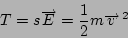
All singly ions accelerated by a uniform electric field are given the same kinetic energy, which is given by

where s is the acceleration distance, is the electric field, m is the ion mass and v is the velocity. This simple equation shows that though the kinetic energy is the same for all ions (regardless of mass), the velocity is mass dependent. Less massive ions travel faster than more massive ions. If the flight distance is the same for all ions (regardless of mass or velocity), the time between acceleration and detection can be used to calculate the mass of a given ion.

TOF instruments have the advantage of data multiplexing. All ions can be detected as opposed to some of the other mass analysis techniques that filter (remove) unwanted ions. Historically, TOF was generally thought to be of limited analytical use due to the length of flight tube required to achieve adequate mass resolution. However, energy focusing devices such as a reflection or dynamic fields provide much higher resolution than simple, field free flight tubes.

=========

In this type of device there is a shield (moly) of metal with a very small slit through it. The detector is "tuned" to detect Helium by adjusting the distances between the He flight path and the slit, which will allow He (wanted) to pass and the remainder of evacuating atmosphere is allowed to pass or is blocked by shield since the known atmospheric components are not 'in tune' to the slit. As the charged He has a predictable path it passes through the slot and is received as an intensity level through quantification.

Anyway, I bring this up because we found that Isopropyl Alcohol (IPA) was found to have trace amounts within it's makeup appear as a positive hit (some component of the IPA passed through the slit). This became a very important point when tube cleaning was to take place as any pooled IPA within would create tremendous difficulty when testing.

So depending on how you are detecting gas we can further decide why.

__________________
I never apologize. I'm sorry that's just the way I am.
Reply Score 1 for Good Answer
Guru

Join Date: Jul 2007
Location: 30°30'N, 97°45'W, Elv: 597 ft.
Posts: 2410
Good Answers: 10
#7
In reply to #5

correction to my post

01/07/2008 6:37 PM

...the detector is "tuned" to detect Helium by adjusting the distances between the He flight path and the slit, which will allow He (wanted) to pass and the remainder of evacuating atmosphere is allowed to pass or is blocked by shield since the known atmospheric components are not 'in tune' to the slit. As the charged He has...

Should indicate that remaining atmosphere id to pass without detection and helium passes through slit to allow for detection based upon it's known flight path.

__________________
I never apologize. I'm sorry that's just the way I am.
Reply
Guru

Join Date: Jul 2007
Location: 30°30'N, 97°45'W, Elv: 597 ft.
Posts: 2410
Good Answers: 10
#6

Re: Helium

01/07/2008 4:20 PM
__________________
I never apologize. I'm sorry that's just the way I am.
Reply
Guru
Hobbies - DIY Welding - Wannabeabettawelda

Join Date: May 2007
Location: Annapolis, Maryland
Posts: 7940
Good Answers: 458
#10

Re: Helium

01/08/2008 12:06 PM

A decade ago, I used a RGD-90/TC gas sensor in a test setup where this sensor would detect the level of H2 in N2 gas. We were verifying the gas purge capabilities of a battery bottle because the Ag-Zn cells would produce H2 as well as O2. This particular sensor was also sensitive to He in N2 so you could use He to test the system before going "live" with the hydrogen. The plant safety folks get all antsy when you use H2 in a process. Perhaps this sensor is not an LEL sensor but instead a gas level sensor and based on the percentage of the gas, it interprets an LEL? However, I agree with the previous posts that most LEL sensors do use a catalytic process to determine the LEL and it would be peculiar that He causes the LEL indication to change.

Reply
Guru
United States - US - Statue of Liberty - New Member Hobbies - Fishing - New Member

Join Date: Nov 2007
Location: Gone to Alabama with my banjo on my knee...
Posts: 5595
Good Answers: 20
#12
In reply to #10

Re: Helium

01/09/2008 9:22 AM

"...it would be peculiar that He causes the LEL indication to change..."

IMNSHO, it would be BEYOND peculiar. He, being inert, HAS no LEL/UEL, and when we used it in a lab setting (carrier for gas chromatography, H2 flame source, so we had both) we used a special detector called a Helicoil (prob. ™) to measure the flow. Hard to even detect the presence otherwise...

__________________
Veni, vidi, video - I came, I saw, I got it on film.
Reply
Guru
Hobbies - DIY Welding - Wannabeabettawelda

Join Date: May 2007
Location: Annapolis, Maryland
Posts: 7940
Good Answers: 458
#13
In reply to #12

Re: Helium

01/09/2008 9:58 AM

I said peculiar because I don't know anything about the sensor being used to measure the LEL. To say that it wouldn't implies you KNOW that it is some kind of catalytic sensor. We don't know that and it would be irresponsible to simply say that He can't cause the LEL readings to increase. I did not say the the actual LEL increased. There is a distinct difference between an indication and reality. I'm old enough to know you can get burned by this IMNSHO way of thinking. Another possible hypothesis to this situation is that there is another unknown gas being unwittingly introduced into the system when Guest thinks that only He gas is being added. We know precious little about this situation making virtually all comments pure speculation. The information provided by Guest does in no way satisfy any reasonable level of technical rigor.

Reply
Guru
United States - US - Statue of Liberty - New Member Hobbies - Fishing - New Member

Join Date: Nov 2007
Location: Gone to Alabama with my banjo on my knee...
Posts: 5595
Good Answers: 20
#14
In reply to #13

Re: Helium

01/09/2008 10:29 AM

OK, I'll concede the low info level, and also the possibility of another unknown (or at least unnoticed) gas being introduced. But regardless of the type of sensor, He will not (as an inert gas) have an LEL/UEL because it simply...won't...explode. No chemical reaction = no explosion (disregarding, of course fusion...). Then, BIG

__________________
Veni, vidi, video - I came, I saw, I got it on film.
Reply Off Topic (Score 5)
Guru
Hobbies - DIY Welding - Wannabeabettawelda

Join Date: May 2007
Location: Annapolis, Maryland
Posts: 7940
Good Answers: 458
#15
In reply to #14

Re: Helium

01/09/2008 10:38 AM

What about false indications? I am well aware that He will not raise the LEL ever. It can only dilute a potentially explosive atmosphere. What Guest said was that He showed up as an LEL on a gas monitor. That is an indication (not necessarily reality) and one that the scientific community knows is erroneous.

Reply Off Topic (Score 5)
Guru

Join Date: Jul 2007
Location: 30°30'N, 97°45'W, Elv: 597 ft.
Posts: 2410
Good Answers: 10
#16

Re: Helium

01/10/2008 12:01 AM

Guest! OOOOh guest, where are you? You ask us a question and then you run off? Very impolite. Perhaps he's/she's off to register with a user name.

Harumph.

cr3

__________________
I never apologize. I'm sorry that's just the way I am.
Reply
Guru
Hobbies - DIY Welding - Wannabeabettawelda

Join Date: May 2007
Location: Annapolis, Maryland
Posts: 7940
Good Answers: 458
#17
In reply to #16

Re: Helium

01/10/2008 10:13 AM

LOL

But we do have a good time talking amongst ourselves

Reply Off Topic (Score 5)
Reply to Forum Thread 17 comments

"Almost" Good Answers:

Check out these comments that don't yet have enough votes to be "official" good answers and, if you agree with them, vote them!
Copy to Clipboard

Users who posted comments:

bhankiii (2); Brave Sir Robin (4); EnviroMan (2); PWSlack (1); rcapper (2); TexasCharley (5); The JMAN (1)

Previous in Forum: Analyzer Fast Loop Flow Calculation.   Next in Forum: Test & Measurment

Advertisement