Previous in Forum: Buried Tank Design   Next in Forum: Fitting without marking
Close
Close
Close
17 comments
Rate Comments: Nested
Member

Join Date: Jan 2010
Posts: 8

Hydraulic Testing for Piping System

02/19/2010 2:50 PM

Hi All,

I am planning to carry out hydraulic test (Water) for piping system. Hydraulic testing pressure is 280 bar. Could anyone help me on following issue.

1. I know, we have to avoid the entrapped air in the pipe system, How can I minimise air in the system, Do I need to carry out nitrogen purge in the pipe system? Why?

2. During the hydraulic test, do I need to remove PSV, Pressure gauge etc?, If yes, what is technical standard?

Regards

Register to Reply
Interested in this topic? By joining CR4 you can "subscribe" to
this discussion and receive notification when new comments are added.

Good Answers:

These comments received enough positive votes to make them "good answers".

"Almost" Good Answers:

Check out these comments that don't yet have enough votes to be "official" good answers and, if you agree with them, vote them!
2
Guru
Engineering Fields - Piping Design Engineering - Retired Piper

Join Date: Feb 2007
Location: Bayonet Point, Florida
Posts: 635
Good Answers: 61
#1

Re: Hydraulic Testing for Piping System

02/19/2010 4:56 PM

msmroomi,

1. It is NOT called "Hydraulic" Testing for a piping system, It is called "Hydrostatic" Testing.

2. You must include in your piping system some way to remove all compressible vapor (Air, Nitrogen, etc.). The piping system must be completely full of the test water. This means that you have a small (3/4" +/-) vent valve at every high point.

3. After you have completed the Hydro-Test you must remove (drain) all the test water out of the system before you start adding the product fluids or vapors. This means that you have a small (3/4" +/-) drain valve at every low point.

__________________
Do it once and do it right
Register to Reply Good Answer (Score 2)
Anonymous Poster
#3
In reply to #1

Re: Hydraulic Testing for Piping System

02/19/2010 11:05 PM

"at every high point."

unless its a cryo pressure system, in which case you need low points, as I understand it.

Register to Reply
Member

Join Date: Jan 2010
Posts: 9
#2

Re: Hydraulic Testing for Piping System

02/19/2010 11:01 PM

Hi,

I want to suggest one thing that, your venting point should be at highest location. So that all air will removed & you will carryout testing smoothly.You can allow some leakage before to remove the air & then air tight it.

Register to Reply
Anonymous Poster
#4

Re: Hydraulic Testing for Piping System

02/20/2010 2:48 AM

If you are only testing for possible leak then why not use compressed air you can test at much higher pressure and hold that pressure for 24hr to see if this drops I stoped using water years ago because I had a costly accident we did not properly remove all trace of water and had to then shut operation down drain the entire system flush the system cost thousand

Register to Reply Score 1 for Off Topic
Commentator

Join Date: Jan 2006
Location: Western flank of the Pennines in Lancashire England
Posts: 93
Good Answers: 8
#5
In reply to #4

Re: Hydraulic Testing for Piping System

02/20/2010 5:24 AM

If you have ever seen a gas line rip open when being tightness tested on air at 100bar without having first been strength tested hydrostatically you would not make such a suggestion. The energy trapped in a pipeline containing air at this sort of pressure is enormous and a vast amount of air has to vent before the pressure drops low enough for the ripping of the pipe wall to stop. The pipe was damaged for a length of 30m and looked like it had been opened with a can opener. If the test had been done with water the damage would nave been limited to less than a metre.

As far as I know most if not all codes require a hydrostatic strength test before a tightness test as they serve different purposes. The hydrostatic test is used to test the strength of the welding and pipework for gross defects. The tightness test with air is used to check for small leaks. It may be permissible to carry out a strength test using air if the test pressure is less than 250mbar, but a risk assessment would be required.

Referring it IGE/UP/1 edition 2 this shows that if you were to test with air for more than a few minutes it is essential that the temperature of the pipeline is measures at the start of the test and then again at the end of the test as a temperature change of 1Kelvin will be detectable either as a leak or a mysterious rise in pressure. For example a test carried out at 7bar would show a change in pressure of 27mbar for a 1Kelvin change in temperature. The same code also requires long duration tests to be corrected for changes in barometric pressure. I have seen the pressure drop 3 or 4mbar in 5 minutes as a weather front went through.

So please design your pipe system so that you can do a hydrostatic test and keep us all safe.

Regards

Register to Reply
Anonymous Poster
#6
In reply to #5

Re: Hydraulic Testing for Piping System

02/20/2010 5:54 AM

Completely agree. Any pressure testing with gaseous media (air, Nitrogen etc) is fraught with danger simply because of the compresseability of the media.

Just consider a pipe burst- the volume of fluid ejecting out of the opening, its velocity and you will understand it.

I was watchin a year or so back on this aspect where they have shown the test being carried out in UK - as I remember in jet engine testing lab and the damage caused when the system burst. (No physical, since it was done in a few feet thick wall and watched through video cameras)

Register to Reply
Guru
United Kingdom - Member - Indeterminate Engineering Fields - Control Engineering - New Member

Join Date: Jan 2007
Location: In the bothy, 7 chains down the line from Dodman's Lane level crossing, in the nation formerly known as Great Britain. Kettle's on.
Posts: 32175
Good Answers: 839
#14
In reply to #4

Re: Hydraulic Testing for Piping System
02/23/2010 7:27 AM

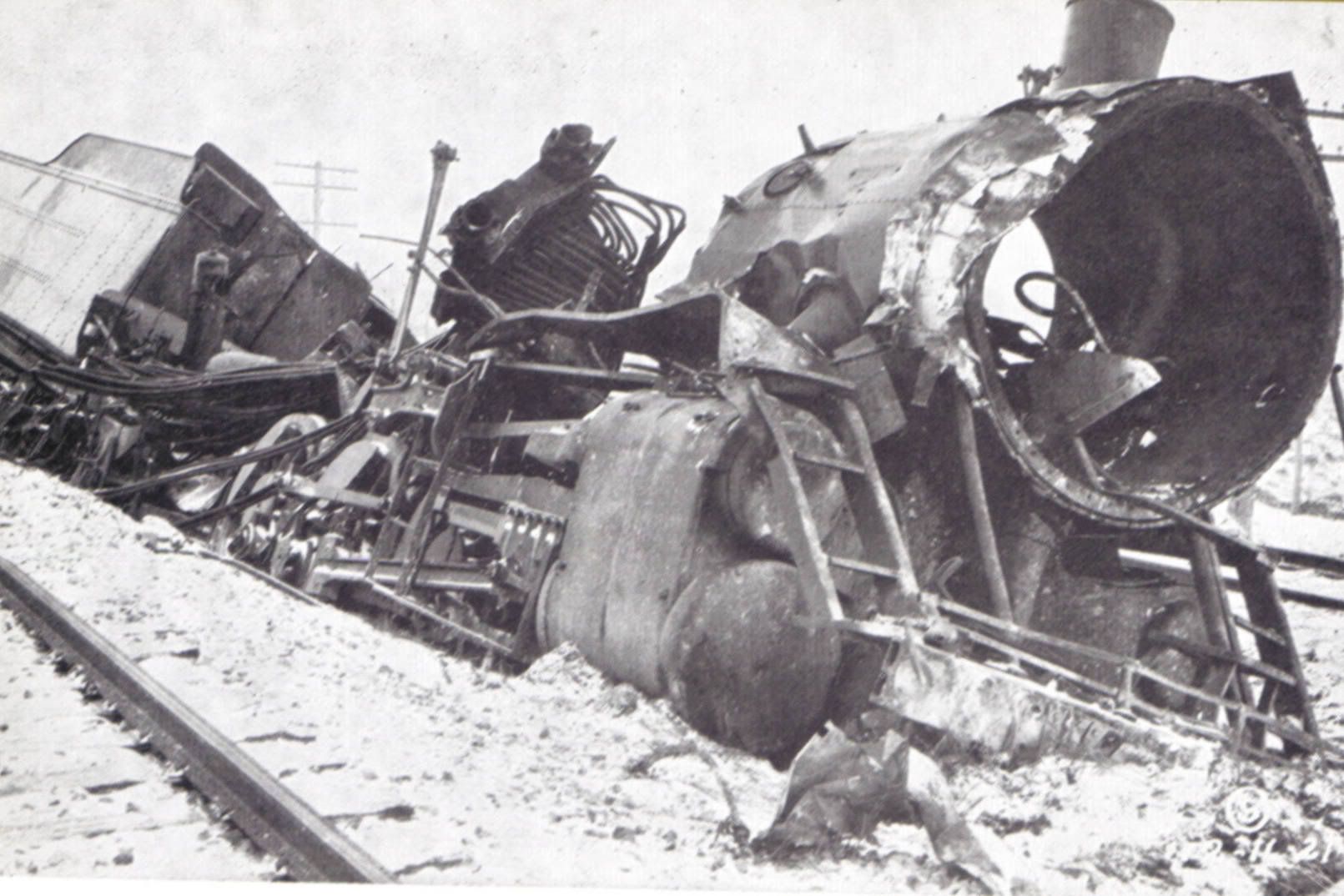
<...why not use compressed air...>

Because when it goes wrong, it's spelled BANG!

__________________
"Did you get my e-mail?" - "The biggest problem in communication is the illusion that it has taken place" - George Bernard Shaw, 1856
Register to Reply
Anonymous Poster
#15
In reply to #4

Re: Hydraulic Testing for Piping System

02/23/2010 9:40 PM

We need some voting system that would indicate a blatantly dangerous and ignorant comment such as this. We shy away from medical type questions because it is believed that any advice given could be dangerous to someone's health, but we allow this sort of dangerous rubbish.

Register to Reply
Associate

Join Date: Jun 2008
Posts: 26
Good Answers: 5
#7

Re: Hydraulic Testing for Piping System

02/20/2010 5:55 AM

Hi msmroomi,

Other posters have already answered the question about removing all the air/vapours from the line under pressure. Nitrogen purging to get rid of the air will not help because then you will have get the nitrogen out of the system!

About removing PSV's, pressure gauges and such. Firstly, the hydrotest is a strength and integrity test of the fabricated piping system and the test pressure is set for this purpose. Any component that is not designed to withstand the test pressure must be removed from or isolated from the system under test. The set pressure of PSV's are usually well below the test pressure so they must be removed or isolated. Similarly for pressure gauges and the like. You will have to review all the instruments and ancillaries to check which must be removed. Any component within the pressure envelop must naturally be specified and selected to resist the hydrotest pressure otherwise you would have a failure somewhere in the system.

What ever you do, please don't do an air test as someone suggested - it is highly dangerous!

Register to Reply Score 1 for Good Answer
Participant

Join Date: Feb 2010
Location: Broussard, LA
Posts: 1
#8

Re: Hydraulic Testing for Piping System

02/20/2010 10:32 AM

You can place a pig in the line to run before the water.

Register to Reply
Guru
Hobbies - DIY Welding - New Member Hobbies - Target Shooting - New Member Engineering Fields - Civil Engineering - New Member United States - Member - New Member

Join Date: May 2009
Location: Red Hook, New York (Mid-Hudson River Valley)
Posts: 4362
Good Answers: 179
#9

Re: Hydraulic Testing for Piping System

02/20/2010 10:48 AM

I strongly suggest that you visit the American Water Works Association (AWWA) and obtain the standard that details how to conduct a "HYDROSTATIC PRESSURE TEST" of water mains.

I'm assuming that this test is being conducted on a water main? It can also be done on sanitary force mains.

Best way to purge the pipeline is to vent it at several high points along the main. If your design engineer was clever enough he/she would have shown on the plans and profiles that fire hydrants or other types of blow-off valves be placed at each high point along the pipeline route as well as at each end f the line + where you are tied into the main with your corporation stop, copper tubing, pressure gauge, and test pump rig. Leave the entire test rig intact during the test.

Never heard of the need to purge nitrogen from a main that has undergone a hydrostatic pressure test......new one on me!

Usually, the test lasts only 2 hours once the internal pressure has stabilized. 24 hours testing can be done, but that's pretty radical and usually reserved for rather large of very long pipelines.

And don't forget to disinfect the pipeline after a successful Hydrostatic pressure test with Sodium Hypochlorite solution (if a water main) pursuant to AWWA standards and your State Health Department regulations.

__________________
"Veni, Vidi, Vici"; hendiatris attributed to Gaius Julius Caesar, 47 B.C.
Register to Reply
Member

Join Date: Jan 2010
Posts: 8
#10
In reply to #9

Re: Hydraulic Testing for Piping System

02/20/2010 7:40 PM

Thanks guys for you answers

I am carrying out hydrostatic test according to AS4037, AS4041 and ASME 31.3.

As per AS standard we have to maintain test pressure in the piping system for 30 min, However ASME is requiring 10 min at testing pressure.

Why do we need to carryout 24 h test for the system?

These standards are not recommending pneumatic test on the pipe system, it allowing only in the case of content of service fluid is not compatible to hydrostatic test fluid.

Regards,

Register to Reply
Anonymous Poster
#12
In reply to #10

Re: Hydraulic Testing for Piping System

02/21/2010 9:15 PM

Why 24Hrs? I have not seen any code mentioning this.

At high pressures normally components are not kept for lonk. Just remember you are working at 25-50% over the designed pressure and the metal is under high stress. Keeping it for long may be counterproductive.

Register to Reply
Associate

Join Date: Oct 2008
Posts: 39
Good Answers: 1
#11

Re: Hydraulic Testing for Piping System

02/21/2010 7:32 PM

My Friend,

All had been said... already.

One thing, before you perform hydraulic tests, I would suggest to include Hydro Flushing.

"And Install single or double bucket strainer with coarse mesh in strategic locations to trap all unwanted particles and materials left inside the pipeline, (i.e. welding rods, flux, bolts and nuts & others)."

Eren

Register to Reply
Commentator

Join Date: Aug 2007
Posts: 97
Good Answers: 3
#13

Re: Hydraulic Testing for Piping System

02/22/2010 2:12 AM

Testing piping system with water is called Hydrostatic Testing. Testing piping system with 280 bar or 4061 psi need high standard of safety during test. Before filling water in the system preparation for test should done, which may be as: 1) Filling point should at lowest part of the piping system. If you do not have install one. Select 2" or above pipe connection one with block valve. 2) You must have vent at highest point to vent air. If you have more than one segment of high point you should have vent installed on each high point. 3) All valve should be in open position to fill the line and during test. 4) If you blind and spectacle, it should be i8n open position. When filling water, keep vent in open position and when water start oozing out, then close to build pressure. When you fill the line from lowest point air would vent out through the installed connect. There are many precautions, I do not time at this moment.

Register to Reply
Anonymous Poster
#16
In reply to #13

Re: Hydraulic Testing for Piping System

09/09/2010 1:07 PM

I have a very tricky system to totally vent all trapped air? What exactly is the danger of having some trapped air in a Hydro Test? My main line is 12 " with 6" branches and 2' BRANCHES SO i HAVE MANY "HIGH POINTS" I just don't know the exact danger if I don't manage to totally clear all the trapped air?

Robert

Register to Reply
2
Guru
Engineering Fields - Mechanical Engineering - New Member Hobbies - CNC - New Member

Join Date: Aug 2006
Location: Western Australia
Posts: 767
Good Answers: 58
#17
In reply to #16

Re: Hydraulic Testing for Piping System

09/13/2010 2:47 AM

There are two things to consider here. One is the danger - clearly described by other posters - associated with the energy stored by air (gas) in a system. This is why pneumatic pressure system should be avoided if possible and if not, carried out under very strict control.

Your question is slightly different in that your quantities of trapped air will probably be relatively low, so though it will pose some danger of the stored energy this may not be your primary concern. The problem of trapped air is that due to the "spring" effect that this air has, it makes the detection of leaks in the system due to pressure drop very difficult to find and or quantify. In a system that is totally filled with an incompressible fluid, the slightest leak will cause a pressure drop. Where air (compressible) is present this takes longer and is less obvious.

__________________
If you can't explain it simply, you don't understand it well enough. (A.E.)
Register to Reply Good Answer (Score 2)
Register to Reply 17 comments

Good Answers:

These comments received enough positive votes to make them "good answers".

"Almost" Good Answers:

Check out these comments that don't yet have enough votes to be "official" good answers and, if you agree with them, vote them!
Copy to Clipboard

Users who posted comments:

Anonymous Poster (6); bruce123 (1); CaptMoosie (1); ereneduarte (1); Garyvan (1); Gasman (1); msmroomi (1); PennPiper (1); PWSlack (1); sathe2209 (1); The Prof (1); user-deleted-1100 (1)

Previous in Forum: Buried Tank Design   Next in Forum: Fitting without marking

Advertisement