Previous in Forum: The Clone Paradox   Next in Forum: Differential Temperature Controller CAMPINI STX041Y00
Close
Close
Close
17 comments
Rate Comments: Nested
Power-User

Join Date: Nov 2007
Location: Dominican Republic
Posts: 278
Good Answers: 10

Fiber Optic Resistant Lab Coats

01/24/2012 7:53 AM

We are getting complaints from operators working with Fiber optics. They get home and have small pieces of fiber sticking through cloths and stabbing them. Tried Tyvek lab coats but they say the fibers pass through.I don't believe this, i think the fibers are getting in at neck line. Anybody have this problem?

Thanks

Register to Reply
Pathfinder Tags: fiber optics lab coats
Interested in this topic? By joining CR4 you can "subscribe" to
this discussion and receive notification when new comments are added.

Good Answers:

These comments received enough positive votes to make them "good answers".

"Almost" Good Answers:

Check out these comments that don't yet have enough votes to be "official" good answers and, if you agree with them, vote them!
Guru
Engineering Fields - Optical Engineering - Member Engineering Fields - Engineering Physics - Member Engineering Fields - Systems Engineering - Member

Join Date: Apr 2010
Location: Trantor
Posts: 5363
Good Answers: 647
#1

Re: Fiber Optic Resistant Lab Coats

01/24/2012 8:29 AM

I'd tend to believe them. Fibers can have some unusual properties and small pieces can work their way into some odd places. Are the workers wearing masks? If small glass fibers are getting into their clothing, I'd be concerned about silicosis, too. At least I'd do more investigations instead of simply denying the problem.

__________________
Whiskey, women -- and astrophysics. Because sometimes a problem can't be solved with just whiskey and women.
Register to Reply
Guru

Join Date: Jul 2007
Location: Minnesota
Posts: 529
Good Answers: 15
#2

Re: Fiber Optic Resistant Lab Coats

01/24/2012 9:31 AM

Has anybody from management worn these lab coats and worked on the line?

If so, what were their comments?

Are all of the operators complaining? just 1 or 2? most?

Has anybody checked the lab coats before the operators went home?

__________________
downhill slide to 112 (damn memor.)
Register to Reply
Guru

Join Date: Oct 2008
Posts: 42355
Good Answers: 1693
#3

Re: Fiber Optic Resistant Lab Coats

01/24/2012 9:46 AM

My uninformed OPINION is that the fibers are not penetrating the Tyvek material.

Register to Reply
Guru
Hobbies - Fishing - New Member

Join Date: Jun 2008
Location: Raleigh, NC USA
Posts: 13529
Good Answers: 468
#4

Re: Fiber Optic Resistant Lab Coats

01/24/2012 9:53 AM

If these fibers look anything like the ones I experienced while working in a fiberglass plant..............you bet they will poke through the cloth. They get in everything!

If they are getting in at the neck line, it probably means they are floating and being breathed..................not good. You may want to consider a vacuum system fitted with HEPA filters, directly over the line................or possibly wetting the material.

__________________
Those who would give up essential Liberty, to purchase a little temporary Safety, deserve neither Liberty nor Safety. Ben Franklin
Register to Reply
3
Guru
Engineering Fields - Electrical Engineering - Been there, done that. Engineering Fields - Control Engineering - New Member

Join Date: Dec 2008
Location: Long Island NY
Posts: 15600
Good Answers: 981
#5

Re: Fiber Optic Resistant Lab Coats

01/24/2012 10:44 AM

I doubt that the fibers are getting through the Tyvek, too. Something in how your workers utilize their issued Personal Protective Equipment (PPE) is wrong. This might be because they take short cuts to meet the production demands, or it might be because of some workers simple laziness or lack of care. (Remember an unsafe worker puts at risk everyone around them.) It maybe because you have insufficient or incorrect PPE for the type of work you're doing with optical fibers.

What you have right now is a mystery in how these fiber optic shards are getting past your PPE. Possibly the climate of the Dominican Republic is too hot for people to wear constantly. When they take the Tyvek coats off, to cool down, shards are getting inside the coats. When the coats are worn again the shards get driven into the street clothes underneath. Possibly in your cutting or cleaving process you're workers do not have the proper tools to control the cut fiber remains.

Examine some coats to see if holes are present in the material. Examine the inner and outer surfaces of a used coat to see if fibers are present. Examine your operation methods not just for the quality of your end product, but for hazardous material (fiber shards) production and control procedures. Examine how well your staff comply with these procedures and if the procedures are suitable for your operations environment.

Good Luck, you have a tricky problem to solve.

__________________
"Don't disturb my circles." translation of Archimedes last words
Register to Reply Good Answer (Score 3)
4
Guru
United Kingdom - Member - Indeterminate Engineering Fields - Control Engineering - New Member

Join Date: Jan 2007
Location: In the bothy, 7 chains down the line from Dodman's Lane level crossing, in the nation formerly known as Great Britain. Kettle's on.
Posts: 32175
Good Answers: 839
#6

Re: Fiber Optic Resistant Lab Coats

01/24/2012 11:24 AM

It sounds as though the operation has a waste material containment problem. Stop the cause of the problem, not the symptoms. Then, personal protective equipment would be unneccessary. What happens to the fibres that the operatives breathe in (rhetorical question)?

So, how about a suction line near where the fibres are produced and a cyclone or a filter to catch these fibres?

__________________
"Did you get my e-mail?" - "The biggest problem in communication is the illusion that it has taken place" - George Bernard Shaw, 1856
Register to Reply Good Answer (Score 4)
Guru
United Kingdom - Member - Indeterminate Engineering Fields - Control Engineering - New Member

Join Date: Jan 2007
Location: In the bothy, 7 chains down the line from Dodman's Lane level crossing, in the nation formerly known as Great Britain. Kettle's on.
Posts: 32175
Good Answers: 839
#8
In reply to #6

Re: Fiber Optic Resistant Lab Coats

01/24/2012 11:59 AM

Oooooh! And what does it say in the local Risk Assessment document?

__________________
"Did you get my e-mail?" - "The biggest problem in communication is the illusion that it has taken place" - George Bernard Shaw, 1856
Register to Reply
4
Guru

Join Date: Jun 2006
Location: Ottawa Canada
Posts: 1975
Good Answers: 117
#7

Re: Fiber Optic Resistant Lab Coats

01/24/2012 11:39 AM

The fibers are sticking to the tyvek, and when they take the tyvek coats off, there is a little cloud of tiny bits of fibre glass. These settle on the street clothes.

I solved my fume problem with a down draught table, which also worked really well for grinding swarf. There are many companies who make them, so please do not think that this link is an endorsement in any way. In fact, I actually made my own, I AM a metal worker after all.

I used a piece of knit fabric as the surface filter, and vented it outside. Cheap solution to a potentially dangerous problem.

This would not work, of course, in a shop which would use fiberglass chop to make fiberglass bodies for, say, boats. But for bench work there is nothing better. (Soldering electrical components became a joy instead of a smokey teary experience.)

__________________
If it was easy anybody could do it.
Register to Reply Good Answer (Score 4)
4
Power-User

Join Date: May 2008
Posts: 306
Good Answers: 12
#9

Re: Fiber Optic Resistant Lab Coats

01/24/2012 10:59 PM

redfred is on the money...I think the others are thinking the fibers as dust - it is not. The OP referred to fiber optic cable. Correct me if I'm wrong... what is happening is that the workers are cleaving the optic fiber for either splicing, fusing or terminating to connectors. Cleaving is required to get a perpendicular cut on the fiber end which leaves about 15 to 20mm of glass fiber end as waste.

The first and foremost procedure we have at our workplace is that the workbench is clean before the work starts. If the bench is not free from fiber, they are not to start anything. Our policy is that the person that used the bench last is to ensure the work area is clean when they finish - even if its the same worker starting the next day - clear the bench at the end of the day/job/task. That way no 'left-over' fiber will contaminate the next workload.

The next logical question to ask is where are the workers supposed to dispose of the 'off-cuts' in the first place? We provide a sharps bin (yes like the ones that needle users supposed to use) to empty the small cleaver. Then dispose of it accordingly (incineration).

I would recommend a static mat or bench that will 'attract' the fiber off-cuts when they fall of the cleaver. Whatever you do, take it seriously. Loose fiber is dangerous and you should surely know that it is a danger waiting to happen. And it could be you getting the glass fiber stuck into your skin when the workers are walking around.

Register to Reply Good Answer (Score 4)
Power-User

Join Date: Jan 2007
Location: spain N38 39' E 00 3' and uk N52 14' W 00 54'
Posts: 274
Good Answers: 3
#10

Re: Fiber Optic Resistant Lab Coats

01/25/2012 1:38 AM

You should also check that the coats are being correctly worn at all times in the working area.

We found that workers in a 'hot' (radiation wise) room, when wearing coveralls of Tyvek or Cambrelle would unzip because they became uncomfortably hot (temperature-wise), especially with Cambrelle.

__________________
duikerbok
Register to Reply
Guru
United Kingdom - Member - New Member

Join Date: Aug 2010
Location: Resting under the Major Oak
Posts: 4347
Good Answers: 181
#11

Re: Fiber Optic Resistant Lab Coats

01/25/2012 2:54 AM

If the fibres are an irritant to the skin, then as has been said the effects on the repertory system is a considerable worry.

Take air samples to determine the burden of the air contamination inhaled by your work force.

Several multi-national companies have been crippled by lawsuits as a result of negligence 30+ years in the past. You're heading the same way if you think blaming the workforce for whinging about the provided PPE.

The problem needs tackling at the source.

Silicosis followed by pneumoconiosis is a horrible way to die, I watched my uncle go through the agony of it!

__________________
The reports of my death are greatly exaggerated.
Register to Reply
Guru

Join Date: Jun 2011
Location: Phnom Penh
Posts: 4019
Good Answers: 102
#12

Re: Fiber Optic Resistant Lab Coats

01/25/2012 4:14 AM

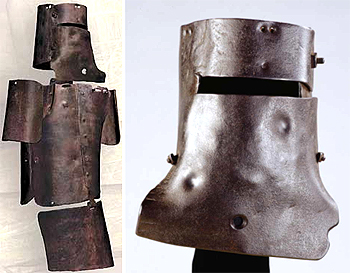
Early Australian Telecom PPE......


...was very effective at preventing sharp penetration.

__________________
Difficulty is not an obstacle it is merely an attribute.
Register to Reply Score 1 for Off Topic
Power-User

Join Date: Nov 2007
Location: Dominican Republic
Posts: 278
Good Answers: 10
#13

Re: Fiber Optic Resistant Lab Coats
01/25/2012 7:10 AM

Thanks all!

Checked the coats,no holes. Looks like a combination of things that we need to evaluate. I will post the results. All good answers! Redfred is on the money. Please don't think I'm blaming the operators but the open neck line is an easy target and about the right angle when cutting.

Register to Reply
Guru
Canada - Member - Specialized in power electronics

Join Date: Feb 2008
Location: Montreal, Canada.
Posts: 1372
Good Answers: 80
#14
In reply to #13

Re: Fiber Optic Resistant Lab Coats

01/25/2012 8:42 AM

Keep the room at 10C. They will keep their lab coats buttoned up...

Joke apart, if the room is at 35C, I understand that thy want to open up the neck line of the lab coat. People don't like to suffer. Make it natural for them to to want to keep the coat on properly.

__________________
Experienced is earned, common sense is taught, both are rare essentials of life.
Register to Reply Score 1 for Good Answer
Power-User

Join Date: Apr 2010
Location: Moncks Corner, South Carolina, USA
Posts: 157
Good Answers: 6
#15

Re: Fiber Optic Resistant Lab Coats

01/25/2012 1:01 PM

I used to terminate Fiber Optic cable. The way I cleave the protruding piece prior to polishing is to hold the waste fiber between my thumb and forefinger as I cleave it and then transfer it to some inside out wrapped electrical tape. Once stuck to the tape you can see it very clearly. When the tape is full you just throw it in the trash.

__________________
You can always tell a Nuke because you can't tell him anything!
Register to Reply Score 1 for Good Answer
Commentator

Join Date: Nov 2007
Location: Western NC
Posts: 92
Good Answers: 3
#16

Re: Fiber Optic Resistant Lab Coats

01/30/2012 8:47 AM

Believe it, I get some through the bottom of my shoes sometimes. I work in a plant that makes the fiber.

Register to Reply
Power-User

Join Date: Nov 2007
Location: Dominican Republic
Posts: 278
Good Answers: 10
#17

Re: Fiber Optic Resistant Lab Coats

01/31/2012 8:49 AM

Thanks all,

Trying new Tyvek lab coats, Engineering is looking at the process and the Safety committee has it for the next meeting.

Register to Reply
Register to Reply 17 comments

Good Answers:

These comments received enough positive votes to make them "good answers".

"Almost" Good Answers:

Check out these comments that don't yet have enough votes to be "official" good answers and, if you agree with them, vote them!
Copy to Clipboard

Users who posted comments:

daffy (1); ddk (1); DGCYS (2); duikerbok (1); kramarat (1); lyn (1); marcot (1); PWSlack (2); redfred (1); rickmoore69 (1); TonyS (1); Usbport (1); Wal (1); XNuke (1); Yusef1 (1)

Previous in Forum: The Clone Paradox   Next in Forum: Differential Temperature Controller CAMPINI STX041Y00

Advertisement