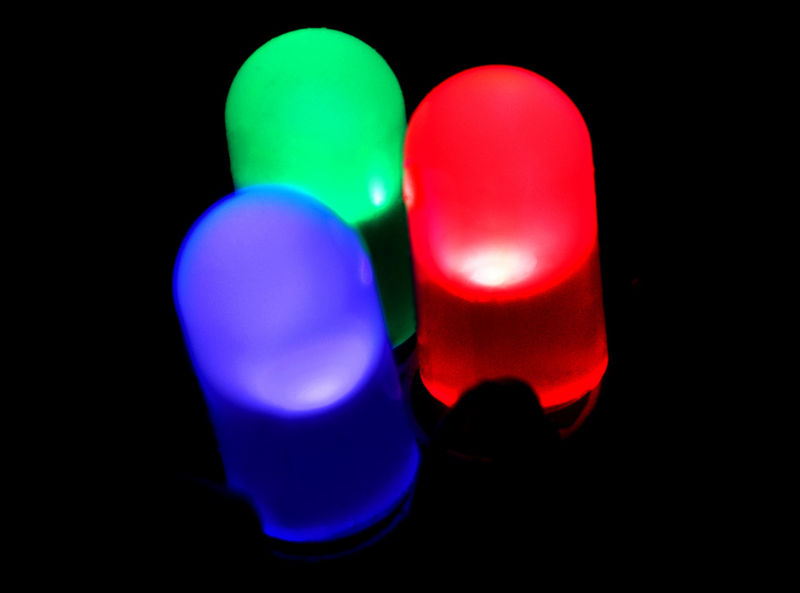
More than twice as efficient as compact fluorescent lights
(CFLs), light emitting diodes (LEDs) are steadily creating a new standard for
green lighting. Once limited to traffic lights, Christmas lights, and
scoreboards, LEDs are quickly becoming an attractive alternative to traditional
lighting.
How LEDs Are Green
Fluorescent bulbs contain mercury, which requires specific
disposal. LEDs, on the other hand, contain no toxic materials and last much
longer than fluorescent bulbs, so disposal is not a huge concern. LEDs are also
compatible with dimmer switches, which can be used to further reduce energy
consumption.
Current Drawbacks to
LEDs
One of the current issues regarding the switch from bulbs to
LEDs is that LEDs only provide directional light. But the biggest obstacle that
LEDs must overcome is the cost. Homeowners may shudder at the initial cost,
which is estimated to take 5-10 years to get back in electricity savings.
The cost comes from the difficulty in production. Gallium
nitride (GaN) LEDs become expensive because gallium nitride cannot be grown on
silicon, as it shrinks two times the rate of silicon in the cooling phase of
production. GaN crystals are grown at 1000°C, which is so high that as the
wafers cool, the new LED has already cracked. This problem was being averted by
using sapphire to grow the LEDs, which shrinks at a closer rate to GaN. The
alternative of using sapphire and other precious materials instead of silicon
makes the technology more expensive.
Advances in LED
Production
Scientists at Cambridge
University have developed
a way to grow LEDs on silicon wafers, making them far cheaper than the sapphire
alternative. Older versions of this technology could only produce red or green
light, but newer versions can produce a blue light that is being manipulated to
simulate incandescent bulbs. This is just one of many universities that are
working to make LEDs more consumer-friendly.
There are plenty of other advantages to making the switch to
LED lighting, which will be discussed in the next part of the blog series.
Would you invest money into something that would take 5-10 years to return
profit?
Resources:
NewScientist
– Cheap, Super-Efficient LED Lights on the Horizon
The
New York Times – Green Promise Seen in Switch to LED Lighting
| 

 2
2


 Re: Light The Halls With LEDs


Good Answers:
"Almost" Good Answers: