|
As a biomedical engineering student, we covered a lot of
anatomy and physiology back in school, including a class on dental implants and
a pig dissection. None of those things ever grossed me out or made me
uncomfortable. The only chapter that ever made me cringe (and fortunately we
didn't go into too much detail about it) was eyes. Something about the eyeball just creeps me out, and as
someone who wears contacts and has extra-sensitive eyes, I am frequently at the
eye doctors and considering Lasik (even though the idea of it makes me nauseous).
The eye is a pretty amazing
and complex organ. They heal quickly and with proper care most corneal
scratches repair in 48 hours or less. Humans blink about 12 times a minute,
with the average blink lasting 1/20 of a second. And seeing is such an important part of
everyday life that it requires about half the brain to get involved.
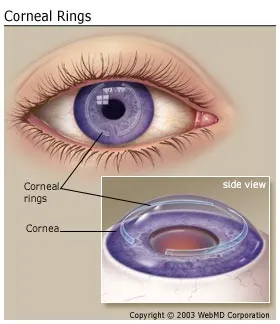
The reason I bring this all up is because scientists at the
University of Nottingham have recently discovered an undetected
layer in the cornea which could help surgeons dramatically improve the
outcomes for patients undergoing corneal grafts and transplants. The cornea is
the clean 'window' at the front of the eye that allows light to enter the eye.
It is about 500 microns thick, incredibly tough, and strong enough to withstand
one and a half to two bars of pressure. The cornea was originally thought to
only have five layers. This new layer, named Dua's Layer (after the scientist
who discovered it), is 15 microns thick and sits at the back of the cornea.
The discovery was made by Professor Harminder Dua and his
colleagues by injecting
air into the corneas of eyes that had been donated for research and using
an electron microscope to scan each separate layer.
Dua notes, "From a clinical perspective, there are many
diseases that affect the back of the cornea which clinicians across the world
are already beginning to relate to the presence, absence or tear in this
layer."

Did you know that Newborns don't produce tears. They make
crying sounds, but the tears don't start flowing until they are about 4-13
weeks old." Image Credit: myrna.info.
Not only will the discovery mean that anatomy text books
will have to be rewritten, but it means that now doctors can provide better
outcomes for patients undergoing eye surgery and those with a disease of the
cornea. One disease in particular, acute Hydrops, is a bulging of the cornea
caused by fluid buildup and occurs in patients in a conical deformity of the
cornea, which is caused by a tear in the
Dua layer. This causes water from the inside of the eye to rush in and results
in water logging.
| 


 Re: The Eyes Have It


