|
 Have you ever heard of the nuclear football? The
name is a metaphor (unfortunately), but it's about an apt description as one
would expect, considering it was termed by executive-level security analysts at
the height of the Cold War. Have you ever heard of the nuclear football? The
name is a metaphor (unfortunately), but it's about an apt description as one
would expect, considering it was termed by executive-level security analysts at
the height of the Cold War.
First, the 'football' part. It's not football or
football-shaped, but is in fact a black, bulky briefcase. The 'nuclear' part is
more descriptive, if only because it establishes the football namesake. In the
'60s, the briefcase once contained a plan with the nickname "dropkick," a once-common
American football scoring play. (Obligatory Doug Flutie
dropkick goes here.) Said briefcase contains four items:
- A book containing all retaliatory options in the
event of a large-scale strike on the U.S.A.
- A book listing classified bunkers in which to hide the president
- A packet with instructions for initiating a
national Emergency Alert System
- A 3" x 5"
index card containing the most recent intercontinental ballistic missile launch codes
So now that we know what's in it, we certainly don't want to
hand it off to Mark
Sanchez. There  have been rumors over the years that President XYZ lost or
misplaced the nuclear football for a period of time, but that's never actually
happened (misplaced momentarily, sure), as it's usually entrusted to a
high-ranking military aide whose sole job is to carry it around with the
president. have been rumors over the years that President XYZ lost or
misplaced the nuclear football for a period of time, but that's never actually
happened (misplaced momentarily, sure), as it's usually entrusted to a
high-ranking military aide whose sole job is to carry it around with the
president.
So while the nuclear football can end the physical world as
we know it--how about the digital world as we know it?
It's easy to foresee a future where the internet doesn't
exist, as it faces countless daily threats to its existence, and acts as a
conduit for attacks on others. Governments ponder overreaching
publishing laws, and also censor
or shut
it down entirely during civil unrest. Terrorists use it to research targets and recruits,
hack
into networks, and also attack
the internet itself. In a sense, the internet is running
out of room to grow. An internet
kill switch has long been rumored (under the guise of protecting it), but
hasn't been implemented.
The point is there are myriad ways to kill the internet.
Perhaps the good news, then, is that there are at least seven individuals with
the ability to restart the internet if it ever is struck down. It's nearly as
simple as rebooting a computer, sort of.
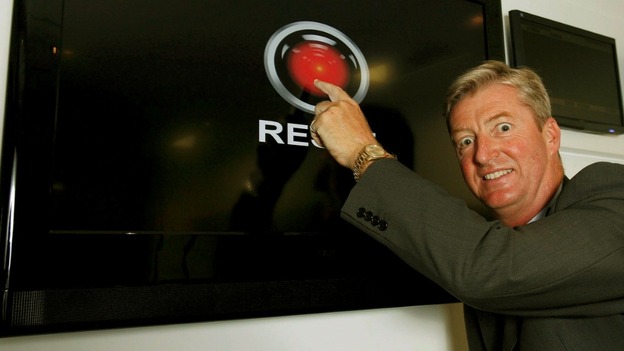 Last winter, Paul Kane (at right), CEO of CommunityDNS
which is based in Bath, England, revealed that he
is one of seven cardholders who together hold the keys that will restart
the internet if there is an event that compromises the nature of the world wide
web. Last winter, Paul Kane (at right), CEO of CommunityDNS
which is based in Bath, England, revealed that he
is one of seven cardholders who together hold the keys that will restart
the internet if there is an event that compromises the nature of the world wide
web.
If such an event ever occurs, five of the seven cardholders
need to assemble to swipe their keys (Paul's is pictured below, left) in a hidden terminal located near
Washington D.C. The other cardholders include individuals from Trinidad and
Tobago, Burkina Faso, the U.S., China and Czech 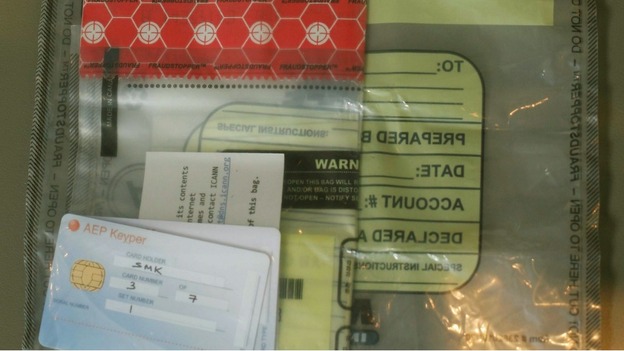 Republic. The individuals are
spread out in case the aforementioned nuclear football is ever used. Kane
remarks that it's incredible unlikely that the internet will need to be
rebooted, but acknowledges his immense responsibility if that ever actually
happens. Apparently these internet guardians meet four times per year for
pizza. Republic. The individuals are
spread out in case the aforementioned nuclear football is ever used. Kane
remarks that it's incredible unlikely that the internet will need to be
rebooted, but acknowledges his immense responsibility if that ever actually
happens. Apparently these internet guardians meet four times per year for
pizza.
It's good to know that all the world's precious cat videos
and selfies are forever preserved, but this concept displays excellent computer
engineering foresight in risk management. Not only will there be a forever-true
copy of the internet, but there are also individuals entrusted with the world's
most important network, a stark contrast to all those who want to abuse
it.
| 


 Re: What Happens When The Internet Gets Nuked?


