|
 When near-field communication first became available in
smartphones, I happened to be in the market for a new one. Enticed by
effortless transactions, I bought the latest NFC-capable phone, and used it to
buy things zero times. I've since replaced that original NFC phone with a
second-generation NFC-capable phone (but this one is waterproof!). I've also
never conducted a transaction with the NFC feature on this second phone,
meaning my cumulative use amounts to nothing.
I'd say it is one of those instances where I was more
enamored with the idea of NFC, than its actual use. NFC initiates communication
between two NFC antennas via electrically- or magnetically-modulated fields,
but not by an electromagnetic field. Small transceivers produce an
omnidirectional field and exchange data when within distance, typically several
centimeters or less. By equipping NFC tags in cell phones, immediate transfer
of data is established simply by confirming what program to execute, and
placing two NFC terminals within the appropriate distance of one another. The
technology is closely related to RFID, but since the antennas are so small, no
standing wave can develop, and connections are terminated once out of range.
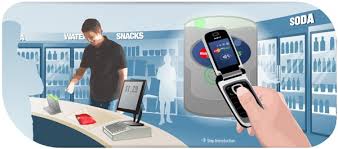 This technology has been implemented in a variety
of applications. It can instantaneously download files and programs. Tap a
wifi hotspot and get instant internet access. NFC can share photos, videos, and
music between devices just by touching them together. Most ubiquitously, NFC
has replaced older methods of electronic payment with a simple "tap and tap"
payment system. Instead of handing your credit or debit card to a cashier,
waiting for the swipe and authorization, followed by a signature, customers can
now load their data into a secure app. At the POS, the customer taps their
phone to the register's NFC terminal, at which point their app opens and
prompts for a user-designated security pin, or other credentialing method. Most
importantly, this data exchange doesn't require an internet connection or cell
signal-as long as the phone is on, it will work.
As has been the case since the dawn of credit cards,
merchants are nickel-and-dimed
by credit card companies for each transaction. Not only do credit companies
collect a 1-4% commission on each charge, but also intercharge fees (consider
it the ATM fee of the merchant world), and they may also collect from leases or
purchases of credit processing equipment.
So big merchants (Walmart, Target, Best Buy, Lowes, Sears,
7-Eleven, Dunkin Donuts, amongst others) have aligned to create CurrentC, a
similar contactless payment option that relies on optical barcode reading,
rather than NFC-linked credit cards. When a shopper arrives at the POS, he or
she scans a QR code with their camera, and funds are withdrawn from a bank
account linked via an app.
 Creating CurrentC cuts out the middle man, in this case the
card companies. The argument is that doing so can correspondingly lower the
costs of products, but it will undoubtedly leave a higher profit margin for
retailers. Using a QR code also means older camera phones with a QR app can be
used--the latest generation of smartphone is a prerequirement.. It's tough to
guess if this contactless payment method will ultimately catch on (this article says it
can't), but it's also totally irrelevant to my point. W pockets your money
ultimately falls in is meaningless, because once it leaves your possession, who
cares.
NFC availability has only been around for about four years
and has varying degrees of proliferation, depending on where you live. It
replaced RFID as it is considered
more secure, and since the primary application of NFC is for transactions, usurping NFC transactions
with CurrentC would severely limit its development. There aren't many other
applications in serious development, since RFID is such a versatile system.
Moving towards an optically-read barcode and away from NFC is actually a
regression in technology, and one that may make data more available to pirates
and hackers.
That reason is enough to support NFC. Last week,
Apple revealed ApplePay,
its introduction into NFC transactions via iPhones. Though the technology isn't
new, they represent the best chance for this burgeoning technology. Perhaps
they can be the first to offer a comprehensive noncontact payment solution, and
if they can't, then it may well be the dying breaths of NFC
| 


 Why Apple Pay/Google Wallet are better


"Almost" Good Answers: