The Networking & Communications Blog is the place for conversation and discussion about power & apps, wireless technology, voice & internet, and network security as they relate to networking and communications fields. Here, you'll find everything from application ideas, to news and industry trends, to hot topics and cutting edge innovations.
In 2008—back when we were still sticking GPS units and mounts to our windshields like cavemen—I owned a Magellan GPS that included voice recognition. In addition to about two dozen preprogrammed commands (e.g., “Magellan, nearest gas”), I could also speak directly at the device to input my destination. This GPS was also one of the first to integrate Bluetooth, which allowed me to take and make phone calls hands-free. At the time, I drove a black sedan with tinted windows, which added up to one of my friends calling my car the Batmobile.
Obviously, the GPS technology of 2008 doesn’t hold up well to modern standards. With rare exception, people use their phones or integrated GPS for navigation these days. Bluetooth is standard on most new cars.
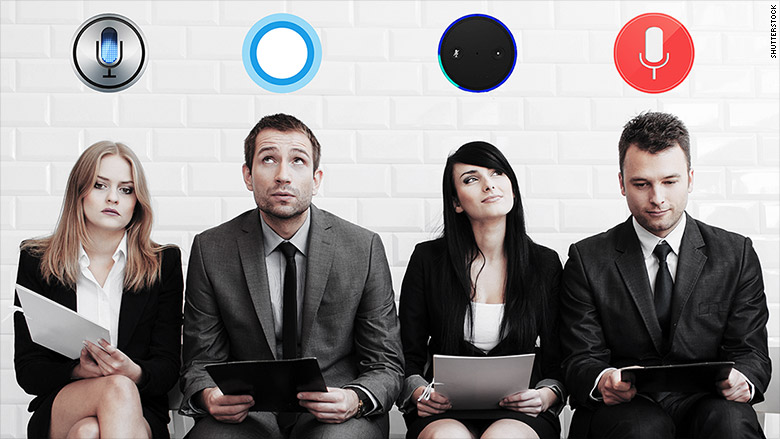
And even though the voice recognition feature was cool, it wasn’t very useful. I’d estimate that the GPS would accurately recognize and execute commands less than 25% of the time. So, considering that there are about 10 different digital, intelligent personal assistants (IPAs) out on the market today, the rise of voice recognition technology is fairly impressive. We’re crowded by Alexa, Cortana, Siri and the gang, each of whom has been integrated into dozens of proprietary and licensed devices.
However, I’m still hesitant to adopt one of these digital orphans in my home. I can clearly recognize the value of them—reading a recipe while you cook, providing a weather forecast while you get dressed, ordering pizza with a short command—but I can never shake the feeling of always being listened to.
The developers promise that even though the microphone is always on, IPAs only respond and begin to record once they recognize their ‘wake word.’ Additionally, these devices typically have a short reception range, typically the size of a small room or less, so if you keep them out of the bathroom and bedroom, embarrassing audio captures are much less likely. However, as a consumer, it’s virtually impossible to know exactly what an Echo or Google may have overheard and saved.
I also feel there are many unforeseen consequences to be witnessed. Case in point: last week, a news story popped up about unintentional orders placed via Amazon’s Alexa, in this case integrated into the Amazon Echo. A San Diego news station did a fluff story about how a six-year-old girl accidentally ordered a $160 dollhouse by asking Alexa to play with her and get her a dollhouse. Once the anchor of the news station repeated the phrase “Alexa ordered me a dollhouse,” Alexa devices in viewers’ homes began placing orders for dollhouses.
Since these devices can’t hold a full-on conversation—yet—they fall short when there are ambiguities in language that might be cleared up by context, inflection, body language, and numerous other variables.
(However, putting two [modded] Google Homes next to each other can result in some strange dialogue. It's not sexual at all, really.)
Even though the AI behind IPAs is quite impressive, I can’t help but feel that it’s worth holding out for the next generation.
I think Amazon has been doing some refinement on the Echo. The thing has recently quit responding to Echo tv commercials in my bedroom. And the Dot I have in the kitchen is not responding as well as it used too.
A. I still have my Magellan GPS, it's not the voice recognition unit, I can figure out where the next gas station is without asking a computer.
B. My car has Bluetooth and I seldom use it, when I drive, I concentrate on driving, when I need to make a phone call, I pull over and call.
C. The proprietary licensed products are just another form of unwanted solicitations.
D.I see no value in digital orphans, I can read from a recipe book, I can look at an app on my phone for the weather report and if I want to order a pizza, I can get out the phone book.
E. I would never put a device in my home that could listen, record or transmit my conversations, there is enough tracking going on outside the home with all of the cameras everywhere watching you.
In my opinion, these devices are for those that need an electronic babysitter that can tell them what to do, think and act.
Even though it's getting difficult to do as time passes, I still want to be the captain of my ship.
They do have their good points actually. I use my Echo and Dot mainly to compile my shopping and to-do lists that get sent to the Echo app on my phone and then updated as I check items off the list.
Believe me it's an immense help to me as my handwritten lists are unreadable because of my shakiness. Writing is a very frustrating experience that gets worse as I get older. Writing a check is a severe pain in the butt that I'm thankful I can avoid with electronic transactions. I appreciate anything that helps me cope with this common problem of aging and I'm sure there are others who benefit from these digital assistants.
But I am very aware of their potential downsides and take appropriate precautions. And I live alone and don't talk to myself, much less anyone else.
I do the same with old established tech. I suspect the 2014 Silverado I bought a couple of years ago will be my last vehicle ever.
But I'm all over new stuff like VR. I can do a whole lot of things that I either can't handle physically or can't afford in retirement. Gotta keep the old grey matter exercised.
We might as well all go out and buy one, and a smart TV as well. Inside of a decade we will be required to have such devices so we can be monitored. Just a few more cases such as the recent Fort Lauderdale incident, where someone should have known what was coming, and it will be law. Government wants to protect us from ourselves and freedoms will be removed to allow this protection.
__________________
Remember when reading my post: (-1)^½ m (2)^½


 5
5


 Re: When Alexa Goes Wild


Good Answers: