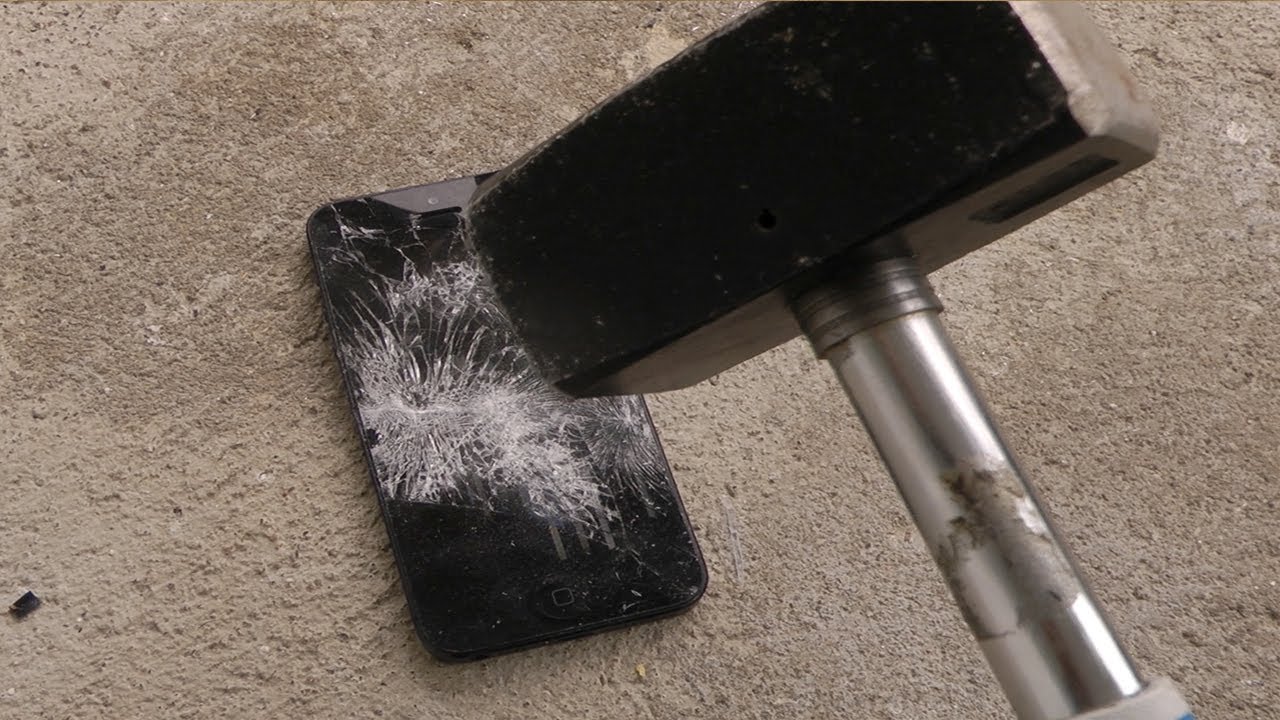
I thought the CR4 community would appreciate the ingenuity of researchers who figured out how to unlock a fingerprint-protected cell phone. Does this mean that fingerprints are on the way out as security measures?
Back in the 80's I always considered myself as a novice programmer, if for anything, it was being able to secure a program. I always felt I was novice, because my security was easily broken into. If you had some experience. Later on, I found out that how I was securing it, was pretty much standard.
I guess the security improvements has only been mediocre.
__________________
“ When people get what they want, they are often surprised when they get what they deserve " - James Wood
I worked on a fingerprint matching system awhile back (a long time back). It's basically a process of image cleanup, ridge enhancement, and determining the location and orientation of minutiae (ridge endings, bifurcations, etc), and finally matching, allowing for variations due to image quality, finger orientation, and finger tip distortion.
But the matching algorithm works as easily with a spoofed print as a real print. So another layer has to be added to reject "spoofed prints", and this is the weak point in the system. It's very difficult to find characteristics of a real finger that cannot be simulated by a determined "spoofer".
"In 2002 a Japanese cryptographer demonstrated how fingerprint recognition devices can be fooled 4 out of 5 times using a combination of low cunning, cheap kitchen supplies and a digital camera.[7]
Taking latent fingerprints from a glass, which were enhanced with a super-glue fumes in the form of cyanoacrylate adhesive and photographed. An image tool were then used to improve the contrast and then printed onto a transparency sheet. The sheet were then used to expose a UV sensitiveprinted-circuit board and etched. The copper imprint were then used for a plastic finger mould and gelatine found in Gummy bears a fake finger could be made.[7] Eleven commercially available fingerprint biometric systems took the fake finger as the real thing. Noted cryptographer Bruce Schneier said "The results are enough to scrap the systems completely, and to send the various fingerprint biometric companies packing,"[7]"
Both the people in your link and the MythBusters needed access to the phone or other device owner's actual fingerprints to succeed. When they can get past the fingerprint reader without such access, then I'll call it hacking.
When they say a severed finger won't work, I assume someone has actually tried it. ...but I'd bet that person was holding the severed finger with latex or plastic gloves, which of course would electrically insulate that severed finger from the mass of the body of the person holding it, reducing the capacity available to the detector.
__________________
Teaching is a great experience, but there is no better teacher than experience.
Both the people in your link and the MythBusters needed access to the phone or other device owner's actual fingerprints to succeed. When they can get past the fingerprint reader without such access, then I'll call it hacking.
I suppose a dedicated thief could steal a phone and dust it (particularly the sensor) to get the print that unlocks it.
That's conceivable, but I think highly unlikely, at least on an iPhone (which is the only fingerprint sensor I've used so far), because the same button that unlocks the phone is also used to change from one app to another, presumably smudging both or all prints.
That GhostBuster concept of having the victim grab a stack of DVDs was pretty clever. The probability of a second thumbprint smudging the first was pretty low there.
This also brings to mind that it would probably be wise to set up the phone or other device so it requires a print of one of the less-used fingers. It would be slightly less convenient to unlock, but I believe considerably less likely to be hacked successfully.
__________________
Teaching is a great experience, but there is no better teacher than experience.
One more layer of security may be needed, add infrared detection to the reader chip, and it detects if the finger is cold and dead. Dead is one thing, cold and dead quite another. Of course, some corporate vampires would have a hard time getting into the office, or unlocking their own cell phones with the added feature.
Maybe combining iris scanning with fingerprint would be good. Otherwise, take a number.
Hacking by providing the victim with a smooth beverage container of harder plastic (such as polystyrene or polycarbonate), and also providing them with a piece of baklava as a desert item is a good way to make sure latent prints in honey will be present. Not hard to develop those, and pretty good results, since slippage could be very minimal. They key is the conductive ink used in final transfer of the "enhanced" print. Very good trade craft, don't ya think?
__________________
If it ain't broke, don't fix it. Just build a better one.
Further on what dkwarner already stated, I don't think this presents a serious case against the security of cell phone fingerprint readers. Notice all the things they needed to have access to in order to make it happen:
The finger. Of which they had to sift through ten different possible fingers to find the right one.
The phone. Not a hard thing to steal but it's still a thing.
Original ink fingerprints of the person. Yeah, your average to even professional thief is not going to get this. Even if it was someone dedicated to getting into say a high-profile person's phone, this is hard to get. And such a person would be highly likely to have other security measures in place. They lucked out that this person didn't after several failed attempts.
Digital scans. Another checkmark on "list of things common thief doesn't have".
Printed 2D and 3D replicas. See above.
Conductive ink. Common thief could get, but are they going to be aware of the function and necessity. At least for now, probably not.
As was also stated, it would really be "hacking" if they got past the security without needing any of these things. Calling this hacking is like calling threatening someone to give you their 4 digit passcode and saying you hacked their phone.
No problem agreeing with all that. However, without the fingers, the "thief" still needs to have access to at least one good fingerprint and that only a 10% probability of being the correct one. Then they need all the fingerprint enhancing and 3D printing with conductive ink in an exact 1:1 image copy.
Yes, it is beyond the ken of most criminals, but there could be a ring of thieves that could come up with this technology easily enough to make it worth their while, that is until the become apprehended. Put down the cell phone, and step away slowly, then turn and face the wall, feet spread, arm up high and spread also, and look down.
Maybe we need cell phones that wait until they are in the perp's vehicle, then they catch on fire?
__________________
If it ain't broke, don't fix it. Just build a better one.
I don't think it's so much a matter of "...beyond the ken of most criminals..." but more like it's not worth counterfeiting any denomination smaller than a $20.00 bill.
__________________
Good judgment comes from experience, and a lotta that comes from bad judgment.