Previous in Forum: Metadata Automation!   Next in Forum: Where Are They Now? NASA's New Horizons Spacecraft
Close
Close
Close
35 comments
Rate Comments: Nested
The Engineer
Engineering Fields - Engineering Physics - Physics... United States - Member - NY Popular Science - Genetics - Organic Chemistry... Popular Science - Cosmology - New Member Ingeniería en Español - Nuevo Miembro - New Member

Join Date: Feb 2005
Location: Albany, New York
Posts: 5060
Good Answers: 129

The North Pole of the Moon

01/30/2018 3:51 PM

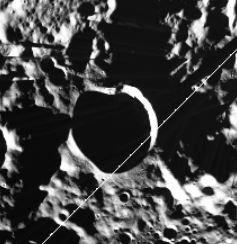
I found this website that has an image of the entire north pole of the moon at 2 meter resolution that you can zoom in on.

http://lroc.sese.asu.edu/images/gigapan/

The images were captured by LROC and stitched together into one coherent image (950 GB files size). The Lunar Reconnaissance Orbiter Camera, or LROC, is a system of three cameras mounted on the Lunar Reconnaissance Orbiter (LRO) that capture high resolution black and white images and moderate resolution multi-spectral images of the lunar surface.

Register to Reply
Interested in this topic? By joining CR4 you can "subscribe" to
this discussion and receive notification when new comments are added.

"Almost" Good Answers:

Check out these comments that don't yet have enough votes to be "official" good answers and, if you agree with them, vote them!
Guru

Join Date: Mar 2007
Location: by the beach in Florida
Posts: 33392
Good Answers: 1817
#1

Re: The North Pole of the Moon

01/30/2018 5:34 PM

Kinda bleak...

__________________
All living things seek to control their own destiny....this is the purpose of life
Register to Reply
Guru
Hobbies - CNC - New Member Hobbies - DIY Welding - New Member Engineering Fields - Electromechanical Engineering - New Member

Join Date: Aug 2007
Posts: 23647
Good Answers: 420
#6
In reply to #1

Re: The North Pole of the Moon

01/30/2018 11:09 PM

Did you expect to see Golden Arches in the background maybe?

__________________
“ When people get what they want, they are often surprised when they get what they deserve " - James Wood
Register to Reply
Guru
Hobbies - DIY Welding - Don't Know What Made The Old Title Attractive... Popular Science - Weaponology - New Member United States - US - Statue of Liberty - 60 Year Member

Join Date: Apr 2009
Location: Yellowstone Valley, in Big Sky Country
Posts: 7426
Good Answers: 295
#2

Re: The North Pole of the Moon

01/30/2018 5:45 PM

This is VERY cool! You seem to find the best stuff. Thanks!

But... where are these Anunnaki I keep hearing about? Do they all live inside?

__________________
Semper Ubi Sub Ubi
Register to Reply
Guru
Hobbies - CNC - New Member Popular Science - Biology - New Member Hobbies - Musician - New Member

Join Date: Dec 2008
Location: Canada
Posts: 3523
Good Answers: 146
#3

Re: The North Pole of the Moon

01/30/2018 7:02 PM

Yayy! So what's with the flat topped mountains? Such a strange topography.. Looks like they were hit with a hammer.

__________________
incus opella
Register to Reply
Guru

Join Date: Apr 2010
Location: About 4000 miles from the center of the earth (+/-100 mi)
Posts: 9921
Good Answers: 1142
#4

Re: The North Pole of the Moon

01/30/2018 7:12 PM

Cool! I guess the bottoms of some of those craters have never seen sunlight!

Register to Reply
Guru
Popular Science - Cosmology - Let's keep knowledge expanding Engineering Fields - Retired Engineers / Mentors - Hobbies - HAM Radio - New Member

Join Date: Dec 2006
Location: North America, Earth
Posts: 4528
Good Answers: 106
#12
In reply to #4

Re: The North Pole of the Moon

01/31/2018 10:36 AM

What are you talking about? There is no permanent dark side of the moon. The side facing the earth is dark more than the other side.

__________________
“I would rather have questions that can't be answered than answers that can't be questioned.” - Richard Feynman
Register to Reply
Guru
Engineering Fields - Optical Engineering - Member Engineering Fields - Engineering Physics - Member Engineering Fields - Systems Engineering - Member

Join Date: Apr 2010
Location: Trantor
Posts: 5363
Good Answers: 647
#13
In reply to #12

Re: The North Pole of the Moon

01/31/2018 11:19 AM

Why would it be darker? Aside from the occasional lunar eclipse, when it passes through the Earth's shadow, it 'sees' the same amount of sunlight that the farside sees (over the course of a month), plus it sees the reflected light from Earth as the Earth goes through it's 'phases'. The Earth is bigger and brighter (as seen from the Moon) than the Moon is (as seen from the Earth), so a 'Full Earth' would look a lot brighter than a 'Full Moon'.

__________________
Whiskey, women -- and astrophysics. Because sometimes a problem can't be solved with just whiskey and women.
Register to Reply
Guru
Engineering Fields - Optical Engineering - Member Engineering Fields - Engineering Physics - Member Engineering Fields - Systems Engineering - Member

Join Date: Apr 2010
Location: Trantor
Posts: 5363
Good Answers: 647
#15
In reply to #13

Re: The North Pole of the Moon
01/31/2018 11:26 AM

And just a side note. The Moon's orbit is angled about 5 degrees from the ecliptic (the plane of Earth's orbit), so over the course of a year both of its poles do see some sunlight at a grazing angle. But yeah, there are likely some crater bottoms that haven't seen sunlight in eons due to the high walls of the crater.

__________________
Whiskey, women -- and astrophysics. Because sometimes a problem can't be solved with just whiskey and women.
Register to Reply
Guru

Join Date: Apr 2011
Posts: 8006
Good Answers: 286
#17
In reply to #13

Re: The North Pole of the Moon

01/31/2018 3:28 PM

In addition, the parallax to the Sun is greater for the Moon's side facing away from the Earth than the facing side by around 0.0013 degrees.

That may not seem like much but It should equate to a difference of more than 60,000 acers being being sunlit on the inside when the line from the center of the Moon to the center of mass of the Earth Moon system is orthogonal to the line from the center of the Sun to the center of mass of the Earth Moon system.

I'm thinking the side we can see on average receives more light even in a month with a lunar eclipse.

__________________
Eternal vigilance is the price of knowledge. - George Santayana
Register to Reply
Guru

Join Date: Apr 2010
Location: About 4000 miles from the center of the earth (+/-100 mi)
Posts: 9921
Good Answers: 1142
#20
In reply to #12

Re: The North Pole of the Moon

01/31/2018 5:13 PM

The moon's axis of rotation is only a few degrees from the ecliptic axis. If you were standing on the moon at the pole, the sun would circle every 27 days and never rise higher than that above the horizon. The bottoms of deep craters near the pole would be in eternal darkness.

Axis and rotation of selected Solar System bodies

Body

NASA, J2000.0[36]

IAU, 0 January 2010, 0h TT[37]

Axial tilt
(degrees)
North PoleRotation
(hours)
Axial tilt
(degrees)
North PoleRotation
(deg/day)

R.A.(degrees)

Dec.(degrees)

R.A.(degrees)

Dec.(degrees)

Sun

7.25286.1363.87609.12

B

7.25

A

286.1563.8914.18

Mercury

0.03281.0161.421407.60.01281.0161.456.14

Venus

2.64272.7667.16–5832.62.64272.7667.16−1.48

Earth

23.440.0090.0023.9323.44undef.90.00360.99

Moon

6.68655.731.54

C

270.0066.5413.18

Mars

25.19317.6852.8924.6225.19317.6752.88350.89

Jupiter

3.13268.0564.499.93

D

3.12268.0664.50870.54

D

Saturn

26.7340.6083.5410.66

D

26.7340.5983.54810.79

D

Uranus

82.23257.43–15.10–17.24

D

82.23257.31−15.18−501.16

D

Neptune

28.32299.3643.4616.11

D

28.33299.4042.95536.31

D

PlutoE

57.47(312.99)(6.16)–153.2960.41312.996.16−56.36

A with respect to the ecliptic of 1850
B at 16° latitude; the Sun's rotation varies with latitude
C with respect to the ecliptic; the Moon's orbit is inclined 5.16° to the ecliptic
D from the origin of the radio emissions; the visible clouds generally rotate at different rate
E NASA lists the coordinates of Pluto's positive pole; values in (parentheses) have been reinterpreted to correspond to the north/negative pole.

https://en.wikipedia.org/wiki/Axial_tilt

Register to Reply
Guru
Hobbies - CNC - New Member Hobbies - DIY Welding - New Member Engineering Fields - Electromechanical Engineering - New Member

Join Date: Aug 2007
Posts: 23647
Good Answers: 420
#5

Re: The North Pole of the Moon

01/30/2018 11:05 PM

Nice...

interesting, with the term North Pole,... since I didn’t think the moon had any magnetic lines to have poles... but it is descriptive...

anyways, I always wonder why, or I don’t know of... if there is a satellite that mapped the moon such as Google earth Moon

__________________
“ When people get what they want, they are often surprised when they get what they deserve " - James Wood
Register to Reply
Power-User

Join Date: Jun 2011
Posts: 336
Good Answers: 18
#7
In reply to #5

Re: The North Pole of the Moon

01/31/2018 12:00 AM

The moon does rotate once per year, so it has an axis and identifiable poles.

__________________
If at first you don't succeed, skydiving is not for you!
Register to Reply
Guru

Join Date: Apr 2011
Posts: 8006
Good Answers: 286
#8
In reply to #7

Re: The North Pole of the Moon

01/31/2018 1:17 AM

It rotates about 12 times more often than that.

__________________
Eternal vigilance is the price of knowledge. - George Santayana
Register to Reply Score 1 for Good Answer
Guru
Engineering Fields - Optical Engineering - Member Engineering Fields - Engineering Physics - Member Engineering Fields - Systems Engineering - Member

Join Date: Apr 2010
Location: Trantor
Posts: 5363
Good Answers: 647
#14
In reply to #8

Re: The North Pole of the Moon

01/31/2018 11:20 AM

__________________
Whiskey, women -- and astrophysics. Because sometimes a problem can't be solved with just whiskey and women.
Register to Reply
Power-User

Join Date: Jun 2011
Posts: 336
Good Answers: 18
#18
In reply to #8

Re: The North Pole of the Moon

01/31/2018 3:39 PM

You are right. I apologise.

__________________
If at first you don't succeed, skydiving is not for you!
Register to Reply
Guru

Join Date: Apr 2011
Posts: 8006
Good Answers: 286
#19
In reply to #18

Re: The North Pole of the Moon

01/31/2018 3:49 PM

No need for an apology. Acknowledging the correction was sufficient.

__________________
Eternal vigilance is the price of knowledge. - George Santayana
Register to Reply
Guru
Hobbies - CNC - New Member Hobbies - DIY Welding - New Member Engineering Fields - Electromechanical Engineering - New Member

Join Date: Aug 2007
Posts: 23647
Good Answers: 420
#11
In reply to #7

Re: The North Pole of the Moon

01/31/2018 10:16 AM

I was thinking magnetic as in the north and south poles... only because I’m being difficult.

but a axis or regional description is fine also... only because I’m mellowing out as I age... like wine.... not cheese but wine.... I SAID WINE.

__________________
“ When people get what they want, they are often surprised when they get what they deserve " - James Wood
Register to Reply
Power-User

Join Date: Oct 2011
Posts: 141
Good Answers: 21
#10
In reply to #5

Re: The North Pole of the Moon

01/31/2018 4:53 AM

Any celestial body has geographical poles - you can find the definitions and conventions in defining North and South poles on Wikipedia.

Regarding Google Moon: yes, it exists as a site where you can find something similar to Google Earth but at a much lower resolution. Maybe LROC will provide a much better resolution when the whole Moon will be covered (as the North pole area is now). Until then, you can see the other pictures from the LROC site - there are hundreds of them, some very interesting (for example, American, Soviet and Chinese lunar landing sites, including even rover tracks).

And (if you are interested) there is also a similar Google Mars site.

Register to Reply
Guru

Join Date: Apr 2011
Posts: 8006
Good Answers: 286
#16
In reply to #10

Re: The North Pole of the Moon

01/31/2018 12:40 PM

"... Any celestial body has geographical poles..."

Tumbling nonspheroidal asteroids are celestial bodies, right? So are dark (and other types of) nebulae, IIRC. Do these have defined North and South poles?

Without some reference to magnetic poles or motion relative to an inertial frame the idea of poles would shift out of character.

__________________
Eternal vigilance is the price of knowledge. - George Santayana
Register to Reply
Guru
Hobbies - CNC - New Member Popular Science - Biology - New Member Hobbies - Musician - New Member

Join Date: Dec 2008
Location: Canada
Posts: 3523
Good Answers: 146
#21
In reply to #16

Re: The North Pole of the Moon

01/31/2018 6:49 PM

https://en.wikipedia.org/wiki/Poles_of_astronomical_bodies

"Some bodies in the Solar System, including Saturn's moon Hyperion and the asteroid 4179 Toutatis, lack a stable geographic north pole. They rotate chaotically because of their irregular shape and gravitational influences from nearby planets and moons, and as a result the instantaneous pole wanders over their surface, and may momentarily vanish altogether.."

" Venus rotates in the opposite direction to the other planets, and Uranus has been knocked on its side and rotates almost perpendicular to the rest of the Solar System."

__________________
incus opella
Register to Reply
Guru

Join Date: Apr 2010
Location: About 4000 miles from the center of the earth (+/-100 mi)
Posts: 9921
Good Answers: 1142
#22
In reply to #16

Re: The North Pole of the Moon

01/31/2018 10:13 PM

An irregular body will tumble unless it is rotating about one of the principal moment of inertia axes. Tumbling means that the rotation axis moves around in space and also moves around on the body itself. This is usually illustrated using a book as an example.

This video shows how a tumbling object behaves:

(The angular momentum vector L, is constant, but the moment of inertia matrix, I and the rotation vector w depend on each other and vary in time unless w is an eigenvector of I.)

So, a rotating object has poles at the points where the rotation axis (through the center of gravity) meets the object. In a tumbling irregular object, these poles move around the object. The geographical poles of the earth itself are not stationary but do move somewhat as the earth's moment of inertia changes with time due to plate tectonics, etc.

"True polar wander is a solid-body rotation of a planet or moon with respect to its spin axis, causing the geographic locations of the north and south poles to change, or "wander". In a stable state, the largest moment of inertia axis is aligned with the spin axis, with the smaller two moments of inertia axes lying in the plane of the equator. When this is not the case, true polar wander will occur: the planet or moon will rotate as a rigid body to realign the largest moment of inertia axis with the spin axis."

https://en.wikipedia.org/wiki/True_polar_wander

Register to Reply
Guru

Join Date: Apr 2011
Posts: 8006
Good Answers: 286
#25
In reply to #22

Re: The North Pole of the Moon

02/01/2018 4:03 PM

Thank you. Good info. That addresses rotating and tumbling well bound contiguous structures.

What of contiguous structures which have no discernable rotation? Intergalactic rogue stars not caught in gravitational wells and similarly intergalactic vigilante planets are bound have some that aren't rotating appreciably. Any convention there?

.

Noncontiguous celestial objects like nebulae also have some different convention as well....though there are bipolar nebulae so apparently these are not devoid of polar description.

__________________
Eternal vigilance is the price of knowledge. - George Santayana
Register to Reply
Guru

Join Date: Apr 2010
Location: About 4000 miles from the center of the earth (+/-100 mi)
Posts: 9921
Good Answers: 1142
#26
In reply to #25

Re: The North Pole of the Moon

02/01/2018 9:27 PM

I can't imagine any body in space with absolutely zero rotation. The body would have the sum total of the angular momentum of the matter that coalesced to form it, which would very likely not cancel out to exactly zero.

Rotation is absolute, not relative. If you were standing on a planet in intergalactic space far enough away from any galaxy that none were visible and had a gyroscope, you could determine whether that planet was rotating because the gyroscope freely gimbaled would define a direction in space. So, in principle, you could find the pole of this planet. (It doesn't have to be a spinning gyroscope, a laser gyroscope would work.)

The best you can do with a collection of objects like a galaxy is to define the center of mass and the total angular momentum. There is not a "pole" location but there is a defined axis of rotation through the center of mass and a "North" and "South" direction defined by the total angular momentum vector.

Register to Reply
Guru

Join Date: Apr 2011
Posts: 8006
Good Answers: 286
#27
In reply to #26

Re: The North Pole of the Moon

02/02/2018 11:41 PM

"..Rotation is absolute, not relative ...."

I am not certain of this, either way. Einstein certainly put a lot of stock in Mach's Principal....which holds rotation to be relative to distant stars.

Relativistic frame dragging would seem to indicate rotation is somewhat relative to movement of surrounding mass.

__________________
Eternal vigilance is the price of knowledge. - George Santayana
Register to Reply
Guru

Join Date: Apr 2010
Location: About 4000 miles from the center of the earth (+/-100 mi)
Posts: 9921
Good Answers: 1142
#28
In reply to #27

Re: The North Pole of the Moon

02/03/2018 12:54 PM

I'm familiar with Mach's Principle. (I was careful not to put my planet in an empty universe.) Some of what's attributed to Mach's Principle seems like it's carrying "relativity" too far. If you turn your head, the distant stars are traveling faster than light, not possible. And centrifugal force doesn't act at all like gravity, it increases linearly with the distance from the axis of rotation.

I think Mach's idea is if your planet were the only thing in the universe, there would be no way to define if it were rotating or not, so all the matter in the universe defines the reference frame. If your planet were alone in the universe, any test you performed would indicate it was not rotating. I don't know if this would be true or not and it would be rather hard to set up an experiment!

The argument is that without external objects as a reference, the concept of rotation is meaningless. Of course, they did not have access to a ring laser gyroscope.

https://en.wikipedia.org/wiki/Ring_laser_gyroscope

https://en.wikipedia.org/wiki/Sagnac_effect

https://en.wikipedia.org/wiki/Absolute_rotation

Register to Reply
Guru

Join Date: Apr 2011
Posts: 8006
Good Answers: 286
#29
In reply to #28

Re: The North Pole of the Moon

02/04/2018 12:53 AM

"... The argument is that without external objects as a reference, the concept of rotation is meaningless. ..."

Hmm, perhaps. Or maybe the Mach principle suggests the concept of rotation of an object comprising most/all of the mass in a universe would lead to reduced effects from rotation (as compared to a universe with more/more disperse mass) or the effects of rotation only being with respect to the limited mass in that universe.....the most distant objects in a universe would be the most distant objects in that universe and the total mass in a universe would still be the total mass, no matter how great or small. Absolute is absolute.

I doubt there will ever be any certainty about such conjecture since (as I understand the concept) a universe isn't something you can affect from somewhere not with that universe.

__________________
Eternal vigilance is the price of knowledge. - George Santayana
Register to Reply
Guru

Join Date: Apr 2011
Posts: 8006
Good Answers: 286
#30
In reply to #28

Re: The North Pole of the Moon

02/04/2018 1:48 AM

Another other portions of your comment deserves discussion...

1. "...If you turn your head, the distant stars are traveling faster than light, not possible....."

2. "...And centrifugal force doesn't act at all like gravity, it increases linearly with the distance from the axis of rotation. ..."

.

1. This argument is specious. There is no assertion in Mach's principle that turning your head one direction is equivalent to accellerating objects in the other direction across your field of view. Additionally, there is no prohibition of quick head turning under a clear night sky to be found in relativity.

2. Again, seems specious. Why would Mach's principle need centrifugal force to act the same as gravity?

Moreover, for centrifugal force to increase with radius, something important that went unmentioned needs to happen unless you are suggesting a violation of conservation of energy and or mass.

mv2/r= F. radius increase leads to a decrease in force....unless some spontaneous increase in velocity and or mass occurs.

__________________
Eternal vigilance is the price of knowledge. - George Santayana
Register to Reply
Guru

Join Date: Apr 2010
Location: About 4000 miles from the center of the earth (+/-100 mi)
Posts: 9921
Good Answers: 1142
#31
In reply to #30

Re: The North Pole of the Moon

02/04/2018 12:33 PM

Let me try to explain a little better...

1. "...If you turn your head, the distant stars are traveling faster than light, not possible....."

Linear motion is relative. If A is moving with respect to B, you can consider A stationary, B stationary, or neither one stationary.

I guess the point I was trying to make with the head-turning example is that it makes no sense to consider rotation as relative in the same respect that motion is relative, that any rotating frame can be considered as stationary (non-rotating). If you consider your head as being stationary, then the far away stars are obviously moving impossibly fast.

The reference to gravity has to do with a "Mach's Principle" explanation of centrifugal force as gravity from the rest of the universe in the rotating frame of reference...

"You are standing in a field looking at the stars. Your arms are resting freely at your side, and you see that the distant stars are not moving. Now start spinning. The stars are whirling around you and your arms are pulled away from your body. Why should your arms be pulled away when the stars are whirling? Why should they be dangling freely when the stars don't move?

Mach's principle says that this is not a coincidence—that there is a physical law that relates the motion of the distant stars to the local inertial frame. If you see all the stars whirling around you, Mach suggests that there is some physical law which would make it so you would feel a centrifugal force. There are a number of rival formulations of the principle. It is often stated in vague ways, like "mass out there influences inertia here". A very general statement of Mach's principle is "local physical laws are determined by the large-scale structure of the universe".[2]"

https://en.wikipedia.org/wiki/Mach%27s_principle

2. "...And centrifugal force doesn't act at all like gravity, it increases linearly with the distance from the axis of rotation. ..."

Centrifugal force in a rotating frame is proportional to the distance r from the axis of rotation and the square of the speed of rotation.

F = mω2r, where ω is angular velocity in radians/sec.

================================

It seems everybody has ideas as to what Mach's Principle includes.

Mach was a pragmatist and only accepted what he could detect:

"Mach maintained that reality must be vested only in those things we can actually detect. It was a line of reasoning which, as late as the turn of the century, led him to deny the existence of atoms. Similarly, he rejected acceleration relative to invisible space."

http://www.padrak.com/ine/INERTIA.html

We now know that not only are there atoms but "invisible space" or vacuum is not empty but teeming with virtual particles. Modern theories of inertia lean more toward the quantum vacuum surrounding a body to explain inertia than the distant galaxies.

Register to Reply
Guru

Join Date: Apr 2011
Posts: 8006
Good Answers: 286
#32
In reply to #31

Re: The North Pole of the Moon

02/05/2018 4:32 PM

Thanks. In light of the explanation you provided, your earlier comment is quite reasonable, largely agreeable....very different from my initial misevaluation.

I do think attempting to compare centrifugal force at varying radii using radians per unit time is likely to suggest some odd relationships.

Radians per second for a given mass is not conserved when radius changes. As such attempting to flesh out any changes in Centrifugal force related to changes in radius either needs account for the inverse relationship between change in radius and the resulting change in angular velocity....or include a caveat about energy added/removed from the system to maintain constant angular velocity.

.

To my understanding Relativity does not constrain the type of motion that would appear in the case for distant stars viewed by rapidly scanning across the sky if that scan were held as having zero rotation and the changes were due motions of the stars. The view would lead to an observation that still does not have any object approaching (or departing from) any other object at a a disallowed superluminal speeds. The stars viewed would not by approaching/departing from the viewer or other "corotating" star at speeds exceeding c. Perhaps someone with a better understanding of relativity could confirm or correct my understanding.

.

To the initial point, whether inertia and rotation are with respect to distant stars or to local vacuum fluctuations, the 'with respect to' (something other) meets my criteria for being relative and not absolute. I feel like our criteria may differ in important ways.

__________________
Eternal vigilance is the price of knowledge. - George Santayana
Register to Reply
Guru

Join Date: Apr 2010
Location: About 4000 miles from the center of the earth (+/-100 mi)
Posts: 9921
Good Answers: 1142
#33
In reply to #32

Re: The North Pole of the Moon

02/06/2018 10:55 AM

To my understanding Relativity does not constrain the type of motion that would appear in the case for distant stars viewed by rapidly scanning across the sky...

Yes, I believe you have a good point there. The distance between any two objects obviously does not change. I will make a note to never use that metaphor again! Thanks.

Register to Reply
Power-User

Join Date: Feb 2010
Posts: 127
Good Answers: 3
#34
In reply to #27

Re: The North Pole of the Moon

02/09/2018 12:43 AM

Relativity can be viewed in many perspectives. As an axiom, Einstein made all inertial frames equally valid and transformable.

I conclude that there is also no need to assume a privileged angular momentum framework If centrifugal force is exactly equivalent to relativistic frame dragging by the entire universe. That is, if spacetime was dragged spinning around me instead, I would feel an identical force pulling outward.

You could take this one step further and apply frame dragging to yourself standing "still" on Earth. Spacetime is dragged overall towards the planet center. Since you cannot occupy the same space, you stay at the surface.

If we assume that even acceleration is not a privileged frame, then we can transform your relatively stationary perspective into an accelerating one. Now you are standing on a surface accelerating out at 32ft/sec/sec. Release an apple 32 feet up. In one second the surface of Earth has reached it. So the Apple was Not accelerating down. In fact, when it splat against the ground, it began accelerating up!

The Earth appears to be expanding at this modest rate. In fact, in this warped spacetime, every thing appears to enlarge at around this rate (+-).

You can extend this perspective to subatomic particles. Spacetime is falling into each Hadron at a rate proportional to local energy density. Either all particles are viewed as expanding, or the local electromagnetic plank length is viewed as constantly shrinking.

You can extend this perspective to Black Holes. At the event horizon spacetime is falling in, consumed at light speed. Any inertial body at the event horizon must also be falling in at light speed. Any light emitted or reflected directly "out" from the event horizon will be a standing wave.

You may, instead, view the event horizon as expanding out into spacetime at light speed. Everything (including spacetime) is expanding and most everything nearby is retreating at/near light speed. Any unfortunate matter that does not have an adequate escape velocity * distance will be consumed.

__________________
avid0g
Register to Reply Off Topic (Score 5)
Guru

Join Date: Apr 2011
Posts: 8006
Good Answers: 286
#35
In reply to #34

Re: The North Pole of the Moon

02/09/2018 4:01 AM

Perhaps the universe is not expanding at an accelerating pace, but is more stationary while our own frame of reference is falling faster and faster into an unnoticed massive gravity well of a black hole.

Hmmm. Is that is any less unsettling than dark energy?

__________________
Eternal vigilance is the price of knowledge. - George Santayana
Register to Reply Off Topic (Score 5)
Commentator

Join Date: Jul 2009
Location: italy
Posts: 58
Good Answers: 6
#9

Re: The North Pole of the Moon

01/31/2018 4:45 AM

talking about poles and rotation this link will interest you guys

https://youtu.be/7CzCDR0nv5g

Register to Reply Score 1 for Off Topic
Guru

Join Date: Mar 2012
Location: Out of your mind! Not in sight!
Posts: 4424
Good Answers: 108
#23
In reply to #9

Re: The North Pole of the Moon

02/01/2018 1:06 AM

Is the Earth flat? Sorry did not look at the link!

__________________
Common Sense Dictates
Register to Reply
Guru

Join Date: Dec 2008
Location: nj,usa
Posts: 1253
Good Answers: 33
#24

Re: The North Pole of the Moon

02/01/2018 7:52 AM

I can see my house from here

__________________
CARPE CRUSTULORUM!
Register to Reply
Register to Reply 35 comments

"Almost" Good Answers:

Check out these comments that don't yet have enough votes to be "official" good answers and, if you agree with them, vote them!
Copy to Clipboard

Users who posted comments:

Alex. Roman (1); angelo (1); artsmith (2); avid0g (1); Doorman (1); IdeaSmith (1); not so smart (1); phoenix911 (3); Rixter (7); SolarEagle (1); StandardsGuy (1); SWB123 (2); truth is not a compromise (10); Usbport (3)

Previous in Forum: Metadata Automation!   Next in Forum: Where Are They Now? NASA's New Horizons Spacecraft

Advertisement