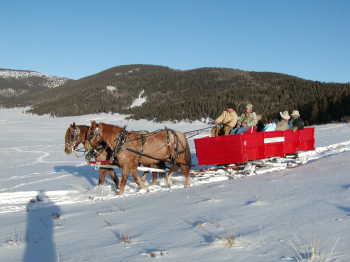
The pony is clearly better than any tractor. For a start some ponies can make more ponies and no tractors can make tractors. Secondly I am using and talkking about 500lb ponies, so the fact that a 1200lb horse isn't efficient isn't relevant. Large horse were developed in part as a subsitute for good engineering. Wheels were crude, bearings were wood on wood, and strength was unpredictable. The old adage that double the diamaeter is half the work is true for wooden wheels on wooden axles with pigg fat as the bearing system. I use 20mm sealed bearings on beefed up, kite buggy, 16X6.50X8 wheel tyre assemblies.
And if it was only 1% of the problem and we can solve it, we only need 99 other ideas of similar niche relevance and the whole damn problem is solved.
If, on my own, I could have solved the whole damn problem I wouldn't be coming to an engineering forum coming and asking for help, and if more people read the UN's comments on the subject, I wouldn't have Chris sneering at me in his holier than thou, I love horses more than you do way without even the courtesy of looking at what i do.
Back to your questions, I use stainless because I can work in it, because 35x35 box fits in 40x40 box with 2mm wall, because it fails progressively and because I like it. Also with a base vehicle at 35kg, of which 10kg is the wheels and tyres, I don't get much benefit using lighter materials. Actially I am switching to using more HDPE
The areas where I need help are a simple way of calculating the caster and trail on a trailing fully castering offset rear wheel on a three wheeler. Imagine a motorcycle sidecar outfit towed backwards by a pony. The problem is the speed wobble which builds up. Increased caster and shifting the weight to the rear seems to help, but since this is for the wheelchair version, I have a range of weights from 100 to 300 lbs, and weight distribution isn't totally predictable.
All I want is a pony/horse drawn vehicle that the seriously disabled can drive in safety across country at a fast canter, on their own. I suspect i need variable caster and trail to cope with all the possible variables, especially as there are three different positions, altering the height and position of the drivers centre of gravity, all with their own distinct advantages.
Obviously Chris couldn't answer any of this because mobility for the disabled and allowing them off road is irrelevant compared to asking a pony to do some work, and he is far too kind to do that. Riding For the Disabled have stated in writing that they have never looked at ANY of my work and never will so Chris is in really good company by refusing to look at what I am doing.
Other areas where I am working are row crop cultivation to reduce pesticides and herbicides, and the design and materials for hoe blades and discs are critical. Can we use plastic, if so which, what is the best angle of attack for a hoe blade, how do we stop it picking up couch grass etc.
As engineers this is virgin territiory. Who has done serious work on horsepowered equipment for the last 70 years? A horse was reckoned in England to use the produce of 4 acres, but we are talking 1500lb heavy horse and ineefficient farming. But they still used them and they generated a lot more food than they used. Remember that cutting edge technology was all about two items; swords and ploughshares, and
you beat one into the other, becuase any bit of high grade steel needed to be working. But rather than drag a blade through the ground, can we convert rotary motion oir whetever.
Enough for this one, but there are a whole series of other possibities, especially battery electric powered eqipment and natural gas powered
Simon


 Improved methods of animal powered transportation & cultivation


 Re: Improved methods of animal powered transportation & cultivation