Previous in Forum: X-Ray Diffusion   Next in Forum: Gate Driver Design for irf840
Close
Close
Close
54 comments
Rate Comments: Nested
Active Contributor

Join Date: Mar 2013
Posts: 12

Convert 220 3 Wire Circuit to 110 Volts

03/02/2013 11:17 AM

Greeting. Great site...

Here is my situation. I am on 40 ft sailboat in Lima Peru. The country has 220 volt,

3 wire circuits. My tools are all 110 volt so I need to find out how to get power

while my boat is out of the water (I know a lot of this stuff will be out of code.

SO I understand that these are HYPOTHETICAL Questions, so you will in no way be

liable. BELIEVE ME, there is not much of a code here). I realize some of these

questions deal are more on a electronics side of thing, but I would appreciate any

input.

Background:
1) Checking the breaker box I have found that they have 2 cables (Red & Black) that

are carrying 220 volts each. These are tied into double breakers. Originally they

told me it was a 4 wire system, with two 110 volt legs. Now when I need the power

this is not the case. All the voltage supplied to the box is 220 volts, 3 wire. This

is at the box. When checking an outlet, and I contect my meter from one of the hot

leads across to ground, and I get 274 volts, when I use the other hot lead I get 99

volts. This equals 273 volts, yet when I check the two prongs on the outlet I get

220 volt. I don't get it.
2)Converters. Looking locally at the converters I am only finding converters (very

expensive) for 3000 VA (Va, I understand is equal to watts at low power usage).

This gives me 27 available amps ( 3000 Va / 110 volts). Some of my tools require 10

amps, and on start up, I understand that I should have 3 times the amps or in this

case 30 amps. So I am hestiant to use a converter because of possible damage to my

tools.
3) Existing Converter/Inverter. I have a combination system that I use in conjuction

with shore power, and my batteries on the boat. On batteries, the unit inverts DC

power to 110 AC. When plugged into 110 volt shore power, the unit transfers power to

the AC Recepticles, and also charges the batteries. The unit will accept 220 volts

coming in, but will only act as a battery charger. It will not convert the AC power,

not will the inverter work. Also there is no transfer of power.
4)I need to be able to both charge the batteries, and have 110 volt AC power, with

enough amps for my tools.


Questions:

1) Is there a way to get 110 volts out of 220 volt 3 wire system? I can either come

from the box, or the outlet. I can not find anything on the web that tells me if it

is possible to rewire/change breakers, to get 110 volts from a 3 wire 220 volts

system. Commont sense tells me that I need to use a convert since the power supplied

is 220 volts. The local electrian tells me that I can get one leg of 110 volts, but

the amps will be halved. Do not understand this.
2)If I use the converter, is 27 amps within the tolerance levels for using a 10 amp

power tool, that needs 30 ammps on start up.
3) How to wire the converter? The converter has 2 black wires going into it, and 2

black wires coming out. Do I need to worry about which are positive or negative on

the incoming/outgoing legs?
4)Can I use the converter to change the power into my inverter/combiner on my boat?

So if the converter comes in with 110 volt, pure sine, and 27 amps, and my combiner

is rated to receive 30 amps, I am thinking that I can then use the electical outlets

on the boat to run power tools, and any deficency in amps on start up, will be

handled by the batteries.
5) Do converters going from 220 volts to 110 volts produce a pure sin curve?

Thanks in advance for you help

Dave

Register to Reply
Pathfinder Tags: 220 volt circuits
Interested in this topic? By joining CR4 you can "subscribe" to
this discussion and receive notification when new comments are added.

Good Answers:

These comments received enough positive votes to make them "good answers".

"Almost" Good Answers:

Check out these comments that don't yet have enough votes to be "official" good answers and, if you agree with them, vote them!
3
Guru

Join Date: Oct 2008
Posts: 42355
Good Answers: 1693
#1

Re: Convert 220 3 wire circuit to 110 volts

03/02/2013 11:28 AM

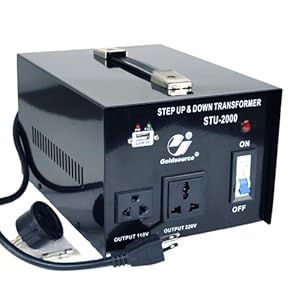
Hire a local electrician, or buy one of these rated for your equipment: Step Down Transformer - World-Import.com

Register to Reply Good Answer (Score 3)
Guru
Engineering Fields - Electrical Engineering - Been there, done that. Engineering Fields - Control Engineering - New Member

Join Date: Dec 2008
Location: Long Island NY
Posts: 15600
Good Answers: 981
#3
In reply to #1

Re: Convert 220 3 wire circuit to 110 volts

03/02/2013 4:41 PM

Hiring a local electrician will help greatly. You will become less of a stranger to the neighborhood additionally.

__________________
"Don't disturb my circles." translation of Archimedes last words
Register to Reply
Guru

Join Date: Mar 2007
Location: by the beach in Florida
Posts: 33392
Good Answers: 1817
#2

Re: Convert 220 3 Wire Circuit to 110 Volts

03/02/2013 1:31 PM
__________________
All living things seek to control their own destiny....this is the purpose of life
Register to Reply
Guru
Engineering Fields - Optical Engineering - Member Engineering Fields - Engineering Physics - Member Engineering Fields - Systems Engineering - Member

Join Date: Apr 2010
Location: Trantor
Posts: 5363
Good Answers: 647
#4

Re: Convert 220 3 Wire Circuit to 110 Volts

03/02/2013 6:03 PM

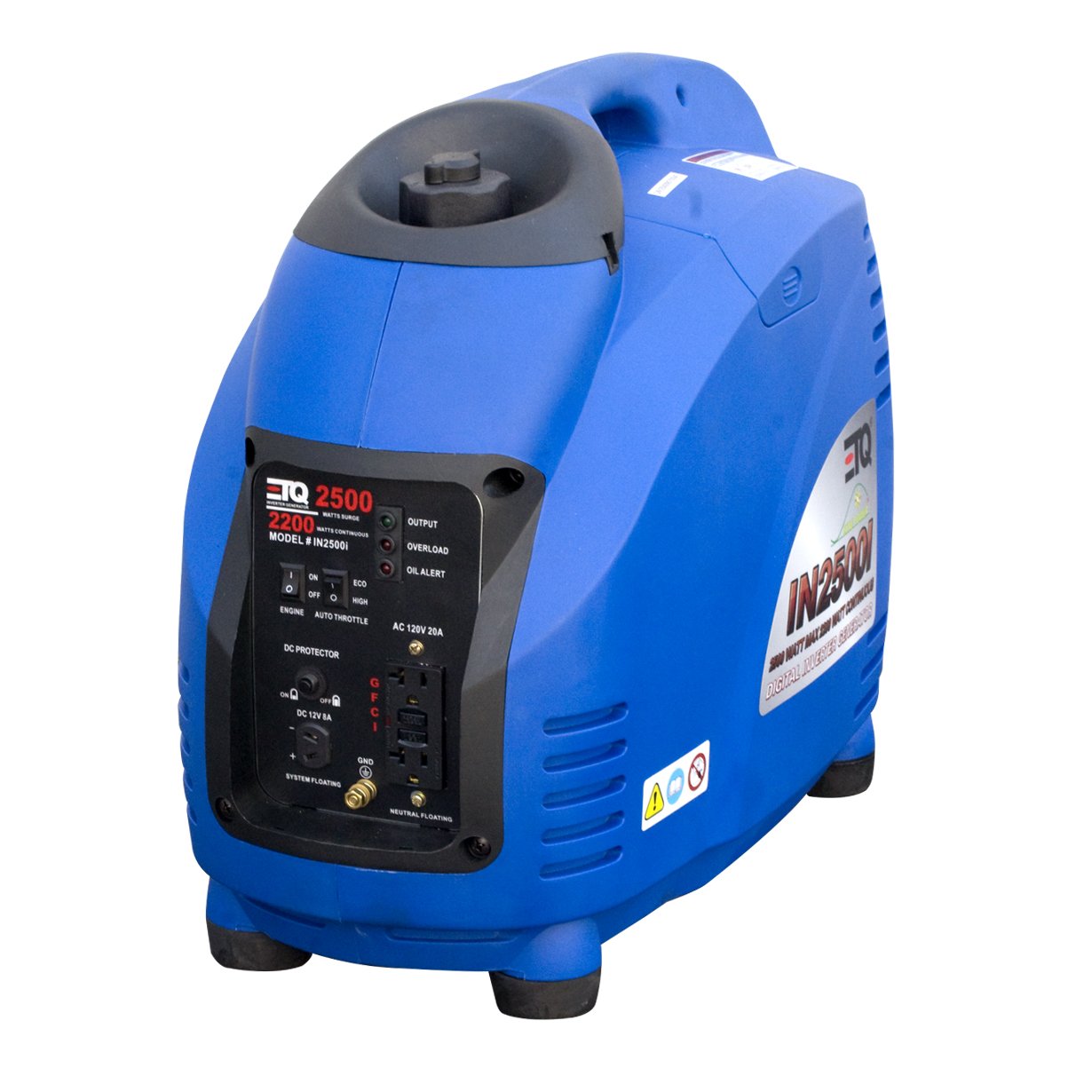
Why not just buy a portable generator? Maybe not as cheap as hiring an electrician or buying an inverter, but you can take it with you.

__________________
Whiskey, women -- and astrophysics. Because sometimes a problem can't be solved with just whiskey and women.
Register to Reply
Active Contributor

Join Date: Mar 2013
Posts: 12
#5

Re: Convert 220 3 Wire Circuit to 110 Volts

03/02/2013 7:00 PM

Well guys, interesting comments. I do not know if you get money or not with me clicking through to Amazon dot com.... I came here cause I am looking for engineering solutions:

1) I am looking for a technical discussion. Simply sending me to amazon or telling to get an electrician does not cut it. I AM IN THE 3RD WORLD !!! To order from amazon, with custom duties will cost me more than flying back to the US to buy the parts recommended so far.

2) I have looked at gen sets. The country is a 220 volt, 3 wire system. That means all gen sets here produce 220 VOLTS.

That means both legs of wires carry 220 Volts, they alternate back and forth with the voltage, which duplicates the amps, which means there is no neutral wire like in the US that uses 4 wires, to get 220 Volts.

3) The local electricians don't know how 110 volt systems work, let along tying into a sophisticated battery charger/inverter/transfer unit. This unit cost me $2500 when I bought it. The manufacturer no longer supports the unit, and I am not about to "try it and see what happens" when hooking up different volts, phases, and converters.

Let's try an simple question. I found a converter. It will go from 220 volts, 50 hz, to 110 volts, 60 hz. The wires coming out of the 110 side are both black. From my understanding of 110 volt circuits, the hot (black wire) is producing a 110 volt alternating current ( goes from pos to neg) and the white, or neutral wire is not carring voltage but is a return path. So how do I determine which of the two black wires is a neutral wire. With a multi-meter, I do not see a netural, and get 110 volts out of both wires. What I have been able to find out is that the transformer is an isolation transfomer, which tells me I do not have to worry about a neutral? So when I contect to my batter combiner unit, I can hook up either wire to the netural or the hot side?

Thanks

Register to Reply
Guru

Join Date: Oct 2008
Posts: 42355
Good Answers: 1693
#6
In reply to #5

Re: Convert 220 3 Wire Circuit to 110 Volts

03/02/2013 7:27 PM

I can't help you. I can't see the wires from here.

BTW, we do this for fun.

Register to Reply Score 1 for Good Answer
2
Guru
Engineering Fields - Electrical Engineering - Been there, done that. Engineering Fields - Control Engineering - New Member

Join Date: Dec 2008
Location: Long Island NY
Posts: 15600
Good Answers: 981
#7
In reply to #5

Re: Convert 220 3 Wire Circuit to 110 Volts

03/02/2013 9:37 PM

As Lyn accurately said, we cannot see your wires. However, I can see why you're having difficulty. You claim that the "3RD WORLD" electricians of this modern capital know nothing about 110 volt systems. You insult the natives and you wonder why they don't like you. You then come to us with a collection of bumbling near understandings of power distribution that tells me you know only enough about electricity to be dangerous to people and machines. I and others here tell you to hire a native electrician and you turn your wrath to us. I do not have the patience nor the desire to teach the fundamentals of electricity to somebody like you.

Se siembran lo que cosechará.

Oh by the way, the international standard to make a circuit node a neutral is to connect it to earth. Not all power distributions include a neutral to a user but any electrician knows what it takes to make a neutral.

Buenos noches senor.

__________________
"Don't disturb my circles." translation of Archimedes last words
Register to Reply Good Answer (Score 2)
Commentator

Join Date: Dec 2012
Posts: 65
Good Answers: 3
#21
In reply to #7

Re: Convert 220 3 Wire Circuit to 110 Volts

03/03/2013 2:43 AM

I have been in Mexico and South America doing construction. Thus btw means dealing with electrical contractors and electricians. I can tell you that unless you hire an electrical engineering firm in any of these places you are unlikely to get anyone with any kind of formal training. Worse, most of the self-proclaimed electricians available would not be allowed to wire a toy house here! It is a daunting task to get a person truly knowledgeable in any of the skilled trades. I have actually seen many so called electricians using old car battery chargers to weld wires together that were part of the distribution system! (most of these devices had no case/were barely more than a bare transformer!) Down there, there are few standards, and even fewer that are kept. It's likely that the op is seeing these voltages as the result of someone using a tap on a transformer not intended for use as the common, as a common! We saw this again and again. When the transformer was damaged leaving the common connection open or unusable they simply moved both taps to get the needed total voltage. We actually had to buy new step down transformers and install them in order to insure that or building service was safe!

Register to Reply
Guru

Join Date: Mar 2007
Location: by the beach in Florida
Posts: 33392
Good Answers: 1817
#14
In reply to #5

Re: Convert 220 3 Wire Circuit to 110 Volts

03/02/2013 11:40 PM

It was not my intent to send you anywhere....I posted these as an example of what would work....I would expect that you would obtain at least a power adapter locally, they sell them in the airports, or ask a taxi driver....good luck with that attitude though, you're likely to end up a permanent resident....

__________________
All living things seek to control their own destiny....this is the purpose of life
Register to Reply
2
Guru

Join Date: Mar 2007
Location: by the beach in Florida
Posts: 33392
Good Answers: 1817
#18
In reply to #14

Re: Convert 220 3 Wire Circuit to 110 Volts

03/03/2013 12:17 AM

Actually you should have 220v 60 hz, which means two legs 110v and a neutral....Which means you only have to use one leg and neutral which should provide 110 v 60 hz.....I would test the legs to ground to make sure of voltage, any metal sticking in the ground should work as a ground.....

__________________
All living things seek to control their own destiny....this is the purpose of life
Register to Reply Good Answer (Score 2)
Power-User

Join Date: Jun 2011
Posts: 140
Good Answers: 3
#8

Re: Convert 220 3 Wire Circuit to 110 Volts

03/02/2013 10:39 PM

Yes your power hand tools will work fine on 27 amps.

Register to Reply
Commentator

Join Date: May 2012
Location: Sutter buttes - East 50 miles you found me
Posts: 59
Good Answers: 3
#9

Re: Convert 220 3 Wire Circuit to 110 Volts

03/02/2013 10:52 PM

Its actually quite easy to achieve what your asking, however since you don't the know difference between the 99 volt leg and the Stinger leg 274 volts this could result in yours or others deaths. Like others have said seek out a local electrician or buy new tools.

__________________
Lurking Always Lurking.........................in the Shadows
Register to Reply
Guru
Safety - Hazmat - New Member Engineering Fields - Retired Engineers / Mentors - New Member Engineering Fields - Piping Design Engineering - New Member Hobbies - DIY Welding - New Member Fans of Old Computers - PDP 11 - New Member

Join Date: Feb 2007
Location: Stronger Than The Storm
Posts: 2394
Good Answers: 203
#10

Re: Convert 220 3 Wire Circuit to 110 Volts

03/02/2013 11:24 PM

Sir,

As other posters have suggested, answers to your problem would probably be closer to what you want if you become more open to others suggestions. I would also note that answers can only be as good as the information that is offered to the problem solvers to work with. Lastly, it is extremely difficult to sit at a keyboard and try to apply ones knowledge to another persons problem if the information needed to solve the problem is not included in the information or data supplied by the poster. Repliers do the best they can with with what they are given, some give good answers and some give extremely bad answers. Its up to you to choose the one you think is best.

From a technical standpoint: The data you supplied isn't worth the ink to print it. Don't get your dander in an uproar though, it could have been due to bad instrumentation or bad information you were given by the locals or it could be what some others have quietly inferred: you don't know much about the subject and therefore don't know much about what you are asking. This makes it extremely difficult to help you since we can only go by what you tell us.

Don't insult the locals. You never know when you will be desperately in need of help and with a 40 ft sailboat it could be often or very expensive to do without there help.

As someone else suggested look for information on google but be aware that not everything you see in the internet is correct or truthful. I googled "electrical system in Peru" and found what could be a good site for information: electricaloutlet.org . From what it says it seems that Peru has a 220 volt 2-pole 3 wire system (my observation not from personal experience since I haven't been further south than Mexico and Jamaica). The third wire is probably a ground off the center tap of the power supply to reduce the voltage of a shock from either wire to ground to 110 volts, still sufficient to kill very quickly. A volt meter applied to the two supply wires would indicate a potential between them of 220 volts. Likewise the meter from the ground wire to either supply wire would indicate 110 volts. To facilitate your 110 volt tools the purchase of a 220v/110v step-down transformer would be wired with its primary winding (220 v) across the two supply wires. The transformer secondary would then supply 110 volts which you could readily wire a socket for your tools. (This is just my interpretation and resultant solution, many other posters with likely have other solutions both good and bad) A good step-down transformer will have several taps on one or both windings to facilitate adjustments to fine tune the resultant voltage supply. This unit is identical to those commercial "travelers" transformers that are sold, just a lot bigger and beefier.

I hope this can help you with your problem. Please remember that the answers you get are only as good as the information supplied, (GIGO- very old computer talk for GARBAGE IN, GARBAGE OUT!) Also don't p_ss off the guy who is trying to help you, you will only get p_ssed on!

Good Luck, Old Salt

__________________
Any day on the green side of the grass is a GREAT DAY!, --- me +++++++++. I believe creativity is an inherent part of everyone. --- Kermit T. Frog
Register to Reply
Guru
Safety - Hazmat - New Member Engineering Fields - Retired Engineers / Mentors - New Member Engineering Fields - Piping Design Engineering - New Member Hobbies - DIY Welding - New Member Fans of Old Computers - PDP 11 - New Member

Join Date: Feb 2007
Location: Stronger Than The Storm
Posts: 2394
Good Answers: 203
#12
In reply to #10

Re: Convert 220 3 Wire Circuit to 110 Volts

03/02/2013 11:27 PM

Also try: treehouse.ofb.net/go/en/voltage/peru

Good Luck, Old Salt

__________________
Any day on the green side of the grass is a GREAT DAY!, --- me +++++++++. I believe creativity is an inherent part of everyone. --- Kermit T. Frog
Register to Reply
Associate
Hobbies - Hunting - New Member

Join Date: Aug 2011
Posts: 40
#11

Re: Convert 220 3 Wire Circuit to 110 Volts

03/02/2013 11:24 PM

invite any american consulate couple on board give a good time and ask them what they done with their powrr tools or better rent their power tools.

Register to Reply
Associate
Hobbies - Hunting - New Member

Join Date: Aug 2011
Posts: 40
#13

Re: Convert 220 3 Wire Circuit to 110 Volts

03/02/2013 11:29 PM

by the way if you are going south you will have the same problem in chile in iquique you will be able to buy any imported product duty free and any power tools at a very reasonable price

Register to Reply
Guru

Join Date: Jan 2008
Posts: 1753
Good Answers: 59
#15

Re: Convert 220 3 Wire Circuit to 110 Volts

03/02/2013 11:55 PM

Well, I have not read the preceding, so my note stands alone. Be there as it may...I expect it to be 220V per phase.

For brute power (as in hair dryer and drills and such) a diode in series with 220 produces 110. Waveshape is not perfect, but who cares.

For radio, TV please buy proper transformer.

That's it.

If you have problem sorting out local vine, call me.

Register to Reply
Power-User

Join Date: Nov 2011
Posts: 286
Good Answers: 15
#38
In reply to #15

Re: Convert 220 3 Wire Circuit to 110 Volts

03/04/2013 3:03 AM

who cares - probably the guy expecting 110V using your diode and getting 155V!

Can't imagine the motor on a hair dryer being too enthusiastic when fed this strange half rectified 220V.

Register to Reply
Power-User

Join Date: Nov 2011
Location: Philippines
Posts: 105
Good Answers: 7
#16

Re: Convert 220 3 Wire Circuit to 110 Volts

03/03/2013 12:08 AM

The nominal supply in Lima is 220V 60Hz according to http://www.enjoyperu.com/peru_travel_tours_information/peru_travel_destinations/peru_lima/lima-peru-useful-information.html

The assymetry you measured suggests that the center tap of the local supply transformer is not grounded (same here in the Philippines with some supplies).

Only reliable measure is to buy a step-down transformer of sufficient VA rating to serve your tools. For most purposes you can ignore the tool's startup current which should only be momentary. To allow for power factor and inferior transformers, choose a VA rating at least 40% higher than the tool's name plate wattage. (I recently had a locally made transformer rated at 1500VA burn out when feeding a microwave oven rated at 900W).

As for providing a safety ground for the tools - that's a new topic!

Register to Reply
Power-User

Join Date: May 2007
Location: Ronan, Montana
Posts: 174
Good Answers: 10
#17

Re: Convert 220 3 Wire Circuit to 110 Volts

03/03/2013 12:13 AM

Some people on CR4 have no life but to be smart-mouthed and offer no real advice. That's unfortunate because CR4 used to have a lot of participants and a lot of good advice but now its not that way. They are high and mighty and it appears easily offended by someones verbage so they can once again make some comment deriding someone who asks a question. Instead of a professional answer to the best of their ability, they answer with no answer but do have something smart to say which is probably the reason most of the good people have left.

I have no opinion for the OP's question. I've never had the training to be an expert on every subject. I do understanding his situation and he has my admiration for trying to get informed so he can either act or be informed enough to make an intelligent decision.

__________________
"don't be so open minded that your brain falls out" unknown
Register to Reply Score 1 for Off Topic
Guru

Join Date: Oct 2008
Posts: 42355
Good Answers: 1693
#24
In reply to #17

Re: Convert 220 3 Wire Circuit to 110 Volts

03/03/2013 10:23 AM

You really didn't pick a very good thread for your sermon.

It should have been obvious to even the untrained, by reading the Original Post, that Original Poster is not an electrician and the best possible advice one can give to a novice working with 220 V while not knowing what they are doing is to tell them to hire a local electrician. That kills the electrician if they make a mistake, not the OP.

It's that new, blue color scheme that makes us all cranky.

Register to Reply
Guru

Join Date: Feb 2011
Location: Atlanta, GA
Posts: 1053
Good Answers: 110
#19

Re: Convert 220 3 Wire Circuit to 110 Volts

03/03/2013 12:56 AM

Answers to your questions:

1. Yes, use a transformer. You will get AC out with the same frequency as the input. In general power in Peru is 60 cycle. A 3000VA transformer should be large and heavy.

2. Yes, a 3000VA converter will generally power a 10 amp tool through its startup.

3. Is this really a converter or just a transformer? Ordinarily, two black wires in and two out would signify a single phase transformer. You need full documentation to be sure you know what this thing is doing. You can easily get yourself killed, especially in a marine environment.

4. Again, you'd need the documentation in front of you. We'd need to see a functional diagram, at least.

5. Some do. Many produce an approximation. Some things occasionally called a converter are transformers, and produce a true sine wave if the input is a true sine wave. Again, you'd need the documentation.

If your house inverter can power your tools, then the easy solution is to buy a 220 VAC input battery charger for your house batteries. A good charger can be left attached while using power from the batteries.

__________________
Think big. Drive small.
Register to Reply
Member

Join Date: Mar 2013
Location: Bucharest Romania Europe
Posts: 6
#20

Re: Convert 220 3 Wire Circuit to 110 Volts

03/03/2013 1:39 AM

When you measure voltage 220v put a bulb in parallel with the voltmeter. That way you're sure that you measure. Otherwise you can measure a high voltage due to a small residual current. Normally if things are correct for 220V single phase, you must have 220v between phase and neutral and 220V between phase and ground and between neutral and ground a small voltage. I think it's a single phase system but for some reason neutral is not connected to earth in power plant. It is not a normal situation.
To get 110v single phase from 220V single phase of using an autotransformer. It is cheaper and easier weight .
At transformer connect wires showing 220v between them at the measurement.

__________________
Falun Dafa is the path to human immortality. You just need to follow it and believe in it. Is the human user manual and it was stolen until now..
Register to Reply Score 1 for Good Answer
3
Active Contributor

Join Date: May 2011
Posts: 18
Good Answers: 5
#22

Re: Convert 220 3 Wire Circuit to 110 Volts

03/03/2013 5:14 AM

Many good similar replies here, to which I add for your longevity and safety...

The mains supply will never be pure sine, its always dirty. Your inverter might be pure sine, or synthesised sine, or filtered square etc.

We would need to know the rating/model etc. of the convertor and inverter in detail to answer the questions about the boat power being used.

In general, for 220 - 110 step down or up...

Suitable auto-transformer will work. But be aware most auto transformers do NOT isolate the stepped down voltage from the supply. They work by placing the supply thru a suitably wound 220 volt winding with a soft iron core which limits the current and taking a tap (in this case a center tap) from the same winding. Thus any earthing irregularities will be passed thru the transformer, not isolated.

A typical 1.5KW txf might weigh 10 Kg plus the case. I would avoid the cheaper lightweight units in your situation.

Using power tools continuously you may cause an under-rated transformer to burn up.... But i would not worry about the starting current, as long as you dont start the tools under load.

Sounds like you have a lot of work to do with various power tools. You must establish a good local earth or risk electrocution.

You need to place a load = lightbulb or toaster or something resistive across the mains supply and recheck the voltage. (as said above)

You should also check the voltage of each wire to your local earth ( a min 1 M deep into wet soil bright steel or copper rod with proper termination). If it is really at 93 volts and 273 volts on the two legs, this indicates you are dealing with a single phase of a three phase distribution system (which we'd expect) and the lower voltage is an floating system neutral while the higher is a power phase. The System neutral should theoretically by at or close to 0 volts ( maybe at 10 volts for example) and would normally fluctuate according to local loads from other users, moment by moment.

Providing a consistent 3 phase Neutral wire is expensive and not always done in remote areas in poorer communities to save capital costs, and it sounds as if that is what has happened where you are.

Depending on the make and quality of your power tools - the local earth (stake) would normally be connected to the outside shield of all your (not doubly insulated) hand tools and so protect you from possible short circuits.

If you are using 2 wire 110V hand tools - mmmm - that worries me. No room for errors in that case.

There must be some local electrician who knows the best practice. I would get two consistent opinions, test them, wear rubber boots, avoid working in the rain etc.

I would NOT simply use one side of the supply to earth to try and get 110 V out of it.

Unless I could observe the voltage to be stable for several hours, even then, a LOCAL EARTH is indicated.

If you don't understand what I have written then you don't know enough about electricity to take this on. Its potentially lethal, especially if you plan to work in or near salt water which is a very good conductor.

Can you borrow some tools? Buy an electrician a beer?

Good luck, please take care.

Register to Reply Good Answer (Score 3)
Active Contributor

Join Date: Mar 2013
Posts: 12
#40
In reply to #22

Re: Convert 220 3 Wire Circuit to 110 Volts

03/04/2013 8:21 AM

OK, if I understand what you are saying, since there is no documentation with the converter, there is no way I can be sure of the polarity on the two black wires coming out of the transformer?

I was planning on using the converter at night to charge yacht batteries since the charger has a programmed charge regime. I was then going to use the converter independently to run the power tools during the day.

As you can see from my posts later on in this thread, I am having problems with the polarity changing on me. Unfortunately, a local electrician, is not an option. The marina electrician does not care since everyone else here has 220 v. That is the end of his job description. This electrian is the one that told me that they had two seperate 110 volt leads to get their 220v, and I could just seperate them. Now I am discoverying that is not the case. The marina will not look to kindly on me bringing in an outside electrican.....

Register to Reply
Active Contributor

Join Date: Mar 2013
Posts: 12
#23

Re: Convert 220 3 Wire Circuit to 110 Volts

03/03/2013 9:57 AM

Wow, I guess I will never use the words "3rd World", again. By all means I did not mean to offended anyone, and I apologize. I would like to respond in two ways, social comments, and technical comments.

Replies to the social aspects:

There are two basic types of people who go to other countries, travelers and tourists...

Well, I really don't want to get into the social comments, I have a broke boat, on the hard (out of the water on land), and do not have time to respond to "comments", about how I relate to the locals, or to my depth of technical knowledge. Again, I really did not mean to "insult" anyone. I have to come up with solutions for power. My first course of action was to talk to the electrician here at the Marina, and he is the one that told me that he could get me 110 V out of their 220 v systems, which is the 220 Volt 3 wire, system I referenced. BTW the local Peruvians make fun of themselves about the technical expertise of the locals... I am just saying... and everyone in the yard is surprised that I want to use power tools to sand the bottom. They all do it by hand. They sand an entire 60 foot boat by hand... I am just saying...

Technical Replies.

I really appreciate the technical replies. Yes, I realize there are many dangerous things that can happen, and believe me I am careful. Just like sailing single handed (around 10,00 nautical miles so far), it is all about calculated risks. Also, I have been posting to different sites, and cutting/pasting. So by looking at my previous posts I can see why some off you might think my knowledge/experience might be suspect, since my editing was done poorly... To summarize what I have read, and the additional information I found yesterday:

1) Converter I have found. I have not located a converter with a higher rating than 3000 Va, yet. There is no documentation at the store with the unit. The web site for the manufacturer is located here:

http://www.transformadoresaudax.com/prod_transf.html The photo of the isolation transformer shown here, is of the 440 V to 220 V. The wires look the same as with the 220 v to 110 v transformer. I've pretty much decide due to time constraints, I will use this to power the tools. I will contact the company early next week to see about documentation, but I am not hopeful, that is why I was looking for testing techniques on the output.

2) Tools. I have more tools than clothes on the boat. Grinders, polishers, sanders, drills, etc. Most, if not all, are doubly insulated, hand tools from quality suppliers Bosh, De Walt etc.

3) Inverter/Combiner Unit. I have contacted the manufacturer, which was bought out by another manufacturer, and discontinued. I bought the unit, because it was advertised to take both 220v and 110 v as the input. The input is a marine connection with a 30 amp plug, 120 volt connector, 3 wires.

So basically I need to do two things:

1) Use my power tools. This seems appears to be answered correctly. I will use the converter independently of the invert/combiner that I have for running the power tools. The 3000 va rating should be enough to handle long periods with a heavy load, e.g. using the grinder, or sander.

2) Charge the batteries. I have a house bank (separate batteries for running systems, e.g. navigation, refrigeration, etc.), and a starting battery. House bank two deep cycle 8Ds, 225 amp hours each, AGM Batteries. Starting battery dual purpose, agm, 110 amp hours. These batteries require a special charging regiment, which is programmed into the controller for the combiner/inverter. So getting a local charger, if I can find one, that has the regiment built in, and can handle the AGMS, could be difficult or expensive. I would like to use my existing combiner/inverter.

So to refine my questions:

1) What is the best way to bring in power to the combiner/inverter? The unit is suppose to use 220 volt. So knowing that it is a 3 wire 220 volt system:

a) I can use the above converter, but how can I be sure to connect the correct wire out the the transformer to the neutral wire on the connector, and the hot wire on the connector? From my readings I think it may not matter, but I am hesitant, since I do not know how the manufacturer built the unit. I guess I can pull the cover off the unit, but before I do that ( a whole lot of work) am I being anal about connecting the wires out of the converter?

b) Hook up to the 220 V 3 cable system they have here. From my readings, I understand that in this system, both of the 220 volts legs carry current, so the breakers needed to be doubled. It I hook one leg up to the neutral connector, and one to the hot connector, will I be OK? I mean if the system is designed for 220 Volts, the internal protection should have a way to detect problems, shouldn't it? I realize there is no way to know for sure, but I am looking for educated guesses. So maybe I just try it a see what happens...

c) Hook up based on using a diode to cut the voltage as referenced in other comments here. This is where I am a REALLY Stupid. I understand how I diode works, I understand parallel and series circuits and I can do math ( though it has been a long time since I used Calculus ) How do I size the diode to bring this down?

Thanks again for the advice, and hopefully I have not offended any one again.

Register to Reply
Guru
Engineering Fields - Electrical Engineering - Been there, done that. Engineering Fields - Control Engineering - New Member

Join Date: Dec 2008
Location: Long Island NY
Posts: 15600
Good Answers: 981
#26
In reply to #23

Re: Convert 220 3 Wire Circuit to 110 Volts

03/03/2013 11:46 AM

I'm glad to see you recognize that the electrical information in your original posting here was far from stellar.

I like very much the suggestion from Mog. Use your existing 220 Vac battery charger at night and run your power tools from the charged battery during the day. If you fully drain the batteries with your work during the day then you might even consider a second set of batteries being charged and discharged in rotation through out the day. A step down transformer to match voltages to US standards will work well in Peru since the frequencies will be the same but may produce more trouble than it is worth in your next port of call. So if you insist on getting a step down transformer for your repairs, I do not recommend taking this transformer with you to your next port of call.

__________________
"Don't disturb my circles." translation of Archimedes last words
Register to Reply
Member

Join Date: Mar 2013
Location: Bucharest Romania Europe
Posts: 6
#30
In reply to #23

Re: Convert 220 3 Wire Circuit to 110 Volts

03/03/2013 12:53 PM

Use a 800-1000V/30Amp diode with an radiator.

Must resume before coming all measurements as I indicated above in my prevues post to identify the correct wires. It is imperative to identify if there is a monophasic ,biphasic or three phase power supply , neutral and earth wires are extra call. Then you can connect properly auto-transformer. Or for complete isolation a transformer network. The boat is wet and it's good to be extra safe.

Since the half-time lead diode voltage equivalent to half results but with a DC component. But voltage is not sinusoidal. For hand tools not matter too much but more efficient equipment can cause problems. Especially since you can not power transformer with it and voltage component is continuous and saturating the magnetic core and transformer blows safe for sure .

__________________
Falun Dafa is the path to human immortality. You just need to follow it and believe in it. Is the human user manual and it was stolen until now..
Register to Reply
Guru
Engineering Fields - Electrical Engineering - Been there, done that. Engineering Fields - Control Engineering - New Member

Join Date: Dec 2008
Location: Long Island NY
Posts: 15600
Good Answers: 981
#31
In reply to #30

Re: Convert 220 3 Wire Circuit to 110 Volts

03/03/2013 2:19 PM

I'm not comfortable with relying on a single diode to drop the effective voltage. Depending on the motor being driven, the DC offset from the asymmetric waveform could damage or make the motor operate in a strange fashion. I guess that it would be a reasonable attempt in an emergency but I would not seek this out as a solution.

__________________
"Don't disturb my circles." translation of Archimedes last words
Register to Reply
Active Contributor

Join Date: May 2011
Posts: 18
Good Answers: 5
#37
In reply to #23

Re: Convert 220 3 Wire Circuit to 110 Volts

03/03/2013 11:20 PM

No Worries, MagicCarpetRide a 220-110 transformer similar to shown in your link will work. It will also isolate you as well. Connect the local earth (see below) to the Transformer body. Consider mounting it all in an earthed metal box, which could take the cable when stowed. Make sure your tool earths are similarly connected, and your extensions too.

BTW we do our bottom sanding by hand annually but we have a crew....its not much fun though.

You should create/use a local earth. You can clamp a sturdy earth wire to the launch or siding rails for example, if you are using a boat yard with a rail cradle. Measure the voltage between this and your transformer earth. If its <10 volts AC you can ground like that. If its 100 AC volts then investigate further and dont work until its sorted.

Consider purchasing an earth leakage circuit breaker. Fit it in the transformer box. This will continuously monitor the leakage from your system to ground and disconnect the supply within about 10 ms of a short. In a boat yard there may be many other ways of getting a shock than just using an unusual supply. These are now mandatory on OZ, and save stress and lives. They are relatively cheap and work simply. If you've ever been a path to ground for AC you'll know the problem is you cant let go of the tool because your muscles alternately contract and release 60 time a second. Not nice. Having a switch to disconnect you automatically and quickly is very reassuring I can tell you from experience.

Our racing yacht has 3 batteries, an even days, an odd days and a starter. We supply 50 amps charging current at 14.4 volts DC at the alternator output ( so the regulator system 'sees' the incoming auxilliary mains charge as an alternator type output) and we let the boats 3 electronic regulators look after the current to the three batteries. Boat electrics can be tricky as you obviously know really well, and if it ain't broke don't fix it.. It looks like your inverter takes care of all this?

Personally I say dont use diodes in this situation. Too many uncertainties.

Further Answer to a)

First completely disconnect the boat's convertor/invertor from everything. Using a known good ohm-meter scale, measure the resistance from each of the sockets to the convertor case ( if metal) or the earthing lug, if there is one AND to the battery terminals. Essentially these should all read >1Mohm ie isolated, except the earth on the incoming 110 Volt should might be connected to the unit's case. Write the readings down in your log.

If its all isolated, try measuring the resistance between the two ac leads ( phase and neutral) on the socket. This should read about < 100 ohms depending on the rating. This would indicate a conventional input transformer. If it reads high, it might be a switch mode input. It would be good to know the make and model so we could do a search. Lots of options here. A transformer coupled unit would need to be switched to the correct input voltage manually BEFORE connecting to the local supply. An switch mode supply can be multi-voltage - typically 90-240V AC on the rating plate AND HAS NO INPUT VOLTAGE SWITCH.

Basically you should be able to connect the mains and observer battery charging immediately, with no heat/noise/smell apparent. Keep an eye on it for at least half an hour before walking away....

For the power tools

Use the right transformer. Local ground. Earth leakage protection. Done. Safe.

Keep the transformer box dry and it will work for years. Most places are either 220/40 or 110 V AC

Register to Reply Off Topic (Score 5)
2
Power-User

Join Date: Sep 2009
Location: Wilmington, NC
Posts: 140
Good Answers: 8
#25

Re: Convert 220 3 Wire Circuit to 110 Volts

03/03/2013 10:56 AM

1. You know your boat system works, check the battery fluid level daily and use it.......... 2. Charge on the 220 AC overnight and use the 110 AC inverter in the day for your tools.......... 3. Wet deep cycle batteries are available and very replaceable, just check connections.......... 4. You should change out the batteries after working them hard anyway, before launch........... 5. A new converter may be OK a few places but batteries are usually at every major port........... 6. Bust the battery not your budget.

Register to Reply Good Answer (Score 2)
Active Contributor

Join Date: Feb 2013
Posts: 16
#27

Re: Convert 220 3 Wire Circuit to 110 Volts

03/03/2013 12:01 PM

Ummm... Dude... do you know how to say "Balance the frigging Phase!" in Espanol? There is more to balancing the load than making it all come out to spec at the end of the wire. Your feed has a serious output problem - probably/possibly a short somewhere. The advice I saw from others is the best advice anyone can get on a system like this - CALL A LOCAL ELECTRICIAN!!! I know you want to do stuff 'cause it's fun - but sometimes fun translates to not only a serious PITA and worse but could morph into the local authorities trying to figure out where to send the body and who to notify, especially when you're dealing with electricity combined with third world systems and power providers. When Seabees go into an area, they bring their own power generation capacity. There are a lot of really good reasons for that.

Have you thought about just buying local power tools? Probably be cheaper...

But the main question here is what your priority is. Get the work done or play with Mr Electricity? Mr Electricity does not play nice and is sometimes really unfair. And Mr Electricity can BITE!!! HARD!!!

Register to Reply
Guru

Join Date: Feb 2006
Posts: 1758
Good Answers: 6
#28

Re: Convert 220 3 Wire Circuit to 110 Volts

03/03/2013 12:06 PM

A Transformer !

No distortion of your supply waveform and will convert as you desire.

3rd world countries are well ahead of local-winding facilities of all international standards.

Register to Reply
Active Contributor

Join Date: Feb 2013
Posts: 16
#29

Re: Convert 220 3 Wire Circuit to 110 Volts

03/03/2013 12:52 PM

A couple of specific things for you. I have no idea how much you know, but I'm beginning to suspect you may not be well grounded (pun intended) in electrical theory and actual real-world stuff. (No offense intended.)

#3 Start with electrical generation. ALL generators create AC power. It's the nature of the beast. If you want to see why, study power generation. An inverter is a device that converts DC power to AC power. So if you have a generator that makes AC power, to do anything with DC (like charge a battery) you must first change the AC to DC - which unsexy process is accomplished by the use of a full wave rectifier. (Turns a sine wave into a straight line.) To charge your battery from AC power, the power must be converted to DC. Then to use the power with an AC circuit it must be converted back to AC (inverter). If you have AC coming in, the inverter has nothing to do as the power is already AC. If you want to step the power level up or down you need a transformer, not an inverter. So charge your battery and run your tools off of the boat's recepticles... but to be honest I wouldn't even plug my systems in to the shore power feed you described.

#1 A 220 V "3 wire" system is usually not... It's usually described as "Two wire 220 with ground." And if that's what it is supposed to be, what you were told (two 110 hot wires and a ground/common) is what it SHOULD be but obviously is not. (See my other post about a bad feed.) A "4 wire 220" should be just two 120 "hot" power wires with two common wires (the common and the ground wire both connect to the ground/common bar.) You get the 220 by using a double breaker that makes contact with both sides of the box (most boxes have two buss bars that run under the breaker lines) For 110, you use a single breaker that contacts only one buss bar.) As to the amps being halved... Ohm's Law - (P=IE) = (P/E=I). (The rest of Ohm's Law is E=IR. I use the word PIONEER = "PIE 'n EIR" to help people remember it.) P=Power/in watts, I = Amps, E=voltage, R=resistance in ohms

"3 wire" (3 hot wires) systems are usually 3 phase systems - which are NOT what you want to be plugging your power tools in to.

#2 The starting amps required are found on the information label on the individual power tools and on most electrical equipment and can/will vary widely between makers and models of tools. To my knowledge there is no standard formula to find starting amps based on unit running amperage, but I could be wrong - things change. Read the label on the tool.

#3 Positive and negative apply to DC. A/C +/- alternate REALLY FAST!!! It makes no difference which wire you hook to which power lead, but the standard is follow the color. Two black wires with no other color wire indicates it doesn't make any difference as long as it's AC "of the right sort." (Can't have that riff-raff A/C coming 'round, you know.)

#5 Sin is what you do on the boat once you have power and a companion... Wave is what you do after the sin has been accomplished.

Register to Reply Score 1 for Off Topic
Guru
Engineering Fields - Electrical Engineering - Been there, done that. Engineering Fields - Control Engineering - New Member

Join Date: Dec 2008
Location: Long Island NY
Posts: 15600
Good Answers: 981
#32
In reply to #29

Re: Convert 220 3 Wire Circuit to 110 Volts

03/03/2013 2:53 PM

WOW the misinformation is just flying around here.

Have you never heard of a DC generator? I will admit that a DC generator is more commonly used today only as part of an instrumentation system to measure the velocity of something. A rectifier or full bridge produces a DC component in the spectrum but not pure DC. A filtering network with storage elements changes this spectrum into DC.

I agree that it is very likely that the feed is highly unbalanced but without knowing how the feeding transformer is attached to the three phase distribution or how other loads are connected it is a wild guess what is going on. Also the atypical voltages values cited and an uncertainty in the measurement technique used prevent me from saying anything about the grid voltage provided.

Ohms law only applies to resistor loads in an AC system. Motors are resistors. Motors have a reactive component that changes the current phase. (I do realize you were trying to simplify things for the OP. Over confidence with electricity can lead to a catastrophe.)

Starting current draw can easily damage other devices when a small split phase sub-circuit is made.

I do like your #5 answer.

__________________
"Don't disturb my circles." translation of Archimedes last words
Register to Reply
Power-User

Join Date: Nov 2011
Posts: 286
Good Answers: 15
#33

Re: Convert 220 3 Wire Circuit to 110 Volts

03/03/2013 3:33 PM

You can do this with a transformer. In the UK 110V for tools is from a special transformer giving 55-0-55V. 110V it is still possible to hurt yourself whilst in this configuration the max voltage you can see is 55V.

Ideally you either need phase and neutral in or 2 phases.

Must be hard on that boat!!!

Register to Reply
2
Active Contributor

Join Date: Jun 2011
Posts: 22
Good Answers: 1
#34

Re: Convert 220 3 Wire Circuit to 110 Volts

03/03/2013 5:52 PM

Single phase power in Peru is 220VAC. Receptacles and plugs are ungrounded 2 prong either flat or round. There is no third ground prong.

In the USA the ground bar is connected to the neutral in the power distribution box.

On boats and ships built in the USA the neutrals in power distribution boxes are isolated from the box and the ground bar. The neutral of a grounded marine power system should only be connected to ground at one location in order to prevent stray current corrosion

In Peru a 220V three wire system is 2 wires supplying 220 V and a ground conductor. The ground conductor is NOT a NEUTRAL. It is a safety ground. It is not intended that 110V is available between one power leg and the ground.

Register to Reply Good Answer (Score 2)
Active Contributor

Join Date: Mar 2013
Posts: 12
#35

Re: Convert 220 3 Wire Circuit to 110 Volts

03/03/2013 9:12 PM

Thanks for all the good information. I started to write a book to answer everyone's questions/comments, and then decide it just concentrate on what I have done.

So how weird is this?

I bought the converter, since I do not know how my inverter/combiner will interpret my 220 volts coming in (remember in other posts I have said I more information than the manufacture has) . Since both of the wires are black on the converter, I need to know which was wire was the return (e.g. the neutral), so I did not have a reverse polarity problem. See the gentlemen's description on boat systems, to get a description of the grounding systems aboard boats. I decided to let my boat's reverse polarity indicator, tell me if I had connected the two black wires correctly. I did some stuff that is not to smart, but I have to get power ($2000 worth of new batteries that need to be charged, let alone being able to use my tools). For instance, I do not have a ground hooked up on the cable going into the boat from the transformer. I will worry about that one I have power coming into the boat. Hooked up the 220 v side, and then made a guess for the black wires on the 110v side. Hooked up one to the white, and one to the black on the cable going into the boat (this is a standard marine cable you buy in the states.). Checked the polarity indicator, and the light was on. Not good. Shut things down. Reversed wires on the 110v side. The polarity indicator was lit but barely. The cable is really corroded that I was using, yea, yea, I know, I will replace it, I figured maybe that was causing the light to be lit, or there was another leak somewhere in the system. I just wanted to see if I had the wires figured out on the inverter. I threw the AC power breaker, and the polarity indicator went off. That isn't suppose to happen. Shut everything down. Guess I need to clean up the circuits. For grins, I went and got a reading on the 220 v outlet I was using. Same as I reported earlier, one leg running 197 volts, the other 99v on the wires coming into the outlet. Reading was 220 v when I checked at the outlet. Hmmm. So I changed the 220 wires coming into my plug and into the 2 red wires going into the converter. Fired it up, and now no reverse polarity. Doesn't make sense to me, but my inverter/charger/combiner seems to working fine now. The step charging for the AGM batteries is working (so the DC Charger is working, and I have AC power at the outlets, so the transfer is working too!).

So now everyone is happy. The electrician for the marina does not have to worry about me telling him he has problems with his circuits/transformers/boxes, etc. What is really wild about this marina, is that they drop electrical power lines a good 1/4 to 1/2 mile in the water, to a station (no idea what is in there) and then run power to various floating buoys. These buoys are subjected to constant wave action, and abuse. No idea how the system was designed, but I do know that I have really gone through zincs... This is the first time I have really participated in a forum. Usually I just read. It has been interesting. Something I noted, is that people from other countries tended to be more suggestive of things to try, while people from the US tended to say, "Call an electrician". Something to ponder on those late night passages. BTW, I love it when people tell me I am stupid, that tells me that I am learning ;-).

Off to other problems. Tomorrow I am dropping a 800 to1000 lb, 55 ft mast, with people who have never done it before. My first time not having "the guy" do it. Now if I can just get the warp drive to work, I can get out of here.

Take care everyone, and follow your dreams. Believe me when the doctor tells you at 33, you have cancer, and only have a 13% chance of living 8 years, you realize everything else is not important. BTW I am 56 now...

Register to Reply
Active Contributor

Join Date: Feb 2013
Posts: 16
#36
In reply to #35

Re: Convert 220 3 Wire Circuit to 110 Volts

03/03/2013 10:03 PM

Re: "Call an electrician" - the people in the States actually have electricians who know what they are doing while in the rest of the world it seems to be "iffy." (And from what I've read here the power supplies seem to be even more so.)

Re: Warp drive - MAKE SURE YOU HAVE THE CLUTCH IN BEFORE YOU SAY "ENGAGE"!!! The last time I heard of a guy who didn't check that he ended up walking back from the Gamma quadrant.

Register to Reply
Active Contributor

Join Date: Mar 2013
Posts: 12
#39

Re: Convert 220 3 Wire Circuit to 110 Volts

03/04/2013 8:01 AM

Reverse Polarity is back.

I turned off the AC breaker, and left the converter plugged into 220v and into my circuit on the boat. No Reverse Polarity light. This morning I got up and the light was back on. Causes:

1) Since the voltage to the outlet is not constant, each leg reading different voltages, could this have caused the polarity to change?

2) How can you test for the polarity of an AC circuit, using a millimeter, or amp meter?

3) Am I correct in thinking that since I am using a isolated converter, that if the voltage goes up on one leg of the 220 v, that the polarity changes, and so the output polarity of the 110 v circuit will change also?

Just goes to show you... the gremlins are still around...Thanks.

Register to Reply
Power-User

Join Date: Nov 2011
Posts: 286
Good Answers: 15
#41
In reply to #39

Re: Convert 220 3 Wire Circuit to 110 Volts

03/04/2013 8:28 AM

This is time to call in an expert. The fire brigade and ambulance services will I'm sure be grateful.

Doesn't the polarity of an AC circuit change quite regularly - in some countries more regularly than others?

Luckily you are not in a boat or near water .....

Register to Reply
Member

Join Date: Mar 2013
Location: Bucharest Romania Europe
Posts: 6
#42
In reply to #39

Re: Convert 220 3 Wire Circuit to 110 Volts

03/04/2013 10:31 AM

Alternative voltage has no polarity. It varies over time, half the time the voltage is positive and half are negative. Polarity can not speak in this case. Both cables can be positive or negative at a time.
Only continuous current is positive or negative pols. 's Polarity does not vary with time.

__________________
Falun Dafa is the path to human immortality. You just need to follow it and believe in it. Is the human user manual and it was stolen until now..
Register to Reply
Power-User

Join Date: Nov 2011
Location: Philippines
Posts: 105
Good Answers: 7
#47
In reply to #39

Re: Convert 220 3 Wire Circuit to 110 Volts

03/04/2013 6:19 PM

This 'ReversePolarity' indication is probably misleading since, as you said, you have no ground hooked up yet and, from your voltage measurements, the supply transformer has no leg grounded.

I imagine (check the manual) that the so called 'polarity' is a check on which incoming wire is at ground potential or 'Neutral' but you don't have such a supply.

Does the RP indicator actually lock out your system? If not, just ignore it and so long as you have 220V +/- 10% between the the 2 power wires if the incoming supply it should work.

However, do not neglect to provide an independent ground (not from the incoming mains wiring which appears unreliable) to your boat's ground terminal as failure might be lethal!

Register to Reply
Active Contributor

Join Date: Mar 2013
Posts: 12
#43

Re: Convert 220 3 Wire Circuit to 110 Volts

03/04/2013 11:08 AM

I think what is going on here is the definition of terms, and the difference between land based systems and water based systems. Complicating things is combining the two...

I was hoping I could get fast answers, without me have to deal with researching through various marine books. Here is what I found as the latest offering to help clarify things. From "Boatowner's Mechanical and Electrical Manual", by Nigel Calder, who btw is a physits

"A poloarized system is one in which the grounded (neutral) and ungroundedd (hot) condutorse are connected in the same realationship to all terminals"

So looking at his trouble shooting suggestions, he has you hook up a light, or a meter, and test the neutral leg against a grounding wire, and then test the hot leg against a grounding wire. If you get a reading or the light goes off when testing the neutral, your system is polorized.

This is essentially what I did when I used my on board light, which is clearly labled "reverse polarity". Remember I said I switched both of the black outgoing 110 v wires and I could not get the Reverse polarity light to go off. On one leg it was a quite a bit dimmer. I did finally get the light to go off, when I switched the 220 volt wires coming into the converter.

My last prompt this morning was because the reverse polarity light was shinning...

So that is what is going on... so I am still at a lose on why I am getting this reverse polarity. It is my understand that since I have an isolatoin transformer (converter) the secondary winding should be grounded because it is a secondary field which is not conncted to the primary field. So shouldn't this be stable?

Register to Reply
Member

Join Date: Mar 2013
Location: Bucharest Romania Europe
Posts: 6
#44
In reply to #43

Re: Convert 220 3 Wire Circuit to 110 Volts

03/04/2013 2:08 PM

In your book terminology is drawn hair. In a single-phase power are usually three cables: phase or live wire , neutral wire earthing network. In a fair system neutral is connected to earth grid electricity factory. Here it seems that is not connected to earth because it is a high enough voltage between neutral and earth conductor. It's a bad situation.
But because it uses a transformer who have isolate primary and secondary 220v 110v no matter that.
Using a bulb connected to ground can identify which stage light show loud and voltmeter show 220v . Conductor at each other for weak light bulb is neutral network. Transformer is connected between phase and neutral network.
110v output voltage from the transformer is isolated from ground. Do not connect either of these wires to the ground. This is so much safer because using hand tools and you have water on the boat. In this way, problems can never occur even if accidental touch one of the wires does not matter which, but never both, carefully. If connect a wire to ground the risk of electric shock is 100% if you touch the one or other wire , and it is wet on the floor.Be very careful.

__________________
Falun Dafa is the path to human immortality. You just need to follow it and believe in it. Is the human user manual and it was stolen until now..
Register to Reply
Power-User

Join Date: Sep 2011
Location: Near the New Madrid Fault. USA
Posts: 269
Good Answers: 1
#45

Re: Convert 220 3 Wire Circuit to 110 Volts

03/04/2013 3:30 PM

You need a crew member well versed in electrical/electronics I will come down there.

__________________
It's not Rocket Science
Register to Reply Off Topic (Score 5)
Associate

Join Date: Mar 2012
Posts: 36
#46

Re: Convert 220 3 Wire Circuit to 110 Volts

03/04/2013 3:52 PM

More information please.

What is the frequency of the electricity?

If the frequency is the same as your tools requires a simple transformer will do the job.

You should not need any converters unless the frequency is different or you want power filtering or something similar.

It seems they are telling you the service is delta 3 phase with a center tap on one leg to give half of one of the phases. This would be 4 wire.

If that is the case you should be able to find the 110V you seek, with no transformer.

More info if this does not help.

Get a connection diagram from the local electricians, or at least take a picture of how your main panel is wired and post it, or something.

Its easy to make 110V out of 220V with a transformer, but I feel your solution can be had much more simply.

Register to Reply
Active Contributor

Join Date: Mar 2013
Posts: 12
#48
In reply to #46

Re: Convert 220 3 Wire Circuit to 110 Volts

03/05/2013 8:37 AM

Frequency is the same for both the 220v and 110v it is 60 hz.

Problem was finding a transformer ( I have been told to call it a converter) that would pull enough amps. I have a grinder that pulls 10 amps, and was told that you needed at least 3 X the amps for start up. Others here said that 27 amps would be fine so I bought the transformer.

I am not sure of the phases. When I looked in the box and did some measurements, there was a black, a red, and a ground. There was dual circuit breakers attached to the red and black wires on the bus. See my above comments for volts measured.

My real problem now is to understand why I am getting "reverse polarity" as I stated above. I have gotten rid of the reverse polartiy problem by changing the wires on the transformer, but now it has come back. Before I started debuging it yesterday, it went away, and last night and this morning the reverse polarity problem is back....

So I am stumped... I understand that there is no "polarity' with an AC circuit, but there is a reverse polarity problem with the grounding of the circuit. See my other comment about this definition. Before I start ripping into my whole grounding system on the boat (I never had the reverse polarity problem when using my inverter from DC to AC, and this would have shown up) I am investigating the power from the AC Source, and the Transformer.

Thanks for you help, I will try to get a photo posted, but it may be a few days before I can get permission.

Register to Reply
Active Contributor

Join Date: Mar 2013
Posts: 12
#49

Re: Convert 220 3 Wire Circuit to 110 Volts

03/05/2013 8:48 AM

Thanks again for you everyone's constant concern.

The reverse polarity problem stops, than starts again. It is not immediate, buy will take place after many hours. For instance, before trying to debug yesterday, it stopped I used the system all day, and then the reverse polarity happened again.

I turned off the Transformer (I was told to call it a converter) for the night. Tried this morning, and the reverse polarity problem is back

I do not think it is my boat's grounding system, since I had no problem generating an AC Circuit from the inverter. If there was a problem this way the light would have come on, to work and protect everything correctly the "reverse polarity" indicator is wired into where the source of the AC is received on the boat, e.g. it does not matter if it comes from the inverter, or a cable from an external source

Today, I will start the debugging with the power coming in and the transformer...

Register to Reply
Active Contributor

Join Date: Mar 2013
Posts: 12
#50

Re: Convert 220 3 Wire Circuit to 110 Volts

03/05/2013 1:57 PM

Here are photos people requeseted

Register to Reply
Associate

Join Date: Mar 2012
Posts: 36
#51
In reply to #50

Re: Convert 220 3 Wire Circuit to 110 Volts

03/05/2013 2:35 PM

Ok that must be the panel box in your boat as I do not see a ground connection.

Is the white wire bonded to ground? If it has zero volts when measured against a good ground source this is implied.

So if it is the Neutral(Bonded to ground) then what are the voltage readings between it and each ungrounded conductor?

In Canada we are only allowed to use white wires as Neutrals, and they should have no voltage on them. Your setup seems to imply they are "live".

Is this the power box in your boat?

If so can you show the power box you are connecting to?

Register to Reply
Active Contributor

Join Date: Mar 2013
Posts: 12
#53
In reply to #51

Re: Convert 220 3 Wire Circuit to 110 Volts

03/05/2013 7:08 PM

Nope it is the marina's box.

I get 220 v on all legs between ground.

See my comments below for the debugging I did today. I think the problem is not in the boat, but bringing it in...

Thanks for your help

Register to Reply
Active Contributor

Join Date: Mar 2013
Posts: 12
#52

Re: Convert 220 3 Wire Circuit to 110 Volts

03/05/2013 6:16 PM

Here are some articles on what reverse polarity is and on how marine systems are designed

http://www.westmarine.com/webapp/wcs/stores/servlet/WestAdvisorView?langId=-1&storeId=11151&page=Shore-Power

http://www.yachtsurvey.com/corrosion_in_marinas.htm

So testing today, OK now everyone is going to think I a really stupid, Here is what I found (I do not believe what I found).

According to the Marine Electrical Book I referenced early, to find if you have a reverse polarity problem when you plug into shore power, ".... connect the hot to ground you should have 110v. Conncet the neutral to ground, you should not read any volts. If you do you have reverse prolarity problem. These connection should be done with your mutlimeter, at the connector you are going to plug into"

So today I checked both 220 v, and 110 v, with the seperate legs, to seperate ground ( ran a ground wire 100 ft to a metal bolt in contact with the ground. I did not trust the ground on the outlet) and found this:

220 V one leg (the prong) to a seperate ground 206.5 v. OK sounds good to me.

220 V other leg ( Other prong) to a seperate ground 205.6 V OK sounds good to me. This is what it's supposet to do right?

Ground from outlet to my seperate ground : 130 v. Not good right? SO maybe this suggest why when I measured perviously from one leg to ground at the outlet I got readings.

So now for the transformer, measurements on the 110 side, with a seperate ground as mentioned above. No ground coming into the transformers I connected the two 220 v wire going into the transformer.

Output on the 110 volt side:

One leg read 177.4 v connected to seperate ground

Other leg read 207 v connected to seperate ground.

I would have expected one of these wires when connected to ground to be the neutral, with nothing on the sepeate ground. SO this tells me I am missing something in how the transformer works. The model down from this, rated for 2000 w, actually had a grounded plug attached to the 110 output side of the transformer.

Reading across both wires coming out of the transformer I got 110 v. With in limits. Right? I still get a reverse polarity problem when I come into the boat.

Suggestions on these solutions:

1) Run a seperate cable to rod in the ground for neutral. Connect the neutral to the neutal to the boat, and conncet both of the wires from the transformer to the hot wire coming into the boat.

2) Again run a seperate cable to rod in the ground, use the ground from the 220v outlet, remember this is hot at 126 v. So in this case I would by pass the transformer.

I know this sound crazy and not very safe.... I do not have the option to get the the marina to fix their grounding system.

Other thoughts?

Register to Reply
Member

Join Date: Mar 2013
Location: Bucharest Romania Europe
Posts: 6
#54
In reply to #52

Re: Convert 220 3 Wire Circuit to 110 Volts

03/06/2013 1:23 AM

From your picture and the measurements it is possible to have a three phase sitem if you have two cables to ground 206V and one showing showing 126 v but can be a tricky phenomenon. Uses a powerful bulb in parallel with the voltmeter. Thread tries to identify phase hot. Try to identify neutral. Trying to identify the ground wire. To use this method you've described it before the bulb and voltmeter. Use a high power load connected to the transformer 110V separation 220V / 110V, 1000W at least in parallel with a voltmeter. Connect the mains transformer primary 220V between phase and neutral alleged. check voltage of 110V. Connect transformatiorul between phase and earth and check voltage 110V. 110V load connected directly to your thread showing 120v and earth. Measure the three voltages. one that is closest to reality shows that are good conductors. If you deal wonder to those in the system port-phase or single-phase voltage is there.
It is possible that the neutral is not connected to earth in power plant. Because it's a port where more moisture is safer floating system where the neutral is not connected to ground.I'm Not sure because i have not boat.

__________________
Falun Dafa is the path to human immortality. You just need to follow it and believe in it. Is the human user manual and it was stolen until now..
Register to Reply
Register to Reply 54 comments

Good Answers:

These comments received enough positive votes to make them "good answers".

"Almost" Good Answers:

Check out these comments that don't yet have enough votes to be "official" good answers and, if you agree with them, vote them!
Copy to Clipboard

Users who posted comments:

bernard de raadt (2); cristian (5); DogOfWar (1); Haajee (1); Haroldus (2); John Gerke (1); K_Fry (1); leveles (1); lyn (3); MagicCarpetRIde (11); mikenelson6 (1); mog (1); NeilA (2); nofluer (3); old salt (2); Phillyblunz (2); Randyl (1); redfred (5); Rockyscience (1); silverfox (3); SolarEagle (3); The Shadow (1); Usbport (1)

Previous in Forum: X-Ray Diffusion   Next in Forum: Gate Driver Design for irf840

Advertisement