|

Courtship Chemistry
CR4's only blog that examines social science. This includes anthropology, public health, history, linguistics and psychology. The principles that govern daily human life and interactions are often overlooked, but are as important as any technology.
|
Posted December 23, 2016 12:00 AM
by M-ReeD
|
|
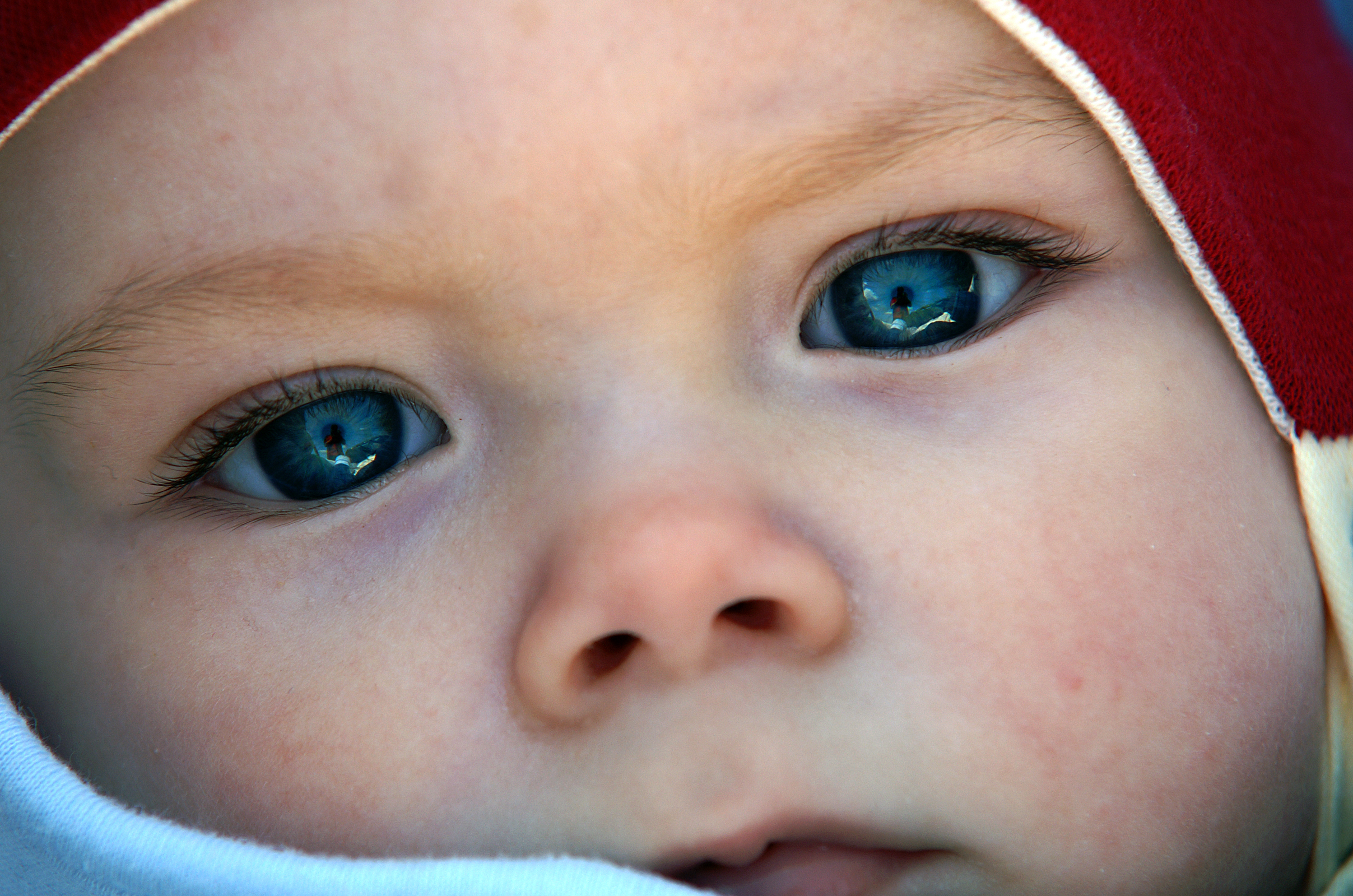 How would you like to “design” a baby? What if you could give the baby George Clooney’s eyes or Cindy Crawford’s…everything? While the science of making these “alterations” is limited, there is concern for that possibility becoming a reality in the future with a recent procedure being cleared for approval in Britain last week. How would you like to “design” a baby? What if you could give the baby George Clooney’s eyes or Cindy Crawford’s…everything? While the science of making these “alterations” is limited, there is concern for that possibility becoming a reality in the future with a recent procedure being cleared for approval in Britain last week.
The fertility procedure, which is banned in the United States, is called mitochondrial transfer technique, or mitochondrial replacement therapy, and it helps to prevent children from being born with deadly genetic diseases. In particular, this procedure is an attempt to treat mitochondrial disease.
Mitochondrial mutations—which are linked to fatal diseases involving the heart, nerves, skeletal muscles, brain, liver, kidneys, and the endocrine and respiratory systems—are caused by defective mitochondria (small structures in almost every cell responsible for converting food into useable energy).
Mitochondrial flaws are typically passed down from the mother, which explains, in part, how this technique works:
The technique involves using a donor egg in addition to the mother’s egg and the father’s sperm. The goal of the procedure is to get healthy mitochondria from the donor. The donor egg’s nucleus is extracted and replaced with the nucleus from the mother’s egg—thereby getting rid of the diseased mitochondria.
Doctors from New York performed the procedure in Mexico and the resulting baby, born a few months ago in New York, is, by all accounts, healthy. The parents who participated in the procedure had only ever experienced having children born with extreme disabilities passed on from the mother’s mitochondrial flaws. For the first time, they have a healthy baby.
And while the headlines surrounding this story have largely been focused on the three-parent angle, the donor’s DNA will have no impact on the physical or personality traits of the resulting baby. All of the physical and personality traits still come from the parents and not from the minute amount of donor DNA.
So why isn’t this procedure approved in the U.S.? What gives opponents pause?
Ethical questions persist! Opponents typically object to the procedure because it deals with the manipulation of genetic matter. There is also concern over this procedure ultimately paving the way for genetically modified babies. That is, being able to select the physical traits of an unborn child.
Do you think this procedure could pave the way for genetically modified babies?
Image credit:
Milan Nykodym / CC BY-SA 2.0
|
|
|
|
Posted July 19, 2012 6:56 AM
by HUSH
|
|
Zach pulled his Ford into Kelly's driveway, flicked his
lights off, and unbuckled his seat belt. Kelly opened her car door, and Zach
was holding her coat while she looked for her keys in her purse. They had a
nice evening; they ate a cliché dinner at the Cheesecake Factory, and then saw
a movie: Harry Potter and I Can't Believe
this Franchise is Still Going.
Zach wanted to see Total Recall, but
sacrificed his want to make Kelly happy.
Kelly jingled her keys, and looked at Zach blankly. Zach
leaned forward, puckered his lips…and Kelly slouched away.
"Oh, no. Oh, jeez. I'm sorry Zach, I just don't see you that
way. You're a great friend, but you're that, a friend." Kelly went inside, and didn't return Zach's phone call
the next day.
A week later Zach learned that
Kelly has been dating A.C. Slater. Slater wasn't nice, didn't take Kelly out on
dates, and was arrogant. Slater was a jerk, and Kelly loved him.
 ...via NY Post ...via NY Post
There is an underlying mythos in the dating world that women
like jerks. Something about their cockiness or selfishness just makes women
fascinated--or at least, allegedly so.
Is it true? Do women really want guys who walk all over
them? It doesn't seem to make sense. People are drawn to people with similar
interests, who are polite, and unlikely to misplace trust.

Let's see what some experts have
to say on the matter, shall we?
Let's further define 'jerk' so we have a basis from which to
compare. While Urban Dictionary lists it as, "The kind of guy most girls
ACTUALLY want," I prefer Dictionary.com's version: "A contemptibly naive,
fatuous, foolish, or inconsequential person." Other adjectives that may describe a jerk:
stubborn, critical, aggressive, and disagreeable.
Physcologist Scott Barry Kaufman wrote that when analyzing
how mating was related to certain character attributes, he noticed one glaring
connection: The lower the level of agreeableness, the more sexual partners.
Similarly, this
study indicates that the so-called "Dark Triad" traits (narcissism,
psychopathy, and Machiavellianism) are
good indicators of short-term heterosexual relationships. Or, to be blunt,
booty-calls and hook ups. While these were a predictor of sexual partners, they
also predicted long-term relationships would be unsuccessful and mostly
unhappy. Specifically, narcissists seek social environments in which to
validate their ego, which only strengthens the personality qualities women find
attractive. Those being: confidence, creativity, humor, charisma, and high
energy. Essentially, if the male is more comfortable in a setting, he is more
likely to find a sexual partner. The most comfortable of men are those who are
unafraid of their social stature, hence the attractive qualities of
narcissists.
Want to
see where you stand in the Dark Triad?
 ...via Terra Incognita ...via Terra Incognita
Part
of the allure of a jerk could be a little bit of conditioning as well. Jerky
guys tend to be non-committal towards females. Jen Kim, of Psychology Today, wrote:
Women want some chase, some drama, some intrigue. If it's too easy
to get the guy, then she might think, "Wait, he just fell into my lap.
This is fishy. Maybe he thinks that I'm too good for him. Cool. I'm too good
for him. Wait, if I'm too good for him, then that means I could do better.
Next!" I hate to say this, but this thought has crossed my mind (and I'm
sure others' as well) more than once.
There
is one glaring conflict though: in Chelsey H's blog, "What
Women Want," she mentions that women are attracted on a biological level. Aren't
these traits exactly what women are trying to avoid? You know, further
depreciation of her offspring's potential gene pool?
Matt Huston,
former editor of Psychology Today,
theorizes that being a jerk is actually an indicator of good genetics, and not
bad genetics. These individuals essentially, can "put their money where their
mouth is" by taking risks from being a bad boy, and are better emotionally
developed (hardened?) to take the consequences of being a jerk and build upon
them. A VERY similar concept has been put forth, but related to salary. Timothy
A. Judge's study
suggests that disagreeable men get further in the business world by taking
risks, and though they are more likely to get fired than a 'yes man,' they're
also more likely to get a new job at a better wage. In fact, disagreeable men
make 18% more annually than agreeable men-averaging $10,000!
 ...via Atomic Movie Freak ...via Atomic Movie Freak
While
I've seemed to make a good case for treating your girlfriend horribly (which,
for the record, I do not condone; I don't know why I need to make that clear …)
there is one issue I need to circle back too: long term relationships. Just as
the Dark Triad-or the jerk traits-tend to indicate a good number of sexual
partners, they also indicate long-term relationship success. Or rather
disaster. Higher scores of narcissism and psychopathy predict unhappy long term
relationships-or more accurately, no long term relationships. These traits are
in direct conflict with compromise and compassion, two highly-heralded pillars
of relationship success .
Do
women like jerks? Do nice guys finish last? It seems it depends on the race. In
the sprint for sex, jerks will take the tape. But in the marathon setting of a
long term relationship, jerks are left for dead with heat exhaustion .
Resources
Psychology Today - Do Girls Really Love A**holes?; Do A**holes Really Finish First?; Use Your Mating Intelligence
Personality and Individual Differences: ISSID - How the Dark Triad traits predict relationship choices (.pdf)
Ask Men - The Jerk Appeal
LoveScience - Why Do Women Love Jerks?
Journal of Personality and Social Psychology - Do Nice Guys - and Gals - Really Finish Last? The Joint Effects of Sex and Agreeableness on Income (.pdf)
|
|
|
|
Posted July 05, 2012 12:00 AM
by Chelsey H
|
|
Hearts
equal love. At least that's what Valentine's Day and pop culture has instilled in us. However,
how the <3 became a symbol for love is an
interesting but rather long-winded story. And as romantic as a broken-heart
sounds, love actually originates in the brain. What makes this even more
confusing is being able to distinguish between love and desire. Both mental states are invoked by an intense
longing to be with another person, and are therefore often difficult to
disentangle from one another.

Image Credit: iheartguts.com
A recent international study published in
the Journal of Sexual Medicine has
been the first to draw an exact brain map of love and desire. Although the
scientists were skeptical, they found that love and desire activate specific, but related areas in the
brain.
Many
studies have been done to examine the brain while subjects engaged in tasks
such as viewing erotic pictures or looking at pictures of their significant
others. The group analyzed the results of 20 of these studies. They found that
the insula, located deep in the cerebral cortex, and the striatum, located in
the forebrain, are responsible for tracking the progression from sexual desire
to love. The two emotions activate different parts of the striatum. Sexual
desire activates an area of the striatum associated with things that are
inherently pleasurable, such as sex or food. Love activates an area associated
in the process of conditioning by which things are paired with reward or
pleasure, and are given inherent valve. This means that as sexual desire turns
to love, they are processed in different parts of the striatum.

The
striatum is the yellow/red part in the middle. Image Credit: FARS News Agency
What
I found interesting is that this area of the striatum is also the part of the
brain associated with drug addiction. This makes sense, since love is actually
a habit. It's formed when the desire part of 'sexual desire' is rewarded (and
subsequently can be hard to break the habit.)

And
while there are always extreme cases, love in general is not considered a bad
habit. Love works with different pathways in the brain that are involved in
monogamy and in pair bonding. It can actually decrease activity in certain
parts of the brain when it is not associated with desire. "While sexual desire has a specific goal,
love is more abstract and complex, so it's less dependent on the physical presence
of someone else," says Pfaus, a professor at Concordia University.
Resources
I want to know where love is
|
|
|
|
Posted June 21, 2012 7:17 AM
by HUSH
|
|
So…we're
again reaching into the back of HUSH's mind to produce an anecdote that will
segue into a good CR4 post for Courtship Chemistry. Are you prepared? I'm not.
A couple years ago, I was dating a very beautiful woman.
Think Vicki Vale kind of beautiful.
Anyway, we had spent about three months casually seeing each other, but we
never had "the talk." The talk I'm referring to, of course, is the one that defines a couple's relationship.
If "the truth shall set you free," then the talk will deprive you equally so.
 ...via Bernos ...via Bernos
Yet, there can be a damning grey area before this talk
arises. And in the case of my Vicki Vale, my procrastination of the talk tempted Vicki to the fruit of another.
It was a lesson learned the hard way, as lessons of love are often taught.
I wonder though, what made Vicki consider her options? Is
there a scientific conclusion? And even if Vicki didn't cheat, what causes
infidelity. I did some digging, so let's see what you think about my shallow
conclusions from what I found. Mmmmkay?
 ...via Sure Villa ...via Sure Villa
It turns out fidelity is linked to something called
'attachment theory.' Essentially, attachment theory explains how people think,
feel and behave in interpersonal relationships. Humans have their first
experiences with attachment theory during the toddler stages of life, where the
youngster uses their parents as a springboard and emotional measuring stick for
their physical actions. The style of attachment between the parent and the
child can be boiled down to one of four styles.
 ...via Wikimedia ...via Wikimedia
These four styles of attachment roughly translate to
romantic and sexual adult relationships. The four types of attachment for
adults are secure, anxious-preoccupied, dismissive-avoidant, and
fearful-avoidant. Securely-attached
individuals are confident of their partners and relationships, and can develop
a good balance of intimacy and independence. Anxious-preoccupied adults are
very dependent, and seek approval and response from the partners often. These
individuals are less confident of their relationships and partner, and are more
prone to worry and emotional impulsiveness. Dismissive-avoidant attachment
styles are characterized by suppressed feelings, extreme independence, and
low-opinions of their partners. Like dismissive-avoidant individuals,
fearful-avoidant individuals suppress emotions, but often believe they are the
ones unworthy in the relationship.
Out of these four, secure individuals are the least likely
to cheat on their partners, while anxious-preoccupied individuals are most
likely to cheat. This is due to their extreme need for approval and attention,
and even a mild affection holdout from their significant other could be enough
to push them to "the cheating side of town."
Avoidant-attachment individuals tend to have "average" rates of cheating, or at
least median rates.
 ...via Venus Genus ...via Venus Genus
However, if we're looking at cheaters as individuals, it's
probably worth looking at the subjective nature of cheating. Some people may
thinking cheating starts at flirting, and others may say it starts when "the nipple makes its first appearance."
Studies have found that twice as many men as women say
they'd be upset more by sexual infidelity than by emotional infidelity. This
could be traced back to an evolutionary behavior providing incentive for both
partners. If a woman becomes impregnated by another man, then her spouse loses
her ability to reproduce for at least nine months, and he'll be left with
another man's child which could take resources from his own offspring. This is
in contrast to if a woman developed feelings for another man, but she did not
have intercourse with that man. On the flip side, a woman would care more about
her male mate's emotional infidelity, because that is essentially what commits
the man to the woman, the family, and their preservation. Intercourse outside
of this relationship is less likely to lead to him abandoning her than if he
were to develop feelings for another woman.
 ...via Author's Den ...via Author's Den
That's not to say males were unconcerned with the affections
of their women, or that women were unconcerned with where their husbands may
lie at night. Evidence only suggests that these factors are diminished in
comparison. Evidence also suggest that because of the traditional male role
model (tough, domineering, emotionless), men are more likely to have dismissive
or fearful-avoidant attachment styles, while women-whose traditional gender
roles (yuck!) instill compassion and emotional development-are more likely to
have secure attachment styles. Again, we're speaking in generalizations here,
so deviations always occur.
Does that make men more likely cheat? Not so, says Men's Health, who-not surprisingly with its readership base-lays the blame of male
cheating on the biological need to reproduce, inattentive spouses, and boredom.
 ...via How to Stop Divorce ...via How to Stop Divorce
Does the perception exist that men cheat more than women?
Yes. In large part this is from media coverage. TIME author Jeffrey Kluger believes that
cheating men are more visible because they abuse their power. Think Bill
Clinton, Arnold Schwarzenegger, and Tiger Woods. Kluger also believes that
there is more public outcry, and therefore coverage, because these already
successful men are living a life provided the admiration of proletariat, and
they should have the moral fiber not to abuse it.
So,
let's get a wrap on this. Was HUSH's Vicki Vale one of many wolves in a
sheepish disguise? It seems more likely that men and women cheat at about the same rate . However, some recent studies have signaled that women cheat more than men;
they're just better at keeping it a secret.
Resources
Science of Relationships - How Not to Get Played; Gurls (and Boys) Gone Wild: Commitment and Infidelity during Spring Break
News Olio: Relationship advice: What causes infidelity?
The Daily Beast: Of Sex and 'Soulmates'
|
|
|
|
Posted June 07, 2012 3:24 PM
by Chelsey H
|
|
So as promised, here is your follow up to 'You "Type" is More Mind Than Media'. I'm calling it "What Women Want." It really should be called "what women are biologically programmed to think they need," but that's not a very catchy title.
Men typically are not very good at sending or receiving the signals used in the courtship ritual. The book The Definitive Book of Body Language states, "women not only control the game and make the rules, they own the scoreboard." In the animal kingdom, the male of a species tends to be more colorful and use flashy, and sometimes absurd rituals to attract a female mate. For humans, the primary displays that men use are their power, wealth, and status. In lieu of dressing sensually, or wearing makeup, men will rev their car engine, brag about their salaries, and challenge other men which, in most cases, isn't very effective. Still, they do subconsciously send out other signals that encourage attraction in either direction.
Similar to women, men display preening behavior in the presence of the opposite sex. Today, more than ever, men are spending more time and money on personal grooming. This behavior may manifest itself as him straightening his tie, touching his cufflinks or watch, and rearranging his shirt, coat, or other clothing. But the most direct sexual display a man can make is the 'Thumb-in-Belt' gesture that highlights his crotch. This may be combined with turning his body to her, use of an intimate gaze and holding that gaze for longer than usual. When sitting or standing a man may spread his legs to not only display his crotch, but to take up more of the space to seem bigger and more dominating. Much to the dismay of women, men will also use crotch adjustments to assert masculinity in front of others. This is especially true on sporting teams or other groups that encourage macho attitudes.
As for what women are attracted to, in general women prefer men with a deeper voice, athletic body shape, broad shoulders, muscular chest and arms, and a tight butt. Just like men, women fall into three distinct categories for what parts of a man's body they are most attracted to: chest/arms, butts, and legs.
Chest/Arms
Men have a distinct upside-down-triangle shape, which is opposite of the women's right-side-up body shape. Sexy, as defined by the book and blog, is the distinction between the sexes so a man who has broad shoulder is highlighting this difference. These features evolved to allow them to carry weapons and food over long distances. The male chest developed to house large lungs to allow for better breathing when running and chasing. In past generations, and in many animal species, the bigger the man's chest, the more power he has in a group.

There is such a thing as too much muscle though; it makes a woman think you care more about your appearance than theirs.
Butt
Surprisingly, butts are considered the favorite part of a man's body with 40% of the votes. But I bet many women don't know why. Women are attracted to a small, tight butt because it's a sign that the man can make the necessary forward thrusting motion needed for reproduction.
Legs
Back to the triangle- the ideal man's body has broad shoulders and narrow hips with muscular legs. It's not that women are actually attracted to the legs, as much as they are attracted to the symbol of power and endurance that they display. According to Dr. Devendra Singh, women find male hips with a 90% waist-to-hip ratio the most appealing.
This book also gives men a sneaky hint that, even as a woman, I admit to be true. If a man wants to find out which women find him attractive, he should wear his tie a little to one side. A woman who thinks you're good looking can't resist straightening it out for you.
Resources
Pease, Allan, and Barbara Pease. The Definitive Book of Body Language. New York: Bantam, 2006. Print.
|
|
|
|
Show all Blog Entries in this Blog
|
|
|
Search this Blog
|
|
|
Courtship Chemistry:
|
|
|
|
|
|


