|
 When it comes to land
warfare, no piece of machinery is more widely known or feared than the armored
tank. These beasts combine a number of different technologies (e.g. combustion
engines, armor plate, continuous track) to create a mobile fortress with some
intense firepower. When it comes to land
warfare, no piece of machinery is more widely known or feared than the armored
tank. These beasts combine a number of different technologies (e.g. combustion
engines, armor plate, continuous track) to create a mobile fortress with some
intense firepower.
(<-- Credit:
Thehistorybluff.com)
Tank technology made its first formal appearance around the
time of World War I, but played a much more significant role in the developments
of World War II. Between these two time periods, a variety of innovative tanks
were developed. But along with the renowned Sherman and Tiger tanks, there were
a number of lesser known designs and proposals that just didn't make the cut…
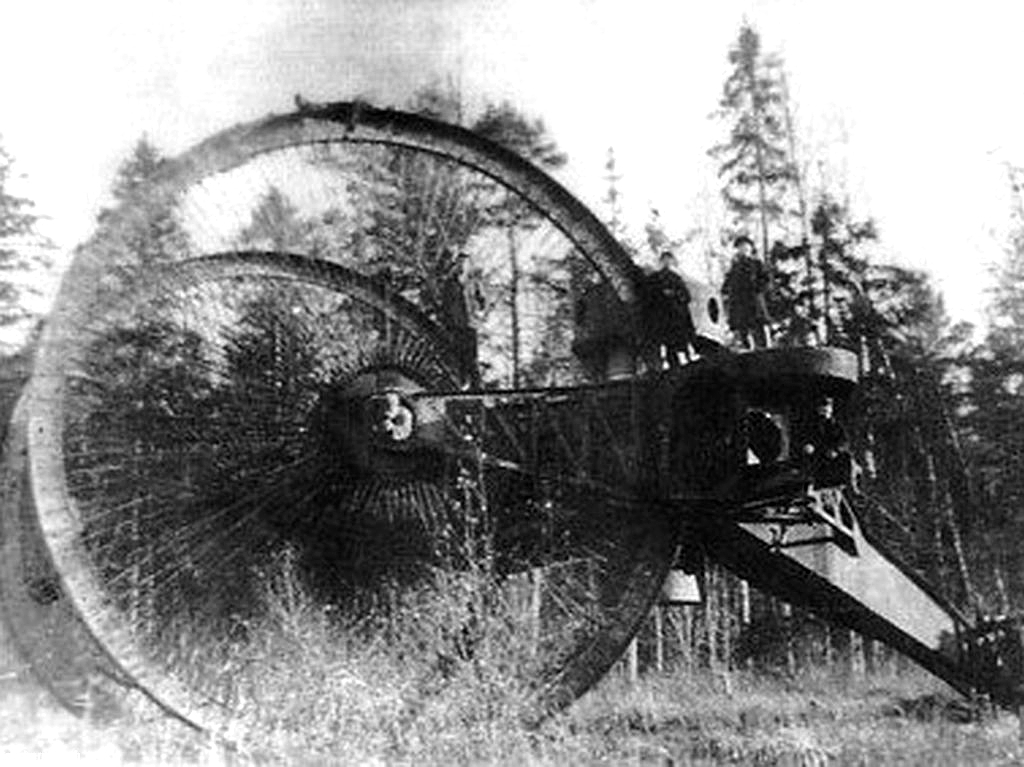
The Russian Tsar Tank
In the early stages of tank development, a lot of designs
were lacking in functionality. The one that stands out the most perhaps was the
Russian Lebedenko, also known as the "Tsar Tank". This 40 ton monster sported
two very large spoked wheels (nearly 9 meters in diameter) attached to a hull
with a centrally placed turret equipped with the desired weaponry. The hull
tapered down at an angle and attached to a double wheel at its rear to provide
the steering.
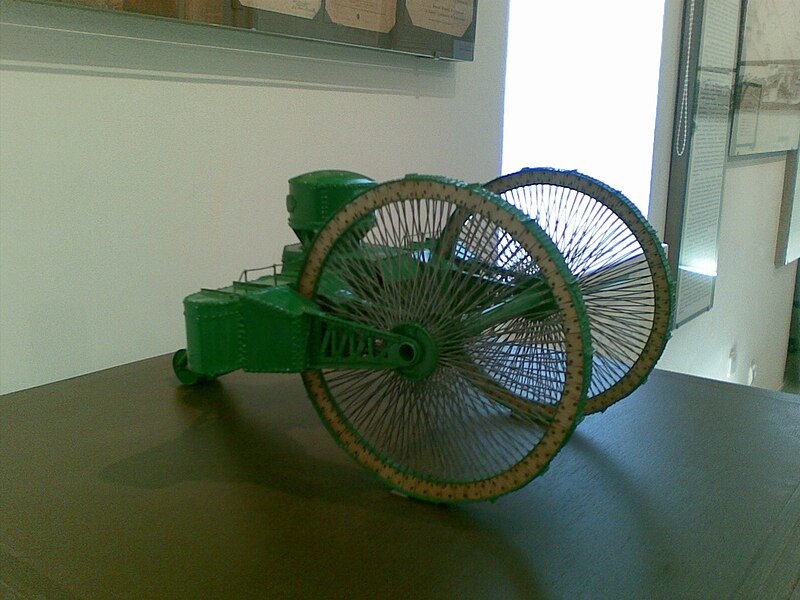 
See the resemblance? (Credit:
Fastboy (Wikipedia user) | cannonsuperstore.com)
The tricycle design, which to me looks pretty similar to an
old-fashioned howitzer or 6-pounder, along with the massive wheels, was
supposed to give the Lebedenko the ability to go virtually anywhere it wanted
to. Unfortunately, the weight of the machine was miscalculated by near 50% due
to the use of a thicker metal, and during a test run the back wheel got stuck
in soft ground. The project was deemed to be too expensive to continue, and was
cut before the design engineers were given the chance to add more powerful
engines. The wheels of the Tsar were also considered to be too vulnerable to
artillery fire.
Corkscrew Tank
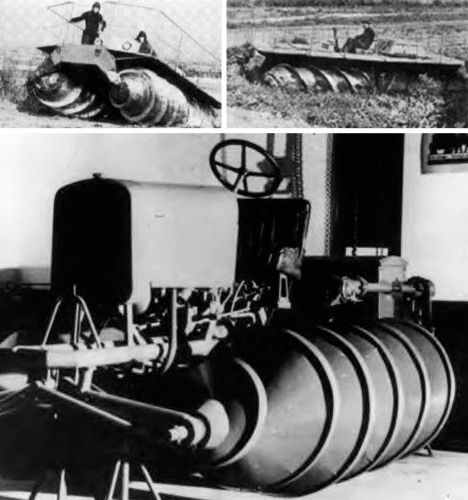
Years after the failed tricycle design, the Russians were
still looking to unlock the key to all-terrain tank mobility. In 1950 they had
another proposal - the corkscrew tank. Riding on two large spinning corkscrew
"wheels", the corkscrew tank was supposed to be more versatile, capable of
traversing terrain such as snow and ice with greater ease than a traditional
track-style tank (something pretty important during the snowy winters in
Russia). Check out this
video to see it in action.
(Credit: WebUrbanist dot com-->)
The tank suffered from a number of severe flaws, however.
While its massive corkscrews were more than capable of grinding through snow
and ice, they weren't able to move through normal terrain (flat ground, tarmac).
The weight of the corkscrews also made the vehicle quite slow and incredibly
hard to maneuver. Its poor steering and instability (apparent in the video)
made it very susceptible to rollovers.
Flying Tank
Because air-drop paratrooper operations were a large part of
World War II, there was a big incentive to develop a tank that could be flown
and dropped into enemy territory. Having tanks on the ground behind enemy lines
would provide a huge tactical advantage in surprise airborne operations like
the famous Operation
Market Garden. A number of different models were attempted by Russia,
England, Japan, and the U.S., including those with detachable glider wings and
others that would be carried by heavy bombers and dropped with parachutes.
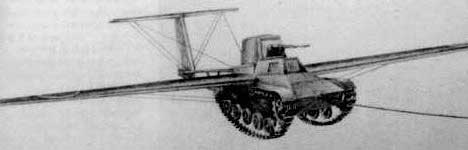

(Credit: Gajitz)
Surprisingly, some designs actually had successful test
flights, including the A-40
(KT-40) developed by the Soviet Union. Unfortunately these projects never
saw production due to the weight limiting factor. In order to fly successfully,
tanks had to be stripped of most of their plating and armament, making them tin
cans in the midst of German armor. Nowadays, with access to stronger and
lighter weight materials, we have aircraft that can airlift tanks to where they
are needed on the battlefield.
References
Antonov KT Flying
Tank - Unreal Aircraft
When the
Military's imagination gets away from them - US Infrastructure
| 


 Re: Failed Military Designs - Tanks


"Almost" Good Answers: