The Engineer's Notebook Blog

The Engineer's Notebook

The Engineer's Notebook is a shared blog for entries that don't fit into a specific CR4 blog. Topics may range from grammar to physics and could be research or or an individual's thoughts - like you'd jot down in a well-used notebook.

Previous in Blog: How Long Would You Wait For A Marshmallow?   Next in Blog: 12/12/12
Close
Close
Close
10 comments
Rate Comments: Nested

Predicting and Preventing Hurricanes

Posted October 30, 2012 4:14 PM by Chelsey H

Hurricanes are a commonly studied natural phenomenon. Usually hurricanes only make the news when they are coming for land or are particularly destructive, but there are researchers who study hurricanes daily in an effort to better predict and reduce the strength of the storms.
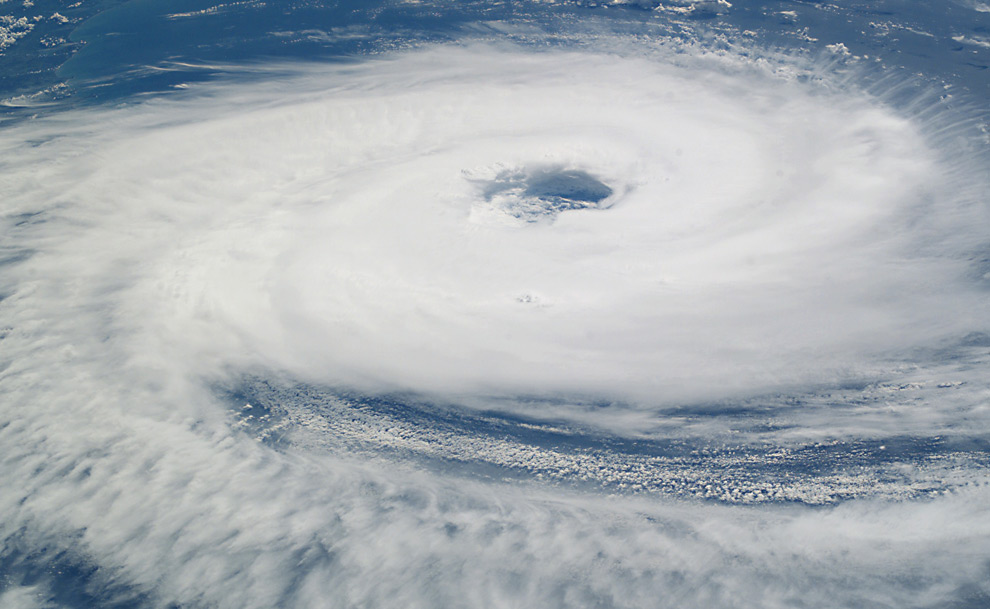
Hurricane Catarina Image Credit:NASA

An aquarium in Florida is creating a giant hurricane simulator.

This 6 x 20 meter tank is named SUSTAIN (short for SUrge-STructure-Atmosphere Interaction) and when it's completed it will be able to create category-5 level hurricanes inside of a lab, across a 3D field of waves made of real sea water pumped at 1,000 gallons per minute. The tank is located in a building at the University of Miami, which will also house a 14,000 horsepower fan and a wave generator. The fan

is able to produce 150 mph winds while the wave generator uses 12 paddles to create waves at various sizes, angles, and frequency. This allows the scientists to create calm, organized swells, as well as sloppy, chaotic storms. The wave energy is dissipated into a perforated, parabola-shaped beach at the end of the tank. The tank is made from three-inch thick acrylic so researchers can observe the storm from all sides.

Image Credit: Cambridge Seven

The goal of this project is to better forecast the intensity of hurricanes, not just the storm's path. SUSTAIN is designed to accommodate remote sensing cameras to mimic the perspective of weather satellites and those measurements will be compared with lasers in the tank to fine-tune to ability to measure storms and waves from afar. Another goal of this simulation tank is to use the violent weather models created against manmade and natural structures so architects and engineers can test how these storms affect the shoreline and surrounding cities.

While SUSTAIN will help us better be able to predict the fury of the storm, a lab in Washington called Intellectual Ventures published a story about a technology that could reduce the strength of hurricanes overall. Intellectual Ventures (IV) explains that global warming causes more energy to be available in the ocean and the atmosphere to produce weather. Hurricanes gain power from warm ocean waters irradiating the heat up into the storm. This led the team of researchers at IV to develop a technology that would reduce the temperature of the ocean surface. They called this the Salter Sink. It works by cooling the sea surface along the corridor in the Atlantic Ocean by using a large pump, powered by waves, that would push hot water from the surface down to a level where it could mix with cold water. The warm layer doesn't need to cool by much, 1-2 degrees Celsius would drain significant power from a potential storm.

Image Credit: Intellectual Ventures

Unfortunately, IV has only been able to develop the idea and small scale prototypes since they are a small lab, and there are still questions about the practicality and risks of the devices.

Preventing, or at least better predicting hurricanes could help save hundreds of lives and billions of dollars each year. This technology is moving ahead and hopefully we can see the effects in the near future.

Reply

Interested in this topic? By joining CR4 you can "subscribe" to
this discussion and receive notification when new comments are added.

"Almost" Good Answers:

Check out these comments that don't yet have enough votes to be "official" good answers and, if you agree with them, vote them!
Anonymous Poster #1
#1

Re: Predicting and Preventing Hurricanes

10/31/2012 1:41 AM

"cooling the sea surface along the corridor in the Atlantic Ocean by using a large pump, powered by waves, that would push hot water from the surface down to a level where it could mix with cold water"

Another one of the world changing idea. I hope it will be thoroughly evaluated what impact this has on the environment in the long term.

But then they are going by the premises that there is Global Warming.

I probably better don't comment on that.

Cheers!

Reply
Guru
Engineering Fields - Optical Engineering - Member Engineering Fields - Engineering Physics - Member Engineering Fields - Systems Engineering - Member

Join Date: Apr 2010
Location: Trantor
Posts: 5363
Good Answers: 647
#2

Re: Predicting and Preventing Hurricanes

10/31/2012 8:22 AM

The article says: The warm layer doesn't need to cool by much, 1-2 degrees Celsius would drain significant power from a potential storm.

I wonder what they mean by 'significant power'. In thermodynamics, you have to use the Kelvin temperature scale. If the warm tropical sea water temperature goes from 85 C to 83 C, that's a change in Kelvin from 358 K to 356 K, or a difference of 0.0056 (= 0.56%); barely half a percent. The energy in a given volume of sea water is directly proportional to its temperature, so the change in energy is likewise 0.56%. (If the sea water were near a phase change temperature, then I could see where a lot of energy could be stored/released with a change of just a couple degrees.)

If somehow storing this energy could act to reduce the wind velocity (i.e., if somehow the thermodynamic random component of the wind velocity could violate the laws of thermodynamics and work unidirectionally to reduce the wind speed) the loss in kinetic energy would be less than 1 per cent. The speed of the sustained wind would drop from (say) 100 mph to 99 mph. Doesn't seem like that would make a big difference.

__________________
Whiskey, women -- and astrophysics. Because sometimes a problem can't be solved with just whiskey and women.
Reply
Guru

Join Date: Oct 2007
Location: Tulare, CA
Posts: 1783
Good Answers: 35
#3

Re: Predicting and Preventing Hurricanes

10/31/2012 12:11 PM

Somehow I get the feeling that the cost to affect the strength of a hurricane will be greater than the cost of the damage the storm is going to leave behind.

Now we are messing with Mother Nature. So we change water temperatures a few degrees. What will be the side affects to that?

They are blaming the intensity of this storm on Global Warming already. I think it is wiser to just roll with the punches rather than try to control Mother Nature.

__________________
Why is there never enough time to do it right the first time but always enough time to do it over?
Reply Score 1 for Good Answer
Guru

Join Date: Aug 2009
Location: Glen Mills, PA.
Posts: 2385
Good Answers: 114
#4

Re: Predicting and Preventing Hurricanes

10/31/2012 10:43 PM

I think that the UK and Northern Europe will be very worried about any effect on the Gulf Stream.

__________________
In a time of universal deceit, telling the truth is a revolutionary act. George Orwell
Reply Score 1 for Good Answer
Guru
Technical Fields - Technical Writing - New Member Engineering Fields - Marine Engineering - New Member

Join Date: Sep 2008
Location: Vancleave, Ms about 30 miles inland from Biloxi and the coast
Posts: 3197
Good Answers: 106
#5

Re: Predicting and Preventing Hurricanes

11/04/2012 1:23 PM

I'm 100% in favor of predicting hurricanes, but totally against trying to prevent them. Messing with mother nature is never a wise thing to do. Hurricanes and other disasters are natures way of healing the damage done by man. They put things back in balance. I see the draining of oil and gas reserves as something that creates an imbalance in nature and nature will fight back in order to put things back in equilibrium. I think there may be a link between earthquakes and oil depletion.

__________________
Mr.Ron from South Ms.
Reply
Guru

Join Date: Oct 2007
Location: Tulare, CA
Posts: 1783
Good Answers: 35
#6
In reply to #5

Re: Predicting and Preventing Hurricanes

11/05/2012 11:19 AM

Predicting doesn't seem to be a problem right now. We get warning well in advance and people that live in zones likely to be hit by a hurricane have plenty of time to prepare or evacuate.

There are a lot of people complaining about not having gas the day after Sandy hit. They knew Sandy was coming a week before it hit, why didn't they fill their tanks the day before. Ooops. I don't feel too sorry for them over that. They plenty of warning and time to prepare.

People that didn't get their homes wiped out and are complaining about no power and are cold, they had plenty of time to get a generator and some extra gas, and have food ready. They had plenty of time and now they are out on the streets screaming at the President about just making a showing and not helping them. I don't feel sorry for them either. They can get off their butts and help the people that got their homes wiped out and realize just how much better off they really are.

What is ironic is those same disaster victims didn't learn anything and are destined to being unprepared when the next hurricane hits. If the disaster wipes them out as bringing balance back to nature, I agree.

__________________
Why is there never enough time to do it right the first time but always enough time to do it over?
Reply
Guru
Engineering Fields - Power Engineering - New Member

Join Date: May 2007
Location: NYC metropolitan area.
Posts: 3230
Good Answers: 444
#7
In reply to #6

Re: Predicting and Preventing Hurricanes

12/21/2012 1:12 PM

"...They knew Sandy was coming a week before it hit...", actually the forecasters could not agree on the path, the variance in models did not narrow sufficiently until 48 hours before landfall. I filled my tanks plus gas containers at that time, but generators are never a big inventory item around here, so they were all gone before that.

If you ever leave Tulare you'll find out that there a lot of highrises that don't really want people to bring in gas cans and generators, plus NYC codes are pretty strict on that sort of thing.

Those that did have generators learned very quickly how inefficient they are, after about 3 nights of listening to the noise pollution they finally started running out of gas, then they learned how heavy 10 gallons can be, if it could be found.

Let's not forget that the infrastructure also shutdown, and restarting a cold process plant like an oil refinery or generating station can take many hours, if not days; much more if there is any damage.

Regarding food, buying it less than 3 days in advance is an exercise in futilitiy, but getting the trucks in for restocking after the storm was even more problematic.

"...They can get off their butts and help the people that got their homes wiped out...", one can only assume that the dial-up connections in Tulare couldn't handle the news-feeds that showed the outpouring of help from those fortunate enough to have escaped the wrath of the storm.

Preparations for the storm started long before it was even on the radar screen, but actually exercising it requires extraordinary cooperation across multiple governmental and private agencies, infrastructure companies, and the populace at large.

One thing that will never occur is cooperation from the weather. We may try to predict it, but Mother Nature is a force that will continue to laugh at Man's efforts to control it.

By the way, the forecasters were way off even as the storm made landfall, the rain was never as bad as predicted, it was the wind-driven storm surge that did most of the damage. Perhaps someday you'll have the experience of watching a 13 foot wall of water come down the main street in Tulare as it makes its way to the currently dry Lake Tulare. Then we'll see how helpful your supply of gas and generators will be.

__________________
“Tell me and I forget. Teach me and I remember. Involve me and I learn.” Ben Franklin.
Reply
Guru

Join Date: Oct 2007
Location: Tulare, CA
Posts: 1783
Good Answers: 35
#8
In reply to #7

Re: Predicting and Preventing Hurricanes

01/02/2013 10:49 AM

Those of us in Tulare have Satellite and we have the weather channel and we were posted and received continuous updates. I also lived in Arkansas with the tornadoes and freezing rains. I received all the same news that you did.

We anywhere outside of New York would be aware of any generator and fuel storage regulations. I'm sorry you had to experience all that.

I'm perfectly aware of the forecasts and fact is, most people assumed it was going to be like the last hurricane and didn't bother preparing.

One of the biggest issues following the storm was people needed gas. They knew it was coming, they should have at least filled their tanks. They could also have gone grocery shopping as well. The people that lost their homes is a different matter.

What is ironic is maybe the next couple hurricanes that come along, people will plan ahead a little but will fall back into old habits.

And you can get quieter generators. We've ran a generator here and it hardly makes any noise at all and we got it at Harbor Freight.

__________________
Why is there never enough time to do it right the first time but always enough time to do it over?
Reply
Guru

Join Date: Jun 2010
Posts: 989
Good Answers: 14
#9

Re: Predicting and Preventing Hurricanes

02/19/2013 12:27 AM

Hurricanes dissipate excess heat build-up in the oceans. Why would we want to quell them if climate change is partly being caused by excessive heat build-up?

Reply
Guru
Engineering Fields - Power Engineering - New Member

Join Date: May 2007
Location: NYC metropolitan area.
Posts: 3230
Good Answers: 444
#10
In reply to #9

Re: Predicting and Preventing Hurricanes

02/19/2013 12:42 PM

Because there are many well-intentioned people out there who refuse to recognize that the Earth is one very large, complex closed system and that what might be appropriate locally is deleterious to the rest of the system.

__________________
“Tell me and I forget. Teach me and I remember. Involve me and I learn.” Ben Franklin.
Reply
Reply to Blog Entry 10 comments

"Almost" Good Answers:

Check out these comments that don't yet have enough votes to be "official" good answers and, if you agree with them, vote them!
Copy to Clipboard

Users who posted comments:

129CBRider (1); Anonymous Poster (1); Janissaries (3); passingtongreen (1); RAMConsult (2); ronseto (1); Usbport (1)

Previous in Blog: How Long Would You Wait For A Marshmallow?   Next in Blog: 12/12/12

Advertisement