|
While it may be snowing across some parts of the U.S. and
Canada, spring is actually on its way away. When we steal the best sunrays from
the southern hemisphere these next few months, a number of spring and summer
traditions renew. The first pitch of  baseball is upcoming; students will
receive a months-long sabbatical; and of course, the classic family vacation. Right, Clark? (language) baseball is upcoming; students will
receive a months-long sabbatical; and of course, the classic family vacation. Right, Clark? (language)
Pack the suitcases and head to the beach or a national park;
and fill the gas reservoir with the murky byproduct of dead dinosaurs--which
will cost you an arm and a leg. Clark, isn't this the gas tank?
While some
speculate that gas prices will recover to previous lows, it's a forecast that
seems unlikely to be accurate. Petrol prices continue to hover near four
dollars a gallon across the U.S., a country rebounding from recession.
Of course, there are alternatives to your typical octanes.
LPG and CNG vehicles are available but rare, E85 isn't worth the money,
electric vehicles are still early in their development, and some radical ideas
are still in the pipeline. While the kids ask, "Are we there yet?", here's why
you're stuck with a $100 gas bill too.
LPG and LNG/CNG
Passed are the days where LNG was considered a viable
gasoline alternative. LNG is one of the cleanest-burning fossil fuels known, so
it was envisioned as our best compromise between availability and emissions
control. Mainly, handling and infrastructure problems have limited its
availability. Liquefying and shipping LNG is expensive, and LNG can only be
transported by sea, reducing its usage to coastal areas where other gas
resources are even more expensive. Building fueling stations is equally cost
prohibitive. CNG faces similar issues, but provides less energy for the same
volume as LNG. Natural gas vehicles have found homes in the Middle East and
South America, but have not been widely adopted elsewhere.
 LPG has a small worldwide market share--just 3%--and like natural
gas offers less drive range with a comparable volume of gasoline. Its
commercial availability is low, despite its ample production; LPG, also called
AutoGas, is a byproduct of crude-oil refining. LPG vehicles are often retrofit
at a cost of about $3,000, and require a bifuel engine so gasoline can also be
used when LPG is not readily available. This adds weight and a second reservoir
to the vehicle, and a dual-use engine does not achieve the best combustion
ratio for LPG. LPG has a small worldwide market share--just 3%--and like natural
gas offers less drive range with a comparable volume of gasoline. Its
commercial availability is low, despite its ample production; LPG, also called
AutoGas, is a byproduct of crude-oil refining. LPG vehicles are often retrofit
at a cost of about $3,000, and require a bifuel engine so gasoline can also be
used when LPG is not readily available. This adds weight and a second reservoir
to the vehicle, and a dual-use engine does not achieve the best combustion
ratio for LPG.
Outside of some buses and some trucks, propane and natural
gas haven't proven to be better alternatives in North America.
E85
With nearly 2 million flex-fuel vehicles in North America,
it's clear that domestic auto manufacturers have hedged their bets on E85 to be
the best gasoline substitute available. The United States has publicly
supported E85 initiatives, and the Midwest provides an abundance of corn from
which to synthesize ethanol. E85 also is less carbon intensive, is less
corrosive to engine components, and can be derived from a variety of
resources. So why hasn't E85 caught on?
 First, a careful ratio determines when it's most suitable to
purchase E85. On average, E85 provides 25% less mileage than gasoline, so it's
only logical to purchase E85 when it's less than 75% the cost of gas. Some E85
proponents argue that manufacturers aren't doing enough to maximize the mileage
of E85 gas, citing that manufacturers are reluctant to purchase the rights to
fuel sensors patented to optimize E85 mixture and combustion. First, a careful ratio determines when it's most suitable to
purchase E85. On average, E85 provides 25% less mileage than gasoline, so it's
only logical to purchase E85 when it's less than 75% the cost of gas. Some E85
proponents argue that manufacturers aren't doing enough to maximize the mileage
of E85 gas, citing that manufacturers are reluctant to purchase the rights to
fuel sensors patented to optimize E85 mixture and combustion.
As a flex-fuel vehicle driver, I can vouch that
the capability of running E85 was an attractive selling point. Only after my
vehicle purchase did I learn that E85 was actually far more expensive per mile
than gasoline. (Not that I regret purchasing it!)
Tesla S and Chevy Volt
 The two most prominent all-electric vehicles to hit North
American shores would be the Tesla Model S and the Nissan Leaf. These cars are
meant for two different market segments, with the Model S starting at $60,000
and late model Leafs starting at about $28,000; both vehicles are eligible for
thousands of dollars of tax credits. Many other all-electric vehicles have yet
to be The two most prominent all-electric vehicles to hit North
American shores would be the Tesla Model S and the Nissan Leaf. These cars are
meant for two different market segments, with the Model S starting at $60,000
and late model Leafs starting at about $28,000; both vehicles are eligible for
thousands of dollars of tax credits. Many other all-electric vehicles have yet
to be 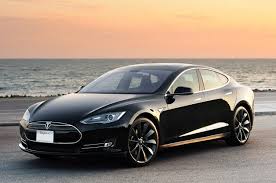 marketed stateside. marketed stateside.
Until very recently, the battery technology to power a whole
vehicle has remained unavailable. Oversized battery packs powered undersized
vehicles, a shortcoming to drivers who crave large cars. Furthermore, a full
charge will only provide 150 to 200 km of range before the battery has to be
recharged again, sometimes for 8 hours. Recharging infrastructure is low and no
standard charging style or method has been set. Finally, the battery packs on
electric-only vehicles will burn out, and manufacturers warranty these
batteries as they would a powertrain. Replacing one of these batteries would
cost around $10,000.
Electric cars remain on the
back-burner, at least until a breakthrough in battery size and cost occurs.
 What does this mean for the family vacation? That inhaling
petrol fumes through the open window on an expanse of highway is meant to be
enjoyed for at least a decade more. What does this mean for the family vacation? That inhaling
petrol fumes through the open window on an expanse of highway is meant to be
enjoyed for at least a decade more.
Last month, Peugot revealed plans for car that runs on
compressed air. It says that the model will be available in 2016, and it has
already driven four prototypes more than 12,000 miles. That being said, the
nonstop knock*knock*knock of a
gasoline engine was perhaps the only respite from the third singing of 100 Bottles of Beer on the Wall.
Resources
(Image credits: Retroland; LPG Vehicles UK; Examiner; Motor Trend; Autoblog)
Wikipedia - E85; Autogas; Natural gas vehicle; Tesla Model S; Nissan Leaf
ClimateTech Wiki
| 

 2
2


 Re: Why We're Still Stuck with Gasoline


Good Answers:
"Almost" Good Answers: