|
I'll give you a clue…..the answer isn't to eat some candy.
We've all done it, around 3PM we walk in a zombie like trance to the vending machine, buy a candy bar and hope that it wakes us up so we can get through the rest of the day. It has long been thought that a sugar rush could fight off afternoon drowsiness, but a new study shows that protein has better slump fighting potential.
The Science
The network of stimulants in the brain called hypothalamic orexin/hypocretin (orx/hcrt) is responsible for regulating energy balance, wakefulness, reward-seeking, and autonomic function in the brain. They are defined as peptide transmitters that, in mammalian brains, are produced exclusively by a small group of Orexin cells located in the lateral hypothalamic area. Orx/hcrt cells are found in the hypothalamus as well as in a variety of brain regions associated with the regulation of forebrain neuronal and behavioral activity states. An absence or loss has shown to produce narcolepsy and weight gain.
Human energy levels change when meals composed of macronutrient mixtures are consumed simultaneously or in a sequence. The nutritional composition of meals, e.g. protein: carbohydrate ratio, has long been recognized to affect the levels of arousal and attention in humans and animals. Our health depends on the detection of these changes in body energy levels by neural circuits coordinating appropriate adaptive responses.
The Discovery
A group of scientist from the University of Cambridge published a study in the November 17th issue of the journal Neuron which found a remedy for the mid-afternoon droop. Protein-not sugar- is what activates the orx/hcrt cells that make people alert and burn calories. "Electrical impulses emitted by orexin cells stimulate wakefulness and tell the body to burn calories. We wondered whether dietary nutrients alter those impulses."
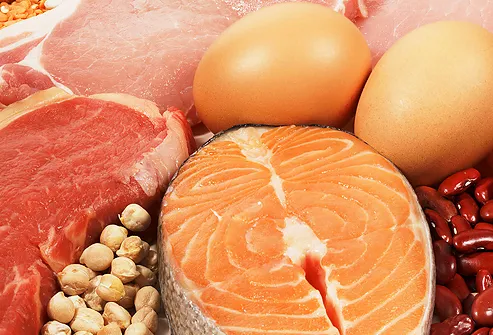
Protein rich foods. Image Credit: webmd.com
Previous studies have found that glucose can lower the activity of orx/hcrt cells (and was cited as a reason for after meal sleepiness) but the effects of other nutrients were unclear. The scientist highlighted the orexin cells with genetically targeted fluorescence in mouse brains and compared the effects of different macronutrients on Orexin. They found that amino acids, found in proteins, stimulate the orexin cells more than others while glucose lowers their activity. Amino acids also worked by preventing/negating the effect of glucose from blocking the activity of the orexin cells, which may identify why protein- rich meals can make people feel less calm and more alert than carbohydrate heavy meals.
If You're Getting Sleepy….
 VS. VS. 
The study has implications for understanding obesity and sleep disorders since shift sleep, health, and body weight are all intertwined. "To combat obesity and insomnia in today's society, we need more information on how diet affects sleep and appetite cells. For now, research suggests that if you have a choice between jam on toast, or egg whites on toast, go for the latter," Burdakov said.
So even now as I sit at my desk this afternoon with my eyes straining to stay open, I look at the empty cupcake wrapper next to my keyboard and wish that I grabbed a protein bar instead.
Resources
Protein not sugar stimulates cells keeping us thin and awake, new study suggests.
Fight afternoon slump with protein, not sugar rush: study
Mahesh M. Karnani, John Apergis-Schoute, Antoine Adamantidis, Lise T. Jensen, Luis de Lecea, Lars Fugger, Denis Burdakov. Activation of Central Orexin/Hypocretin Neurons by Dietary Amino Acids. Neuron, 2011; 72 (4): 616 DOI: 10.1016/j.neuron.2011.08.027
Hypocretin/orexin, sleep and narcolepsy
| 


 Re: How To Fight Afternoon Fatigue


