|
On a Sunday every March and every November at 2 a.m. clocks around the world
are changed for what seems like no good reason. I always remember it as "Spring
forward, Fall back".
Daylight saving time (DST) was enacted in the U.S. during World War I as
a way to decrease energy use since people would go to bed earlier when it was
dark out and wake up earlier as it got lighter earlier.

While there is still some debate as to whether or not it actually saves
energy (with a strong vote towards the negative) there is evidence that the
time-switch has negative health effects. Perhaps the most obvious is that it
affects people's sleeping patterns. An earlier "bed-time" means people are
restless at night and therefore tired during the day, decreasing productivity.
Even more troubling, during the first week of DST (in the late winter) there is
a spike in heart attacks, according to a study in the American Journal of
Cardiology. According to the study, this is because losing an hour of sleep
increases stress and provides less time to recover at night. Heart attacks
decrease at the end of daylight saving time (when we gain the hour back). Image Credit
DST has also been linked to an increase in deadly car crashes and
accidents at work. Cognitive effects have been observed as well; a 2011 study
in Journal of Neuroscience, Psychology, and Economics found that students in
counties where DST was observed had SAT scores 2 percent lower than those of
students who didn't have to spring forward or fall back. I officially have a new excuse for my SAT
scores.
All of these effects can be attributed to our body's internal circadian
rhythm. 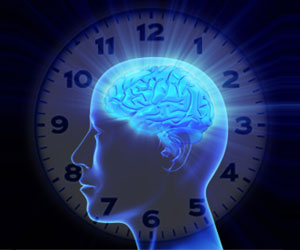 This molecular cycle is responsible for regulating when we feel awake
and when we are tired, as well as hunger and hormone production schedules.
Since DST is ultimately effecting how much light we get, our natural clocks go out
of whack. The feeling is similar to being jet lagged. Image Credit This molecular cycle is responsible for regulating when we feel awake
and when we are tired, as well as hunger and hormone production schedules.
Since DST is ultimately effecting how much light we get, our natural clocks go out
of whack. The feeling is similar to being jet lagged. Image Credit
But it's tough to say who DST is actually benefitting.
DST has been shown to increase residential electricity demand
(especially in the fall when heating costs increase) and decrease work force
productivity, but retailers and the golfing industry love the extra sunlight!
Supporters of DST claim that the extra hour in the summer reduces the
amount of television watched and increases outside activities like jogging and
walking. However, being off of your circadian rhythm can increase the risk of
obesity, sleep disorders, diabetes, and even mental health issues.
Most people do adjust to the change in a couple of days; for night owls
and those who are chronically sleep deprived (guilty) it can take a full week
to catch up.
Now that you've had a week to adjust, what do you think about DST?
References
Daylight
Saving Time is Bad for Your Health
Daylight
Saving Time: Bad for Your Health, Not Good for Much Else
Is
tinkering with time bad for your health?
Daylight
Saving Time 2014: When Does It Begin? And Why?
| 


 Re: Daylight Savings Time and You


"Almost" Good Answers: