Previous in Forum: About the Nomenclature of Refrigerant   Next in Forum: Shaft Diameter Of Motor
Close
Close
Close
56 comments
Rate Comments: Nested
Active Contributor

Join Date: Aug 2016
Posts: 17

Spray Nozzle Technology

08/18/2016 7:17 PM

I am trying to INCREASE spray range by altering my Nozzle design. I do not think I can get any more pressure or flow.

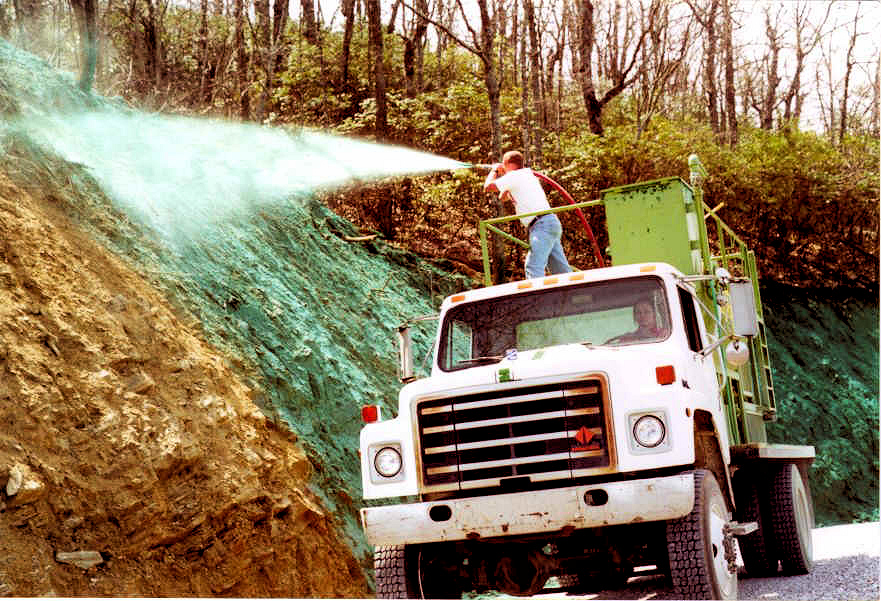
I am pumping an aqueous slurry that contains 1/4" - 3/8" thermally refined wood fibers out of a "Hydro Seeder". Viscocity is close to "soup". The current nozzle has a 1" round discharge port and is a typical tapered bore "Fire" nozzle 12" long. I have pressure of 160 psi and flow of 391gpm.

With such limited information, can anyone suggest how to increase spray range from 265' to 300' ?

Any and all help would be appreciated.

__________________
Neil Reinecker
Register to Reply
Pathfinder Tags: SPRAY NOZZLE DESIGN
Interested in this topic? By joining CR4 you can "subscribe" to
this discussion and receive notification when new comments are added.

Good Answers:

These comments received enough positive votes to make them "good answers".

"Almost" Good Answers:

Check out these comments that don't yet have enough votes to be "official" good answers and, if you agree with them, vote them!
Guru

Join Date: Mar 2007
Location: by the beach in Florida
Posts: 33392
Good Answers: 1817
#1

Re: SPRAY NOZZLE TECHNOLOGY

08/18/2016 8:00 PM

I can always get more distance from my hose by tightening the spray pattern.....if that helps....otherwise I think you need more pressure or a smaller discharge port....but what about the gpm flow? must it be maintained? Maybe a 7/8" nozzle...

__________________
All living things seek to control their own destiny....this is the purpose of life
Register to Reply
Active Contributor

Join Date: Aug 2016
Posts: 17
#2
In reply to #1

Re: SPRAY NOZZLE TECHNOLOGY
08/18/2016 8:17 PM

Solar Eagle:

Thanks for your input !

I'm talking about spraying from a turret, but your experience means something to me as I have been locked in to thinking that I need to open or increase the size of the discharge port... As you know, the flow will diminish if I decrease the port size, but if that gives me more distance, I'm ok with that. When I said flow and pressure can't be changed, I meant I can't increase either from the pump, impeller, and power I have.

Do you own a hydroseeder or is your recommendation from other experience ?

Thanks so much for your help !

__________________
Neil Reinecker
Register to Reply
Guru

Join Date: Mar 2007
Location: by the beach in Florida
Posts: 33392
Good Answers: 1817
#3
In reply to #2

Re: SPRAY NOZZLE TECHNOLOGY

08/18/2016 8:51 PM

Not much experience with these...but have done some general troubleshooting...

__________________
All living things seek to control their own destiny....this is the purpose of life
Register to Reply Score 1 for Good Answer
Guru

Join Date: Oct 2008
Posts: 42355
Good Answers: 1693
#5
In reply to #2

Re: SPRAY NOZZLE TECHNOLOGY

08/18/2016 10:03 PM

My experience is with water type fluids and 2" plumbing, but in addition to decreasing orifice size, increasing supply hose size and/or reducing supply hose length will both help also.

The nozzle size is probably the simplest thing to try.

Register to Reply Score 1 for Good Answer
Active Contributor

Join Date: Aug 2016
Posts: 17
#7
In reply to #5

Re: SPRAY NOZZLE TECHNOLOGY

08/18/2016 10:10 PM

Thanks Lyn:

I wonder if a nozzle configuration change would help. It's apparent from other posts that I need to consider a smaller discharge port, but I wonder if the shape of the internal taper might also be a factor...

I am grateful for your input.

__________________
Neil Reinecker
Register to Reply
Guru

Join Date: Oct 2008
Posts: 42355
Good Answers: 1693
#8
In reply to #7

Re: SPRAY NOZZLE TECHNOLOGY

08/18/2016 10:51 PM

My thoughts are that any commercial nozzle would already be designed to reduce turbulence so yes, it matters, but probably already been optimized.

Register to Reply
Active Contributor

Join Date: Aug 2016
Posts: 17
#36
In reply to #1

Re: SPRAY NOZZLE TECHNOLOGY

08/21/2016 6:16 PM

Solar Eagle:

Thanks for your input !

I'm talking about spraying from a turret, but your experience means something to me as I have been locked in to thinking that I need to open or increase the size of the discharge port... As you know, the flow will diminish if I decrease the port size, but if that gives me more distance, I'm ok with that. When I said flow and pressure can't be changed, I meant I can't increase either from the pump, impeller, and power I have.

Do you own a hydroseeder or is your recommendation from other experience ?

Thanks so much for your help !

__________________
Neil Reinecker
Register to Reply
Guru

Join Date: Apr 2010
Location: About 4000 miles from the center of the earth (+/-100 mi)
Posts: 9910
Good Answers: 1141
#4

Re: SPRAY NOZZLE TECHNOLOGY

08/18/2016 9:50 PM

If you think about it, maximum range means maximum velocity at the nozzle outlet. You can convert (volume) flow rate and nozzle outlet diameter to velocity:

Area = pi x D^2 / 4,

Velocity = volume flow rate / Area

So, to maximize range, you need to maximize (flow rate/ Area)

There are quite a few online calculators out there. I don't know which are best.

Here's one:

http://www.pipeflowcalculations.net/nozzle.xhtml

Hope this helps.

Register to Reply
Active Contributor

Join Date: Aug 2016
Posts: 17
#6
In reply to #4

Re: SPRAY NOZZLE TECHNOLOGY

08/18/2016 10:03 PM

Rixter:

Thanks a bunch ! Your recommendation is a big part of what I was hoping to find here also.

I appreciate you taking the time to reply.

__________________
Neil Reinecker
Register to Reply
Guru
Engineering Fields - Electrical Engineering - Been there, done that. Engineering Fields - Control Engineering - New Member

Join Date: Dec 2008
Location: Long Island NY
Posts: 15600
Good Answers: 981
#11
In reply to #6

Re: SPRAY NOZZLE TECHNOLOGY

08/19/2016 9:36 AM

You should remember the calculator is designed to work well with a mostly pure liquid. I expect your seeding mixture is more like a thick slurry with trapped gas pockets than a liquid. I expect at least two predominant effects with this being a slurry instead of a liquid. First, more frequent clogging as one decreases the orifice size for distance. Second, a wider deviation in spray pattern from the average as momentary smaller orifices occur and clear. You may also find an unexpected maximum achievable pressure level due to the tiny air pockets in your slurry compressing.

__________________
"Don't disturb my circles." translation of Archimedes last words
Register to Reply
Active Contributor

Join Date: Aug 2016
Posts: 17
#12
In reply to #11

Re: SPRAY NOZZLE TECHNOLOGY

08/19/2016 10:07 AM

Redfred:

Thanks for participating !

Your observations are very relavant and can not be dismissed. This slurry is not pure water and depending on it's composition, it sometimes is more viscous, other times it is more fibrous, and sometimes it is more watery....

We do find that most times, we actually get more distance with the slurry than with just water... most of the time, the stream holds together longer with the slurry than with just water. Our objective is to maximize the slurry stream. I apologize for not making this clear from the start. Most times, however, we just do our tests with water only. This is my first time using this website and did not expect to get so much brain power and assistance. I'm so glad I am here and thank you all again for your help !

I keep wanting to go back to nozzle design.... One post suggested a straight bore at the end of the nozzle, and another suggested a decrease in the discharge port diameter. I think both need to be explored. I saw a nozzle with a rounded taper on the interior bore....I thought there had to be some good reason for this.... any thoughts ?

__________________
Neil Reinecker
Register to Reply
Power-User

Join Date: Jun 2007
Location: Center of the Known Industrial Universe - TUGGERAH 2259 - Australia
Posts: 259
Good Answers: 52
#45
In reply to #12

Re: SPRAY NOZZLE TECHNOLOGY

08/23/2016 11:00 PM

Dirtboy,

Your comment "... most of the time, the stream holds together longer with the slurry than with just water."

is very important. Getting the stream to "hold together" is very important for range. The Gates Foundation has funded some work on cohesive and adhesive forces in liquids. Here's a quick peek at that:

https://cnx.org/contents/7vEquViP@5/Cohesion-and-Adhesion-in-Liqui

I believe that the adhesive forces between the disparate soup ingredients can be improved with a surfactant. Here's a primer on surfactants for you:

http://www.essentialchemicalindustry.org/materials-and-applications/surfactants.html

The right amount of suitable surfactant added to your soup will "cling" the flow and boost your range - as will several great ideas already submitted by others.

Register to Reply
Guru

Join Date: May 2006
Location: Placerville, CA (38° 45N, 120° 47'W)
Posts: 6215
Good Answers: 248
#46
In reply to #45

Re: SPRAY NOZZLE TECHNOLOGY

08/23/2016 11:42 PM

Unfortunately, your first link failed.

The second worked just fine. That's a pretty comprehensive "primer", at least for someone who took a single organic chemistry class over 50 years ago...

__________________
Teaching is a great experience, but there is no better teacher than experience.
Register to Reply
Power-User

Join Date: Jun 2007
Location: Center of the Known Industrial Universe - TUGGERAH 2259 - Australia
Posts: 259
Good Answers: 52
#48
In reply to #45

Re: SPRAY NOZZLE TECHNOLOGY

08/24/2016 12:09 AM
Register to Reply
Guru
Technical Fields - Technical Writing - New Member Engineering Fields - Piping Design Engineering - New Member

Join Date: May 2009
Location: Richland, WA, USA
Posts: 21017
Good Answers: 795
#9

Re: SPRAY NOZZLE TECHNOLOGY

08/19/2016 12:12 AM

What kind of pump (centrifugal vs. positive displacement) supplies this nozzle? Do you have the pump curve for it?

As for nozzle configuration, a straight (non-tapered) section near the outlet might help.

__________________
In vino veritas; in cervisia carmen; in aqua E. coli.
Register to Reply
Active Contributor

Join Date: Aug 2016
Posts: 17
#10
In reply to #9

Re: SPRAY NOZZLE TECHNOLOGY

08/19/2016 9:13 AM

Tornado:

Thanks for your contribution !

The pump is a centrifugal with a Vortex impeller. I haven't looked at the pump curves yet, as I came into this project late. I'm going with the assumption that we have the power, flow, and pressure required, but that could be a bad assumption. I know we've tested larger impeller diameters with no improvement.

You bring up a great point. Thanks for your help !

__________________
Neil Reinecker
Register to Reply
Guru

Join Date: Apr 2010
Location: About 4000 miles from the center of the earth (+/-100 mi)
Posts: 9910
Good Answers: 1141
#14
In reply to #10

Re: SPRAY NOZZLE TECHNOLOGY

08/19/2016 11:03 AM

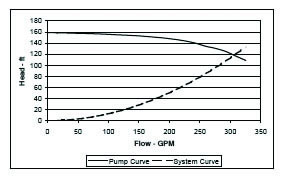
The key is the characteristics of your pump. A centrifugal pump delivers a fairly constant head over the range of flow rates the pump can deliver. The head is the height of a column of liquid that the output pressure of the pump would support. (If the head is constant, the output pressure would be proportional the specific gravity of the liquid, but the head will determine your range.)

Your nozzle imposes a load on the flow of liquid (back pressure). There is a characteristic curve of loss of head versus flow rate, the load line or system curve (dotted). If you plot the pump performance (gpm vs head) on the same graph as the system curve, the point where they cross will be the flow rate and head as shown in the diagram below.

The dotted line is determined by the nozzle, and a small nozzle would give a slightly greater head (steep system curve) at the cost of much lower flow rate. The trick is to select a nozzle small enough to not lose too much head but large enough for an acceptable flow rate. It's a trade off.

http://www.pumpsandsystems.com/topics/pumps/characteristics-centrifugal-pumps-0912

Register to Reply Score 1 for Good Answer
2
Guru
Hobbies - CNC - New Member Hobbies - DIY Welding - New Member Engineering Fields - Electromechanical Engineering - New Member

Join Date: Aug 2007
Posts: 23647
Good Answers: 420
#13

Re: SPRAY NOZZLE TECHNOLOGY

08/19/2016 10:47 AM

Maybe give these guys a call.

__________________
“ When people get what they want, they are often surprised when they get what they deserve " - James Wood
Register to Reply Good Answer (Score 2)
Active Contributor

Join Date: Aug 2016
Posts: 17
#24
In reply to #13

Re: SPRAY NOZZLE TECHNOLOGY

08/19/2016 4:27 PM

Thanks Phoenix !

__________________
Neil Reinecker
Register to Reply
Guru
Hobbies - CNC - New Member Hobbies - DIY Welding - New Member Engineering Fields - Electromechanical Engineering - New Member

Join Date: Aug 2007
Posts: 23647
Good Answers: 420
#25
In reply to #24

Re: SPRAY NOZZLE TECHNOLOGY

08/19/2016 5:30 PM

They use to have pretty good tools on thier website back in the mid 90's. In fact, too good, and then they removed It when Bete move in, (competitor). But the distributor from spraying systems in our area did a lot of foot work. I don't know about the volume and velocity your dealing with to get that. But they may point you in the right direction.

Also if you look at how they use to do hydraulic mining, maybe you'd find the info you need. It's not the pressure, it's the velocity.

__________________
“ When people get what they want, they are often surprised when they get what they deserve " - James Wood
Register to Reply
Guru
Safety - Hazmat - New Member Engineering Fields - Retired Engineers / Mentors - New Member Engineering Fields - Piping Design Engineering - New Member Hobbies - DIY Welding - New Member Fans of Old Computers - PDP 11 - New Member

Join Date: Feb 2007
Location: Stronger Than The Storm
Posts: 2394
Good Answers: 203
#26
In reply to #24

Re: SPRAY NOZZLE TECHNOLOGY

08/19/2016 11:17 PM

Phoenix has the best and easiest answer.

I have also used them frequently in the past and recommend them as your first enquiry. They have an extensive range of technical information in their technical personnel and in their catalogs. Very seldom were they unable to assist me or solve the complete problem or segment of a project.

Good Luck, Old Salt

__________________
Any day on the green side of the grass is a GREAT DAY!, --- me +++++++++. I believe creativity is an inherent part of everyone. --- Kermit T. Frog
Register to Reply
Guru
Safety - Hazmat - New Member United States - US - Statue of Liberty - New Member Engineering Fields - Chemical Engineering - Old Hand

Join Date: Mar 2011
Location: Lubbock, Texas
Posts: 14331
Good Answers: 162
#15

Re: SPRAY NOZZLE TECHNOLOGY

08/19/2016 11:56 AM

I could be way off base with this suggestion, but have you considered introducing high pressure air into the flow at the nozzle, thus increasing total fluid exiting the nozzle? You would need this be an eductor type nozzle that draws a vacuum, but with air blower outputting directly into the jet, velocity should be increased.

Good luck. I am not sure that will work, but heck if it does, the design is all yours to patent.

__________________
If it ain't broke, don't fix it. Just build a better one.
Register to Reply
Guru
Hobbies - CNC - New Member Hobbies - DIY Welding - New Member Engineering Fields - Electromechanical Engineering - New Member

Join Date: Aug 2007
Posts: 23647
Good Answers: 420
#16
In reply to #15

Re: SPRAY NOZZLE TECHNOLOGY

08/19/2016 12:07 PM

like an eductor?

well if anything,..... it'll make a lot of noise.

__________________
“ When people get what they want, they are often surprised when they get what they deserve " - James Wood
Register to Reply
Guru

Join Date: Oct 2008
Posts: 42355
Good Answers: 1693
#17
In reply to #16

Re: SPRAY NOZZLE TECHNOLOGY

08/19/2016 12:16 PM

No, that is not an educator.

Register to Reply
Guru
Hobbies - CNC - New Member Hobbies - DIY Welding - New Member Engineering Fields - Electromechanical Engineering - New Member

Join Date: Aug 2007
Posts: 23647
Good Answers: 420
#18
In reply to #17

Re: SPRAY NOZZLE TECHNOLOGY

08/19/2016 12:27 PM

your on top of the ball this morning,...an eductor is not a educator

__________________
“ When people get what they want, they are often surprised when they get what they deserve " - James Wood
Register to Reply
Guru

Join Date: Oct 2008
Posts: 42355
Good Answers: 1693
#19
In reply to #18

Re: SPRAY NOZZLE TECHNOLOGY

08/19/2016 12:32 PM

What you showed in not an EDUCTOR either.

Don't be such an ass, you knew what I meant.

You should have quit with your recommendation of Sprayco.

After that you're just trying to show off!

You have two choices now. Drop it or continue to be an ass.

I don't care.

Register to Reply
Guru
Hobbies - CNC - New Member Hobbies - DIY Welding - New Member Engineering Fields - Electromechanical Engineering - New Member

Join Date: Aug 2007
Posts: 23647
Good Answers: 420
#20
In reply to #19

Re: SPRAY NOZZLE TECHNOLOGY

08/19/2016 12:49 PM

a rose by any other name is still a rose and unlike you, having designed eductors/ejectors its nothing more than semantics.

Here's another one for you.

so, get over yourself.

__________________
“ When people get what they want, they are often surprised when they get what they deserve " - James Wood
Register to Reply
Guru
Safety - Hazmat - New Member United States - US - Statue of Liberty - New Member Engineering Fields - Chemical Engineering - Old Hand

Join Date: Mar 2011
Location: Lubbock, Texas
Posts: 14331
Good Answers: 162
#22
In reply to #20

Re: SPRAY NOZZLE TECHNOLOGY

08/19/2016 3:53 PM

Those come in all sizes, eductors I mean. BTW, spell check want to correct eductor to educator.

Now that is an educator.
A teacher is the one who exercises the educator in moderation.

Now, everyone, it's Friday, break time is over, back on your heads.

__________________
If it ain't broke, don't fix it. Just build a better one.
Register to Reply
Guru
Hobbies - CNC - New Member Hobbies - DIY Welding - New Member Engineering Fields - Electromechanical Engineering - New Member

Join Date: Aug 2007
Posts: 23647
Good Answers: 420
#23
In reply to #22

Re: SPRAY NOZZLE TECHNOLOGY

08/19/2016 4:25 PM

It still must be sore, I really didn't think he'd take my recommendations to him seriously.

Its never ending....

__________________
“ When people get what they want, they are often surprised when they get what they deserve " - James Wood
Register to Reply
Guru

Join Date: Oct 2008
Posts: 42355
Good Answers: 1693
#31
In reply to #23

Re: SPRAY NOZZLE TECHNOLOGY

08/20/2016 2:49 PM

You love it and you know it.

I admit I was wrong. That is an eductor.

Register to Reply
Guru
Hobbies - CNC - New Member Hobbies - DIY Welding - New Member Engineering Fields - Electromechanical Engineering - New Member

Join Date: Aug 2007
Posts: 23647
Good Answers: 420
#32
In reply to #31

Re: SPRAY NOZZLE TECHNOLOGY

08/20/2016 2:57 PM

The post was directed to What James Stewart discribed.

as far as your response, I don't know what to say and am reserved to say this because bulling is an abused term. But when I see it, I will not back down.

Whether When we agree or disagree, your a good man to come through, that I always knew.

So, until Till next time.

__________________
“ When people get what they want, they are often surprised when they get what they deserve " - James Wood
Register to Reply
Guru
Safety - Hazmat - New Member United States - US - Statue of Liberty - New Member Engineering Fields - Chemical Engineering - Old Hand

Join Date: Mar 2011
Location: Lubbock, Texas
Posts: 14331
Good Answers: 162
#21
In reply to #17

Re: SPRAY NOZZLE TECHNOLOGY

08/19/2016 3:48 PM

He don need no stinking educator.

__________________
If it ain't broke, don't fix it. Just build a better one.
Register to Reply
Guru
Hobbies - RC Aircraft - New Member Hobbies - Automotive Performance - New Member Hobbies - DIY Welding - New Member

Join Date: Jul 2007
Location: Fort Lauderdale Florida
Posts: 5708
Good Answers: 123
#27

Re: Spray Nozzle Technology

08/19/2016 11:40 PM

http://www.elkhartbrass.com/files/aa/downloads/catalog/catalog-f6-T.pdf

Above is probobly more technical information than you will be able to use, but most of what you need should be there.

Some basic things to check for to increse distance with what you posted;

1) Make sure that the nozzle tip is the maximum restriction in the flow system. With a thicker fluid, you need to reduce friction loss all along the way. Open the size of the hose as far as you can, while maintaining needed flexibility unde pressure.

2) Reduce the friction loss in the pipe bends. Two 45 elbos flow better than one 90. Better yet, larger radius bend pipe, like electrical PVC elbos.

3) If possible, shorten the lenght of the delivery pipes and hose.

4) Stream straigtners help to increase distances.

5) The longer the distance between the nozzle and the bend, or size change the better.

Good luck.

__________________
Bob
Register to Reply
Active Contributor

Join Date: Aug 2016
Posts: 17
#37
In reply to #27

Re: Spray Nozzle Technology

08/21/2016 6:26 PM

Bob:

What's a stream straightener ?

__________________
Neil Reinecker
Register to Reply
Guru
Hobbies - RC Aircraft - New Member Hobbies - Automotive Performance - New Member Hobbies - DIY Welding - New Member

Join Date: Jul 2007
Location: Fort Lauderdale Florida
Posts: 5708
Good Answers: 123
#38
In reply to #37

Re: Spray Nozzle Technology

08/22/2016 12:34 AM

In fire service, it is a straight section of pipe with dividers in it that are parallel to the direction of flow. They are designed to take any spin out of the water.

http://www.firehosedirect.com/11-x-2-1-2-discharge-pipes-with-stream-straightener?feed=Froogle&gclid=CPXGr-KY1M4CFY5ZhgodTtcLxw

__________________
Bob
Register to Reply
Guru

Join Date: May 2006
Location: Placerville, CA (38° 45N, 120° 47'W)
Posts: 6215
Good Answers: 248
#28

Re: Spray Nozzle Technology

08/20/2016 12:22 AM

I'm really surprised that after 27 posts, no one has mentioned the exit angle.

It's fairly common knowledge that for artillery, the maximum range is achieved with close to a 45° angle placement of the muzzle, when the target is at the same altitude as the gun. Recent references to the Olympics have pointed out that shot-putters achieve the maximum range with an initial angle closer to 37°, mostly because the target (the ground) is lower than the starting point (roughly the shoulder).

Your optimum initial angle will vary, mostly depending on the target area height with respect to the nozzle height, and the horizontal distance of the target from the nozzle. Both of the images provided By SolarEagle showed maximum distance target areas considerably higher than the tip of the nozzle, and those images are pretty typical of the highway seeding I've seen. Both of those images appear to show the nozzle close to 20° above horizontal, which is hardly appropriate if maximum range is the objective (but I get the impression that they didn't need greater range in those images). When the target area is higher than the nozzle, the greatest range will probably occur with a nozzle angle of between 50 and 60°, depending on how much higher the target is, and how far away.

__________________
Teaching is a great experience, but there is no better teacher than experience.
Register to Reply
Guru
Hobbies - RC Aircraft - New Member Hobbies - Automotive Performance - New Member Hobbies - DIY Welding - New Member

Join Date: Jul 2007
Location: Fort Lauderdale Florida
Posts: 5708
Good Answers: 123
#29
In reply to #28

Re: Spray Nozzle Technology

08/20/2016 1:46 AM

Don't you think that the person with the nozzle would keep changing angles till he found the angle that gave him the distance he needed? I would think that angle had already been explored.

__________________
Bob
Register to Reply
Guru

Join Date: May 2006
Location: Placerville, CA (38° 45N, 120° 47'W)
Posts: 6215
Good Answers: 248
#30
In reply to #29

Re: Spray Nozzle Technology

08/20/2016 1:56 AM

I learned long ago not to take anything for granted, although it's often easy to forget...

__________________
Teaching is a great experience, but there is no better teacher than experience.
Register to Reply
Guru
Australia - Member - New Member

Join Date: Feb 2008
Location: Australia
Posts: 2181
Good Answers: 255
#33

Re: Spray Nozzle Technology

08/21/2016 4:57 AM

I do have a suggestion for you to research.

Look at "laminar flow" devices. fire departments in the USA found that by creating laminar flow at the hose outlet, they achieved capability to increase range of their fire fighting nozzles for high rise buildings.

One way that this is achieved is a "honeycomb" pattern inside the nozzle so that the flow in each conduit becomes laminar within the length (From memory something like length greater than 14 x tube diameter.)

__________________
Just an Engineer from the land down under.
Register to Reply
Guru
Hobbies - RC Aircraft - New Member Hobbies - Automotive Performance - New Member Hobbies - DIY Welding - New Member

Join Date: Jul 2007
Location: Fort Lauderdale Florida
Posts: 5708
Good Answers: 123
#39
In reply to #33

Re: Spray Nozzle Technology

08/22/2016 12:37 AM

See if the site I posted is the device you are referring to.

__________________
Bob
Register to Reply
Guru
United Kingdom - Member - Indeterminate Engineering Fields - Control Engineering - New Member

Join Date: Jan 2007
Location: In the bothy, 7 chains down the line from Dodman's Lane level crossing, in the nation formerly known as Great Britain. Kettle's on.
Posts: 32175
Good Answers: 839
#34

Re: Spray Nozzle Technology

08/21/2016 8:31 AM

The maximum range would be found by angling the existing nozzle around 45deg to horizontal.

Range would be increased by lowering the viscosity of the <..."soup"...>, as would the addition of a tail wind from behind the nozzle.

Making the nozzle smaller would increase the discharge velocity, which would help. However, the upstream piping and prime mover would need to handle the increased pressure that would be involved.

Moving the nozzle closer to the target needs to be considered, as does delivering the <...slurry...> in a different way; buckets, conveyor belts, rail tank cars, paintbrushes (rhetorical question - NNTR)?

__________________
"Did you get my e-mail?" - "The biggest problem in communication is the illusion that it has taken place" - George Bernard Shaw, 1856
Register to Reply
Guru
Engineering Fields - Electrical Engineering - Been there, done that. Engineering Fields - Control Engineering - New Member

Join Date: Dec 2008
Location: Long Island NY
Posts: 15600
Good Answers: 981
#35
In reply to #34

Re: Spray Nozzle Technology

08/21/2016 9:50 AM

Actually a 45° launching angle for maximum horizontal distance for the trajectory of a particle is only true when multiple assumptions are true. The obvious assumption people easily grasp is no flight path obstruction. One must be able to steer around the obstruction only by changes at the launching point. The next assumption is the launch and land locations must be effectively at the same elevation. The assumption many do not notice is the loss of energy due to drag during flight must be negligible. When all of these assumptions are true the trajectory curve will be symmetrical with the vertical path that intersects the trajectory apex.

Spraying a slurry of seeds, fertilizer and binding goo as far as possible horizontally will occasionally be at a 45° launching angle.

__________________
"Don't disturb my circles." translation of Archimedes last words
Register to Reply
Guru
United Kingdom - Member - Indeterminate Engineering Fields - Control Engineering - New Member

Join Date: Jan 2007
Location: In the bothy, 7 chains down the line from Dodman's Lane level crossing, in the nation formerly known as Great Britain. Kettle's on.
Posts: 32175
Good Answers: 839
#50
In reply to #35

Re: Spray Nozzle Technology

08/24/2016 8:17 AM

Then the arrangement is worthy of practical testing, which the Original Poster is in the best position to carry out.

The prospect of spraying <...seeds, fertilizer and binding goo...> is enough to gast anyone's flabber, so here's the start of a campaign to have the trials put on YouTwitFace (usual disclaimer), or whatever it's called.

<unsubscribes>

__________________
"Did you get my e-mail?" - "The biggest problem in communication is the illusion that it has taken place" - George Bernard Shaw, 1856
Register to Reply
Guru
Hobbies - RC Aircraft - New Member Hobbies - Automotive Performance - New Member Hobbies - DIY Welding - New Member

Join Date: Jul 2007
Location: Fort Lauderdale Florida
Posts: 5708
Good Answers: 123
#40
In reply to #34

Re: Spray Nozzle Technology

08/22/2016 12:45 AM

You may have hit on a solution.

If the OP is able to raise the discharge point relative to the target area, without lowering the nozzle pressure, the +-45 degree angle will allow longer travel time before hiting the target.

Does anyone have a formula for how much distance will be gained for each measure of vertical hight?

__________________
Bob
Register to Reply
Guru
Hobbies - RC Aircraft - New Member Hobbies - Automotive Performance - New Member Hobbies - DIY Welding - New Member

Join Date: Jul 2007
Location: Fort Lauderdale Florida
Posts: 5708
Good Answers: 123
#41

Re: Spray Nozzle Technology

08/22/2016 12:49 AM

Are you able to raise the discharge nozzle for the long reach throws?

Can you fabricate a 20 foot extention of pipe that is signifigently larger than the nozzle diameter?

__________________
Bob
Register to Reply
Guru

Join Date: May 2016
Posts: 1746
Good Answers: 87
#42

Re: Spray Nozzle Technology

08/22/2016 11:40 AM

Look up Critical Length in incompressible flow. What you are trying to do is suppress the onset of turbulence in the pumped fluid. The less turbulent the flow, the greater distance from the nozzle before the flow breaks up into individual droplets.

The methods used to do this are smooth transitions in the fluid lines going to the nozzle and diameter to length and surface roughness inside the nozzle to keep flow as close to laminar as possible. You are looking for a Reynolds number as low as possible in the approach to the nozzle and in the nozzle. Flow straighteners in the nozzle approach as well as smooth transitions in the approach to the nozzle could be of benefit. From the pictures, it looks like the lashup uses standard pipe fittings are used throughout. You can improve the performance by using long radius turns and flanged connections with a smooth wall contour.

Register to Reply Score 1 for Good Answer
Guru
Safety - Hazmat - New Member United States - US - Statue of Liberty - New Member Engineering Fields - Chemical Engineering - Old Hand

Join Date: Mar 2011
Location: Lubbock, Texas
Posts: 14331
Good Answers: 162
#43
In reply to #42

Re: Spray Nozzle Technology

08/22/2016 11:47 AM

And that, gentlemen, is a completely true statement. Good Answer!

__________________
If it ain't broke, don't fix it. Just build a better one.
Register to Reply
Guru

Join Date: May 2006
Location: Placerville, CA (38° 45N, 120° 47'W)
Posts: 6215
Good Answers: 248
#44

Re: Spray Nozzle Technology

08/22/2016 2:22 PM

At least a couple of posts have suggested flow straighteners, but the ones indicated can't be used for your application because the wood chips would get lodged in the channels.

Here is something that might work. At a minimum, it would reduce the spin of the slurry. I'm proposing a set of internal fins, and a way to fabricate them:

I'd take an existing nozzle and cut a set of slits. I've shown six, but fewer might work, with slightly less chance of clogging. Each slit would have an insert that stuck a little inside the original cone. The inserts would be soldered or brazed into the slits, and a sleeve around the inserts would give it strength. By soldering, the inserts could be unsoldered to try different shapes of inserts. It may not be obvious that the inserts I've shown only project inward in the conical section of the nozzle, so the ID of the fins is identical to the original exit ID.

If you are interested, I can give more detail...

__________________
Teaching is a great experience, but there is no better teacher than experience.
Register to Reply
Guru

Join Date: Apr 2008
Location: Chicago
Posts: 3990
Good Answers: 144
#47

Re: Spray Nozzle Technology

08/23/2016 11:58 PM

The mix is violently moving a lot of twisted fittings by time it reaches the flared nozzle and flares outward. A simple section of straight pipe prior to discharge will increase laminar flow and increase range. Conveniently it is only about $5 per for to test what length works best.

__________________
High Tolerance is Beautiful
Register to Reply
Guru
United Kingdom - Member - Indeterminate Engineering Fields - Control Engineering - New Member

Join Date: Jan 2007
Location: In the bothy, 7 chains down the line from Dodman's Lane level crossing, in the nation formerly known as Great Britain. Kettle's on.
Posts: 32175
Good Answers: 839
#49
In reply to #47

Re: Spray Nozzle Technology

08/24/2016 8:10 AM

<...laminar flow...> 391gpm through a 1in nozzle on a 2.5in pipe?

__________________
"Did you get my e-mail?" - "The biggest problem in communication is the illusion that it has taken place" - George Bernard Shaw, 1856
Register to Reply Score 1 for Good Answer
Guru
Safety - Hazmat - New Member United States - US - Statue of Liberty - New Member Engineering Fields - Chemical Engineering - Old Hand

Join Date: Mar 2011
Location: Lubbock, Texas
Posts: 14331
Good Answers: 162
#51
In reply to #49

Re: Spray Nozzle Technology

08/24/2016 11:06 AM

I would come nearer believing 391 L/m through a 1 inch nozzle on a 2.5 inch pipe. Maybe the other at some astronomical pressure driven by a Triplex oil field pump.

In hydrodynamics, one of the great discoveries was that dolphins typically stream a layer of fine air bubbles along their bellies (maybe all around themselves) to reduce water friction, and thereby swim considerably faster. Ships, even very, very large ones also benefit from the use of a fine stream of air bubbles introduced on the bottom of the hull to reduce water drag, and achieve more knots.

If OP wants to increase stream velocity, just make some tiny holes in the nozzle, and couple in a low flow of air to bubble the stream.

__________________
If it ain't broke, don't fix it. Just build a better one.
Register to Reply
Guru

Join Date: May 2006
Location: Placerville, CA (38° 45N, 120° 47'W)
Posts: 6215
Good Answers: 248
#52
In reply to #51

Re: Spray Nozzle Technology

08/24/2016 11:57 AM

Someone must have a grudge to have marked that OT. Here's a GA to counter the OT.

I don't know whether your idea will work, but it is certainly worth trying. Although the volume of air would presumably be small, it could make a big difference, especially if the inside surfaces of the nozzle are not highly polished. There is room for a rather large amount of experimentation on the number, size, location, distribution, orientation, etc. of the air holes. It is even likely that a design could be developed that would use venturi forces to inject the air with no air pump required.

While thinking about the above, and about my prior suggestion, it occurred to me that the choice of material for fabricating the nozzle could be of considerable significance. One common material for nozzles is brass, but brass is soft enough that I can easily picture the edges of the wood chips getting caught momentarily on the inside surface of the nozzle, creating friction and turbulence. If the nozzle can't be fabricated from a much harder metal, then it might be worthwhile to deposit a rather heavy layer of chrome plating on the inside of the nozzle. In addition to achieving higher exit velocity and therefore range, this should also reduce wear and make the nozzle last considerably longer.

__________________
Teaching is a great experience, but there is no better teacher than experience.
Register to Reply
Guru

Join Date: May 2016
Posts: 1746
Good Answers: 87
#53
In reply to #52

Re: Spray Nozzle Technology

08/24/2016 12:37 PM

The key is reducing the Reynolds number of the discharging stream. By lining the flow with a less viscous fluid such as air could work if the air can be introduced as a smooth film around he fluid. A light vegetable oil would work better as entrained air bubbles in the fluid would expand and disrupt the flow at the nozzle exit to atmospheric pressure. This would start splatter of the fluid.

In thinking it through, the discharge tube would start with a large diameter chamber followed by a flow straightener section. This would flow into a venturi contraction to final nozzle diameter. The venturi and final tube need to be very smooth and if vegetable oil was to be added, it would come in through a ring at the entrance to the venturi, so that the working fluid was passing through the venturi and final tube as a slug of material, rather than a laminar fluid flow. The laminar flow and velocity shear would happen in the oil. The nozzle exit would need to be sharp edged to get an exit flow with the least disruption. You would then deliver the seed mix as a piece of barstock with little or no internal fluid shear that would cause the stream to break up. The disruption of the fluid stream would then be limited by aerodynamic effects of the air beyond the nozzle as the fluid passes through it.

Register to Reply Score 1 for Good Answer
Guru
Hobbies - CNC - New Member Hobbies - DIY Welding - New Member Engineering Fields - Electromechanical Engineering - New Member

Join Date: Aug 2007
Posts: 23647
Good Answers: 420
#54
In reply to #51

Re: Spray Nozzle Technology

08/24/2016 1:09 PM

I'm trailing off topic slightly, that also goes with airplanes, where it was discovered if they have micro-holes in the skin of the airplane it would lessen/reduce the boundary layer between the skin of the airplane and the slip stream.

Unfortunately, these holes plug for it to be justified..

__________________
“ When people get what they want, they are often surprised when they get what they deserve " - James Wood
Register to Reply
Guru

Join Date: May 2006
Location: Placerville, CA (38° 45N, 120° 47'W)
Posts: 6215
Good Answers: 248
#55
In reply to #54

Re: Spray Nozzle Technology

08/24/2016 1:41 PM

...quite similar to dimples in a golf ball.

__________________
Teaching is a great experience, but there is no better teacher than experience.
Register to Reply
Guru
Hobbies - RC Aircraft - New Member Hobbies - Automotive Performance - New Member Hobbies - DIY Welding - New Member

Join Date: Jul 2007
Location: Fort Lauderdale Florida
Posts: 5708
Good Answers: 123
#56

Re: Spray Nozzle Technology

09/13/2016 1:03 AM

At this point it seems that the OP may need to bolt a carburetor onto the nozzle and feed it with non toxit oil product.

I'm not too sure about that.

OK, so tell us what you have tried, what worked and what didn't.

__________________
Bob
Register to Reply
Register to Reply 56 comments

Good Answers:

These comments received enough positive votes to make them "good answers".

"Almost" Good Answers:

Check out these comments that don't yet have enough votes to be "official" good answers and, if you agree with them, vote them!
Copy to Clipboard

Users who posted comments:

bob c (7); Dirtboy58 (8); dkwarner (6); James Stewart (5); JE in Chicago (1); Jpfalt (2); Just an Engineer (1); lyn (5); old salt (1); phoenix911 (8); PWSlack (3); redfred (2); Relativity PL (2); Rixter (2); SolarEagle (2); Tornado (1)

Previous in Forum: About the Nomenclature of Refrigerant   Next in Forum: Shaft Diameter Of Motor

Advertisement