Previous in Forum: Clay Road Problems   Next in Forum: Switched High Voltage Current Source and Sink
Close
Close
Close
44 comments
Rate Comments: Nested
Active Contributor

Join Date: Mar 2014
Posts: 13

Concrete Wicking

03/17/2014 1:57 AM

We built a home, now 3 years old, and it began having its wood floors buckle. The foundation is a slab on grade. The design called for a moisture barrier. The builder has since gone out of business. Upon pulling up the wood floor, the 7 pound concrete sealer was wet. Some kind of calcium test in a sealed container showed a reading of ~13 pounds. I am not a civil engineer and figure it must mean that there is 13 pounds of pressure so a 13 or greater sealer is needed.

The home is on a hill side where the back side has had the hill excavated and the fill placed in front to form the build site. There is about 10' of space from the foundation slab on the backside of the home to the lava rock wall against the hillside.

Between the slab and the rock wall there is a 30" wide concrete sidewalk. I dug two holes 3' deep just outside the sidewalk and put in a preforated pipe to see if water would accumulate in it. Thus far no water.

I have heard from friends to dig a trend all the way around the home 3' deep and drain it out to the front of property. But as i see no water in my 3' deep holes, will this even help?

Register to Reply
Interested in this topic? By joining CR4 you can "subscribe" to
this discussion and receive notification when new comments are added.

Good Answers:

These comments received enough positive votes to make them "good answers".
Guru

Join Date: Apr 2011
Posts: 8006
Good Answers: 286
#1

Re: concrete wicking

03/17/2014 4:01 AM

Some additional information about your site would be helpful.

.

Where are you? What are the typical weather extremes for rainfall and temperature?

.

What type of soil/ground exists outside the fill?

.

Do you notice water accumulating in the area between the house and the rock wall when it rains?

__________________
Eternal vigilance is the price of knowledge. - George Santayana
Register to Reply
Guru
Hobbies - CNC - New Member Hobbies - DIY Welding - New Member Engineering Fields - Electromechanical Engineering - New Member

Join Date: Aug 2007
Posts: 23647
Good Answers: 420
#3
In reply to #1

Re: concrete wicking

03/17/2014 7:37 AM

water table level would be helpful.

__________________
“ When people get what they want, they are often surprised when they get what they deserve " - James Wood
Register to Reply
Active Contributor

Join Date: Mar 2014
Posts: 13
#14
In reply to #3

Re: concrete wicking

03/18/2014 1:12 AM

I am not sure. But soils report did not reveal water in the three 20' deep bore holes.

Register to Reply
Guru
United States - Member - Born, raised halfway 'round .....

Join Date: May 2010
Location: Metro.Manila, Philippines.
Posts: 1268
Good Answers: 27
#43
In reply to #14

Re: concrete wicking

03/18/2014 3:38 PM

Are the test bore holes by any chance done close to where the moisture are now present? Since a lot of underground streams are present in the Manoa Valley, it may also be a case where the natural flow path of these streams were blocked during constructions? Once blocked it is only natural for the stream flow to seek other way? I experienced flash floodings coming from these streams when I was along in the Manoa Rd., not far from the University when this was observed.. and seen a lot of cars swept and damaged properties caused by these streams..

__________________
vsar
Register to Reply
Active Contributor

Join Date: Mar 2014
Posts: 13
#13
In reply to #1

Re: concrete wicking

03/18/2014 1:11 AM

We are in Hawaii. I am at the 500 foot elevation. Weather is mild, 60 to 90 year round. We get a fair amount of rain on this hillside of Manoa Valley.

The soil report commissioned for the construction indicated that the soil was volcanic silt and rocks, not clay. We bored down something like 20' and did not encounter water. The site was bored in three locations. Outside the fill is the same stuff.

I have noticed during heavy rains that water does accumulate between the house and rock wall. But it eventually drains away after an hour or so.

Register to Reply
3
Guru
Popular Science - Weaponology - New Member Safety - ESD - New Member Hobbies - Fishing - New Member

Join Date: Sep 2006
Location: Near Frankfurt am Main, Germany. 50.390866N, 8.884827E
Posts: 17996
Good Answers: 200
#21
In reply to #13

Re: concrete wicking

03/18/2014 5:08 AM

As I have said many times, I am NOT a CE, so take my thoughts with a good pinch of salt please.

But to my mind, that water accumulation needs to be guided away from the house as quickly as possible, then the problem needs to be reassessed regularly to see what improvement has or has not been achieved.

Many years ago, there were methods using silicon fluids to make concrete waterproof. Whether these are even still available, allowed or even are viable, I could not say anymore, hopefully there is something even better. They effectively formed a chemical damp course.

The idea is that the concrete takes on the liquid, which disallows further water ingress, allowing the rest of the wall/floor to dry out over a month or six!

You may be lucky with just getting rid of the standing water immediately....which could be "tested" over a period of a few months quite cheaply by using heavy plastic sheet, UV resistant of course, to do the same job and see if the situation gets better, once the standing water after a rainfall is not "standing" anymore.....worth a try and cheap.

I would suggest that you buy one of those modern moisture measuring meters with two spikes and start taking readings now and noting them down all around your house, in and out, so that any changes you make can be monitored more exactly....

I hope you get a handle on the problem and get it fixed for a reasonable price. With a bit of luck and good management on your part, it may not be as difficult to fix as some might think.

Go slowly, and DON'T let anyone get you to invest in fixes till you personally know exactly what is happening. There are plenty around (all over the world, here too!) that will tell you what to do, without a clue, just to get you REALLY worried, the quicker to get hold of your money, with no guarantee of a fix.

In a worse case scenario of a friend of mine here many years ago, somewhat similar I would say, he put in path around the house using concrete slabs, joints cemented and sealed (don't ask me how anymore!), small amount of "fall" to cause the water to move away from the house, with plenty of drain grids and 100mm underground piping to remove water to a pond we had made, below the house.

He had both rainfall and wet ground to contend with.....but it turned out (luckily for him!) that the wet ground was exacerbated by rainfall, that is not always the case!

He placed little grids (I have no idea what they are called in English) around the top of the house pavement, to catch any possible surface water before it got near the house...he told me that it took the better part of 2 years to show that what he had done worked, but he did not have the benefit of modern electronics to measure damp then.

Over the years previously (well before I knew him), he had had the house dug out of the ground to let the cellar walls dry and be resealed by Companies TWICE at quite heavy costs. It helped only for 10 or so years before needing to be redone again!! I have no real idea what was done then...

He made a nice job of the pathway, pretty I would say, about 2 meters wide, nice to sit on in the summer using deck chairs....I guess that the new owner does not have a clue why it was done, after Heinz died the property was sold for a tidy sum 4 or 5 years ago.

Don't let anyone push you around, you make the tests, you measure the effects over the months and you decide what needs to be done...I would guess that you might need a year to get things working well.....its a slow process. Best of luck...

Remember Shit happens.

__________________
"What others say about you reveals more about them, than it does you." Anon.
Register to Reply Good Answer (Score 3)
Active Contributor

Join Date: Mar 2014
Posts: 13
#37
In reply to #21

Re: concrete wicking

03/18/2014 2:14 PM

Would anyone have information on good electronic meters for taking moisture readings?

Register to Reply
Guru
United States - Member - New Member Engineering Fields - Mechanical Engineering - New Member Engineering Fields - Petroleum Engineering - New Member Hobbies - Target Shooting - New Member

Join Date: Jan 2008
Location: Spring, Texas
Posts: 3403
Good Answers: 150
#40
In reply to #37

Re: concrete wicking

03/18/2014 2:23 PM

Here is a cheap one that Lowes sells...

http://www.lowes.com/pd_78059-56005-MMD4E_0__?productId=3136919&Ntt=moisture+meter&pl=1&currentURL=%3FNtt%3Dmoisture%2Bmeter&facetInfo=

__________________
Who is John Galt?
Register to Reply
Guru
United States - Member - Born, raised halfway 'round .....

Join Date: May 2010
Location: Metro.Manila, Philippines.
Posts: 1268
Good Answers: 27
#31
In reply to #13

Re: concrete wicking

03/18/2014 11:00 AM

"I have noticed during heavy rains that water does accumulate between the house and rock wall. But it eventually drains away after an hour or so."

I would suggest not to do any inside fix yet until the outside problems has been addressed...


The basement of my house in New York has had water problems too before although it sits almost on the top of the hill! I implemented the following steps which proven to be very cost effective in correcting my wet basement problems;
1. All water runoffs coming from the roofs were re-directed away from the house. Ensure no standing water accumulates even when continuously raining.

2. Made a small trench in-between my property and my neighbor's since his is a bit higher than my own! Any collected water are drained away from the house, always flowing! ensuring No standing water whatsoever!

3. Then made the area of about 3 feet wide from my house walls, around the immediate perimeter of the house to be slightly higher and graded down away from the house..

4. Poured a concrete walkway with a bit of slope around the perimeter of the house. 5. Lastly was to water sealed all basement windows.

__________________
vsar
Register to Reply
Guru

Join Date: Apr 2011
Posts: 8006
Good Answers: 286
#33
In reply to #13

Re: concrete wicking
03/18/2014 12:49 PM

I'll be brief(because the text editor doesn't agree with my phone browser).Even though the soil drains well enough (and property is sufficiently above water table) to preclude standing water from the boreholes, surface tension can allow significant amounts of water to remain i the soil and to be laterally transported..The hill and wall may be more important to this problem than it might seem at first glance. The amount of rain that streams down the incline and ends up pooling on the surface between the house and wall is probably minimal, most of it likely seems into the hillside quickly.... which presents a different problem.As that water that falls and seeps into ground uphill from you, it likely creates a subsurface flow downhill through your property. Even while air can be incorporated in the soil, the height of the water in the soil uphill cab still drive water laterally against and under your property..This could mean that even after you take care transporting the rain that falls between your house and wall to prevent any pooling there, a significant flow could exist beneath the surface to your foundation when it rains heavily. .The levels at which water flows horizontally and accumulates are not typically at a specific elevation relative to sea level. Instead water table and the flows occuring with significant rain, tend to follow a path more related to the surface and any significant geological features. When the side of a hill is cut sometimes streams will pour out places in the cut when it rains. The very same thing could be happening at your property, though the well draining sand would make it difficult to notice..So in addition to the good advice you have already received in the other comments, here are a few additional suggestions:.The rain falling on the your house's roof can be significant. Make sure your gutter or other system effectively collects that water and extend if necessary drain lines to release to an area distant and downhill.It is probably fair to assume that in heavy rains water is flowing towards your house in the ground between your house and the wall. This suggest a modified approach to french drains may be appropriate, with the pipe still layed at the bottom of a ditch (of increasing depth for drainage), but instead of merely surrounding thee perforated pipe with coarse aggregate and the burying it all, instead one side of the ditch is lined with an impermeable barrier and a geotextile lines the other with something between hydrophobic or at least that provides good drainage and support, so perlite or airy lava rocks perhaps.Generally try to have surfaces slope away from your house. It may be beneficial to make those that slope away less permeable to water for soil consider hardpack a layer of clay and iron oxide...maybe a little below the surface. For concrete with appropriate grade, Sodium silicate solutions are far less expensive than concrete hardener/sealers though is is often the exact same thing.For surface that for some reason slope toward your house, you probably don't want to decrease permeability unless you are moving the water to a drainline closer to the house.get a stand alone dehumidifier...these can be very helpful for dewatering/drying when used in combination with a decent fan.I really hope this doesn't format to one big block again...sorry if it does..

__________________
Eternal vigilance is the price of knowledge. - George Santayana
Register to Reply
Active Contributor

Join Date: Mar 2014
Posts: 13
#36
In reply to #33

Re: concrete wicking

03/18/2014 2:13 PM

I had a friend that mentioned: the hill absorbs water above out house site during rains. As it travels down through the hillside the water exerts pressure and looks for a way out of the hill. Like a water hose filled with water, if you elevate one side (like upside of the hill) and release the end, the water gets pushed out the lower side. I am thinking that is the surface tension thing you are mentioning.

The hill is about 1500' tall. I am about 600' up the hillside.

The home has rain gutters, so much of the rooftop rain is diverted into underground pipes off the property. The home also has a concrete walkway 30" around the house.

I will google the internet for this type of modified drain system you mentioned for more information.

Thank you.

Register to Reply
Guru
Hobbies - Fishing - New Member

Join Date: Jun 2008
Location: Raleigh, NC USA
Posts: 13529
Good Answers: 468
#2

Re: concrete wicking

03/17/2014 5:49 AM

It sounds like your builder or the guys that poured the slab left off the moisture barrier.

Before you do any digging, you are going to have to have a moisture barrier anyway, which at this point, will involve pulling up all of your flooring and laying down 6 mil plastic, so I would do that first.

After that, look online for methods of laying flooring on concrete basement flooring. It doesn't sound like you have a flooding problem...just wicking or condensation, which trenching won't fix.

__________________
Those who would give up essential Liberty, to purchase a little temporary Safety, deserve neither Liberty nor Safety. Ben Franklin
Register to Reply
Active Contributor

Join Date: Mar 2014
Posts: 13
#15
In reply to #2

Re: concrete wicking

03/18/2014 1:14 AM

I have heard from the flooring guy that two coats of epoxy will provide 20 or so lbs of protection. I would do that, but also try to get the water away in the first place.

Register to Reply
Guru

Join Date: Aug 2012
Posts: 1071
Good Answers: 92
#4

Re: Concrete Wicking

03/17/2014 8:13 AM

When you say wood floors- do you mean hardwood, or wood subfloors with another (including hardwood) floor finish on top? It sounds like part of your problem may be the way the floor was installed.

If it is hardwood, it should be installed according to standard procedures on a system of sleepers with proper 6 mil vapour barrier underneath- was that done?

An alternative is to use engineered hardwood, which has the cosmetic wear layer laminated onto a dimensionally stable substrate.

Register to Reply
Active Contributor

Join Date: Mar 2014
Posts: 13
#16
In reply to #4

Re: Concrete Wicking

03/18/2014 1:19 AM

I do mean engineered hard wood flooring. It is a top layer of real wood with several layers of ply substrate bonded together. Below the engineered wood floor are two materials, 7 lbs moisture barrier and a cement leveler placed on top of the concrete. Another flooring company has said that they use two coats of epoxy in cases like this. I just don't want to take their word for it anymore.

Register to Reply
Guru

Join Date: Feb 2011
Posts: 7025
Good Answers: 207
#5

Re: Concrete Wicking

03/17/2014 10:05 AM

did you start out with proper foundation drainage including building site drainage?

Register to Reply
Active Contributor

Join Date: Mar 2014
Posts: 13
#17
In reply to #5

Re: Concrete Wicking

03/18/2014 1:20 AM

If done per plan then yes. I am not sophisticated enough to have know during construction.

Register to Reply
Guru

Join Date: Oct 2008
Posts: 42355
Good Answers: 1693
#6

Re: Concrete Wicking

03/17/2014 10:10 AM

The contractor should have dug a trend trench before the foundation was poured.

This is standard procedure on houses dug into hill sides for rain drainage, but maybe you live in the desert?

Register to Reply
Guru
Engineering Fields - Electrical Engineering - Been there, done that. Engineering Fields - Control Engineering - New Member

Join Date: Dec 2008
Location: Long Island NY
Posts: 15600
Good Answers: 981
#7

Re: Concrete Wicking

03/17/2014 10:16 AM

It sounds to me like you've found one of the reasons your builder went out of business.

Hire a certified civil engineer and a lawyer. You may not have any financial recourse directly against the defunct business that was your builder but let your lawyer advise you about this. Your lawyer should know the relevant laws of your location and what legal actions can be taken. Your lawyer should also know what municipal inspections the builder should have performed to build this house.

__________________
"Don't disturb my circles." translation of Archimedes last words
Register to Reply
Guru

Join Date: Mar 2007
Location: by the beach in Florida
Posts: 33392
Good Answers: 1817
#8

Re: Concrete Wicking

03/17/2014 11:04 AM

You should have a moisture barrier under the concrete slab. If this wasn't installed, you have a problem. The calcium chloride test is not reliable when testing a covered floor; in other words this is a test performed before the flooring to determine moisture content. If we assume that the slab was installed properly and has a moisture barrier, then there may be a leak in the plumbing that is causing moisture accumulation in the slab, so this would be the first thing to check. Cut off all faucets, make sure no leaks, shut off ice maker and see if meter moves over the course of an hour or so, look around toilets and plumbing locations for any drips or moisture. If you find a leak, then that is most likely the problem.

__________________
All living things seek to control their own destiny....this is the purpose of life
Register to Reply
Active Contributor

Join Date: Mar 2014
Posts: 13
#12
In reply to #8

Re: Concrete Wicking

03/18/2014 1:06 AM

Thank you for the comment. I agree, we should have a moisture barrier as it is on design.

The calcium test was performed by pulling up two 3 sq ft sections of floor, removing the leveler and 7 lb moisture barrier which exposed the bear concrete. So the test was not done on the wood flooring material, but on the bare concrete.

I shall try to the water leak test. Thank for the that tip.

Register to Reply
Guru
Engineering Fields - Systems Engineering - New Member Hobbies - Model Rocketry - New Member

Join Date: Dec 2006
Location: Long.92E,Lat.26N
Posts: 1336
Good Answers: 14
#9

Re: Concrete Wicking

03/17/2014 10:32 PM

<I have heard from friends to dig a trend all the way around the home 3' deep and drain it out to the front of property>

THAT is Surely the way

Register to Reply
Active Contributor

Join Date: Mar 2014
Posts: 13
#18
In reply to #9

Re: Concrete Wicking

03/18/2014 1:24 AM

The footings are to be dug three feet deep so that was the reason for the depth.

I do have a concern that the drain will fill with silt and roots eventually becoming ineffective. If there is a way to make a drain with "sewer traps" so I can periodically snake it clear of dirt and roots that would be good. I just don't see anything like that on the internet.

I will need to start looking for a hydro engineer but don't know any at this point.

Register to Reply
Guru
Popular Science - Weaponology - New Member Safety - ESD - New Member Hobbies - Fishing - New Member

Join Date: Sep 2006
Location: Near Frankfurt am Main, Germany. 50.390866N, 8.884827E
Posts: 17996
Good Answers: 200
#22
In reply to #18

Re: Concrete Wicking

03/18/2014 5:12 AM

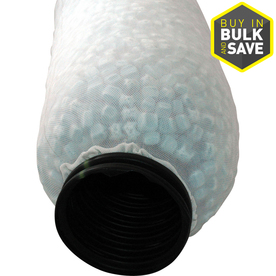
Special large bore plastic pipes are used with holes in the top to capture moisture. A filter "fleece" covers this holes to prevent other stuff entering. It works fine in such situations here. I did two sides of my house 8 years ago, fantastic....

__________________
"What others say about you reveals more about them, than it does you." Anon.
Register to Reply
Guru
United States - Member - New Member Engineering Fields - Mechanical Engineering - New Member Engineering Fields - Petroleum Engineering - New Member Hobbies - Target Shooting - New Member

Join Date: Jan 2008
Location: Spring, Texas
Posts: 3403
Good Answers: 150
#23
In reply to #22

Re: Concrete Wicking

03/18/2014 7:19 AM

this is what Andy is referring to.

http://www.lowes.com/pd_308700-676-EZ-0802F_0__?Ntt=french+drain&UserSearch=french+drain&productId=3136611&rpp=32

__________________
Who is John Galt?
Register to Reply
Guru
Safety - Hazmat - New Member Engineering Fields - Mining Engineering - New Member Engineering Fields - Construction Engineering - New Member Hobbies - Hunting - New Member

Join Date: Dec 2006
Location: Scottsdale, AZ
Posts: 1014
Good Answers: 12
#10

Re: Concrete Wicking

03/17/2014 10:43 PM

The moisture test is telling you 13 lbs of moisture emitted over 1000 sq ft per 24 hrs your limits are 3-5lbs. Sounds like your sealer failed. Check with a professional floor installer before ripping up the concrete or your yard.

__________________
John J Baker
Register to Reply
Guru
Safety - Hazmat - New Member Engineering Fields - Mining Engineering - New Member Engineering Fields - Construction Engineering - New Member Hobbies - Hunting - New Member

Join Date: Dec 2006
Location: Scottsdale, AZ
Posts: 1014
Good Answers: 12
#11
In reply to #10

Re: Concrete Wicking

03/17/2014 11:37 PM

Another issue may have happen the builder before applying the sealer for the floor may not have tested the moisture of the concrete plus if the room humidity was high and the build sealed the floor it could have saturated the concrete holding in the moisture causing the floor to buckle over time. At 13 lbs there is no way you can at this point seal it you most dry out the concrete. Again I'd contact a professional floor installer.

__________________
John J Baker
Register to Reply
Active Contributor

Join Date: Mar 2014
Posts: 13
#19
In reply to #11

Re: Concrete Wicking

03/18/2014 1:32 AM

They did not test the floor but assumed the 7 lbs moisture barrier was sufficient. One installer recommeneded two coats of epoxy. I think that I need to pull up the entire floor and not just the areas where the floor buckled up from the concrete. This would also "dry" out the concrete as you mention here.

Thank you for the comments.

I think I will try to get the moisture away from the home with a drain and also use epoxy on the floor. The question now is how to make a drain that is maintainable. Also, since my 3' deep holes do not have any water in them, is it going to be deep enough or totally ineffective.

I have a slab on grade home with no basement. So I do not think I can do an internal drain system.

Register to Reply
Guru
Safety - Hazmat - New Member Engineering Fields - Mining Engineering - New Member Engineering Fields - Construction Engineering - New Member Hobbies - Hunting - New Member

Join Date: Dec 2006
Location: Scottsdale, AZ
Posts: 1014
Good Answers: 12
#20
In reply to #19

Re: Concrete Wicking

03/18/2014 1:44 AM

There is perforated flex pipe sold at your local hard where store. This is called a french drain. You'll need to dig down about three feet and three feet away from the house fill will 1/2-3/4" crushed stone all around the pipe. Then cover the last 6" with the surrounding soil. You can "Google" for a better explanation.

__________________
John J Baker
Register to Reply
Guru
United States - Member - New Member Engineering Fields - Mechanical Engineering - New Member Engineering Fields - Petroleum Engineering - New Member Hobbies - Target Shooting - New Member

Join Date: Jan 2008
Location: Spring, Texas
Posts: 3403
Good Answers: 150
#24
In reply to #19

Re: Concrete Wicking

03/18/2014 7:22 AM

I am told by my Howlie wife that many houses in Hawaii do not have AC systems (I've never been there but is on the bucket list), but in your case an AC system would go a long way towards dealing with humidity issues.

__________________
Who is John Galt?
Register to Reply
Guru
Safety - Hazmat - New Member Engineering Fields - Mining Engineering - New Member Engineering Fields - Construction Engineering - New Member Hobbies - Hunting - New Member

Join Date: Dec 2006
Location: Scottsdale, AZ
Posts: 1014
Good Answers: 12
#25
In reply to #24

Re: Concrete Wicking

03/18/2014 9:06 AM

Do they have "swamp" coolers? They're pretty common here in AZ, mostly older homes. I'm not overly farmilar with them but the basics is they add cool moisture to the air with a fan. This helps bring down the temps. In Mexico along the shore line they use the breeze to keep things cool but again you still have realitively high humidity.

__________________
John J Baker
Register to Reply
Guru
United States - Member - New Member Engineering Fields - Mechanical Engineering - New Member Engineering Fields - Petroleum Engineering - New Member Hobbies - Target Shooting - New Member

Join Date: Jan 2008
Location: Spring, Texas
Posts: 3403
Good Answers: 150
#26
In reply to #25

Re: Concrete Wicking

03/18/2014 9:12 AM

nope, swamp coolers need dry air to work which is why they work in AZ. They don't work where the humidity is high enough to make you feel like you need SCUBA gear to breathe. =b

Hawaii being an island in the south pacific is VERY humid....

__________________
Who is John Galt?
Register to Reply
Guru
Safety - Hazmat - New Member Engineering Fields - Mining Engineering - New Member Engineering Fields - Construction Engineering - New Member Hobbies - Hunting - New Member

Join Date: Dec 2006
Location: Scottsdale, AZ
Posts: 1014
Good Answers: 12
#27
In reply to #26

Re: Concrete Wicking

03/18/2014 9:23 AM

I guess thats why I never say them in the North East. ; ) Here we have standard AC units on my place and I was told by one of the guys at work with not to install swamp coolers because they cause more trouble then they are worth. Some I guess have a tendicy to leak and cause water damage and mold in your roof. Also they tend to attached bees hives because of the water source.

__________________
John J Baker
Register to Reply
Guru
Engineering Fields - Electrical Engineering - Been there, done that. Engineering Fields - Control Engineering - New Member

Join Date: Dec 2008
Location: Long Island NY
Posts: 15600
Good Answers: 981
#28
In reply to #26

Re: Concrete Wicking

03/18/2014 9:45 AM

No, the lattitude of the island of Hawaii is about 21.3° North. This does put it into the Pacific tropics but northern tropics. Hawaii does have a high elevation, dry, desert where the Keck telescope resides, too.

Generally, generalities are wrong.

__________________
"Don't disturb my circles." translation of Archimedes last words
Register to Reply Off Topic (Score 5)
Guru
United States - Member - New Member Engineering Fields - Mechanical Engineering - New Member Engineering Fields - Petroleum Engineering - New Member Hobbies - Target Shooting - New Member

Join Date: Jan 2008
Location: Spring, Texas
Posts: 3403
Good Answers: 150
#30
In reply to #28

Re: Concrete Wicking

03/18/2014 10:00 AM

yeah but the keck telescope is at the top of Mauna Loa, and they routinely get snow up there too.

He's at 500' AMSL, while that is higher than us here in Houston. it isn't THAT much higher. And the humidity will be about 90%+ year round there. way too wet for a swamp cooler to work and humid enough to cause condensation on concrete.

__________________
Who is John Galt?
Register to Reply Off Topic (Score 5)
Active Contributor

Join Date: Mar 2014
Posts: 13
#38
In reply to #24

Re: Concrete Wicking

03/18/2014 2:18 PM

We do have AC. But as the temp rarely a problem we only use it 3 or 4 days out of the year. We have a steady wind and the home has many windows.

Register to Reply
Guru
United States - Member - New Member Engineering Fields - Mechanical Engineering - New Member Engineering Fields - Petroleum Engineering - New Member Hobbies - Target Shooting - New Member

Join Date: Jan 2008
Location: Spring, Texas
Posts: 3403
Good Answers: 150
#41
In reply to #38

Re: Concrete Wicking

03/18/2014 2:24 PM

it isn't about temperature, it is about dehumidification.

__________________
Who is John Galt?
Register to Reply
Power-User

Join Date: Jun 2011
Posts: 140
Good Answers: 3
#29

Re: Concrete Wicking

03/18/2014 9:51 AM

You may not have a water problem. You may have a humidity problem. They are not the same thing because humidity in the ground or concrete or air moves in very different ways than water does. Also, engineered flooring, All engineered flooring is extremely sensitive to humidity. If the humidity in the air in the ground is higher than the air in the house, which is normal, then there must be an "intact" vapor barrier between the concrete and the floor. In respect to Boyles laws of vapor pressures even a pinhole can defeat the barrier.

Register to Reply
Active Contributor

Join Date: Mar 2014
Posts: 13
#39
In reply to #29

Re: Concrete Wicking

03/18/2014 2:23 PM

When the flooring company came to repair the buckled portion of the floor, the took up the floor and there was water droplets on the barrier. They scraped off the glued down/moisture barrier from the concrete and again it was damp and had water droplets. That is when they decided to glue the plastic shell thing to the concrete with the calcium inside to take a measurement.

They did provide a gap (looked like 1/2" or so) at the edges for expansion.

Register to Reply
Associate

Join Date: Aug 2011
Posts: 42
Good Answers: 5
#32

Re: Concrete Wicking

03/18/2014 12:12 PM

I agree with all of the sound advice about moisture barriers and vapor coontrol but do not overlook the simple expansion and contration of the floor itself. When a wood floor is installed it needs some extra area around the perimeter to allow for changes in size due to expansion and contraction caused by temperature changes. You say that the temperatures changes from 60 to 90 degrees and that is enough for the wood to expand. If the installer did not leave enough room against the walls the floor will buckle when it expands. This gap is usually covered by the baseboard at the walls.

Register to Reply
Guru

Join Date: Oct 2008
Posts: 42355
Good Answers: 1693
#34

Re: Concrete Wicking

03/18/2014 12:49 PM

Don't know if anybody's mentioned this, but if the air in your house is kept very dry and the air under your floor is very moist, the wood will swell on the moist side and shrink on the dry side. This would cause the edges of your floor boards to warp upward.

Register to Reply
Guru
Popular Science - Cosmology - Let's keep knowledge expanding Engineering Fields - Retired Engineers / Mentors - Hobbies - HAM Radio - New Member

Join Date: Dec 2006
Location: North America, Earth
Posts: 4528
Good Answers: 106
#35

Re: Concrete Wicking

03/18/2014 1:23 PM

There were previous threads of this kind. One involved a pipe buried in the concrete floor that was leaking. Look for plumbing leaks including around the furnace if it has a humidifier. Check in several parts of the home to see if it is wet averywhere or just in one general area.

__________________
“I would rather have questions that can't be answered than answers that can't be questioned.” - Richard Feynman
Register to Reply
Power-User

Join Date: Aug 2012
Location: Mono,Ontario, Canada
Posts: 144
Good Answers: 1
#42

Re: Concrete Wicking

03/18/2014 3:00 PM

We had the same problem when I built my underground house and found the problem was the floor installer had not let the flooring season inside the structure long enough so it acclimatized and did not swell when it reached the humidity levels inside- we solved the problem by lifting the borders of the flooring and letting it subside then cut the edges to fit the new profile- - hope this helps

Register to Reply
Guru

Join Date: Nov 2007
Location: Eastern Arizona mountains on Route 666 about a mile from God's country
Posts: 1676
Good Answers: 122
#44

Re: Concrete Wicking

03/20/2014 10:25 AM

In addition to installing a "french" drain system arround the perimeter of the home I would suggest you install rain gutters on all of your roof edges if you do not already have them.

If the water/moisture barrier is properly installed with no leaks present then the back side of the moisture barrier will be wet but the front side contacting the wood will be dry.

I would also check the installation clearance between the flooring materials and the walls.

All wood and composite floors require room to expand around the entire perimeter.

If this clearance is not adequate, the floor will buckle with the degree of buckling depnedent on the amount of relative humidity present.

Also; The moisture barrier must wrap up/around the edge of the flooring so that none of the floooring contacts the concrete cement.

If all of the above does not solve the problem, I would suggest you remove all of the flooring then clean and paint the cement slab surface with a flexible, high quality floor paint and re-install the flooring following the manufacturer's directions.

__________________
They said; "Brain size?" I heard; "Train size?" so I said: "I'll take a small one, thank you."
Register to Reply
Register to Reply 44 comments

Good Answers:

These comments received enough positive votes to make them "good answers".
Copy to Clipboard

Users who posted comments:

Andy Germany (2); bakerjohn (5); Fredski (1); Hugh Sutherland (1); JME761 (1); JNB (1); kramarat (1); lyn (2); mikenelson6 (1); MUKULMAHANT (1); phoenix911 (1); redfred (2); Rorschach (6); SHOCKHISCAN (1); SolarEagle (1); StandardsGuy (1); TM808 (12); truth is not a compromise (2); vsar (2)

Previous in Forum: Clay Road Problems   Next in Forum: Switched High Voltage Current Source and Sink

Advertisement