Previous in Forum: Relation Between Stray Capacitance and Ungrounded System   Next in Forum: Can a Germanium Transistor Be Replaced With a Silicium One?
Close
Close
Close
36 comments
Rate Comments: Nested
Associate

Join Date: Apr 2014
Posts: 27

Difference Between 230 P-P and 230 P-N

04/29/2014 10:02 AM

Dear all,

Is there any difference between 230 V phase to phase and 230 V phase to neutral? I know the difference but I mean to say can we plug in loads designed or rated for 230 (Phase to phase) to source providing 230 Phase to neutral??

Register to Reply
Interested in this topic? By joining CR4 you can "subscribe" to
this discussion and receive notification when new comments are added.

Good Answers:

These comments received enough positive votes to make them "good answers".

"Almost" Good Answers:

Check out these comments that don't yet have enough votes to be "official" good answers and, if you agree with them, vote them!
Guru
Engineering Fields - Electrical Engineering - Been there, done that. Engineering Fields - Control Engineering - New Member

Join Date: Dec 2008
Location: Long Island NY
Posts: 15600
Good Answers: 981
#1

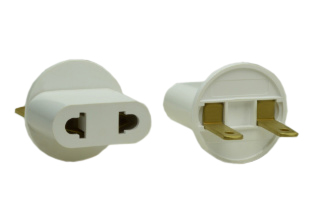
Re: Difference Between 230 P-P and 230 P-N

04/29/2014 10:31 AM

Well it depends. Do you know what the difference is between a phase and a neutral?

Put down the soldering iron and step away.

__________________
"Don't disturb my circles." translation of Archimedes last words
Register to Reply Score 1 for Good Answer
Associate

Join Date: Apr 2014
Posts: 27
#2
In reply to #1

Re: Difference Between 230 P-P and 230 P-N

04/29/2014 10:39 AM

What a pathetic response!

I do know the difference! Just answer the question or else don't waste my time (and yours too)!

Register to Reply Score 2 for Off Topic
Guru
Engineering Fields - Electrical Engineering - Been there, done that. Engineering Fields - Control Engineering - New Member

Join Date: Dec 2008
Location: Long Island NY
Posts: 15600
Good Answers: 981
#6
In reply to #2

Re: Difference Between 230 P-P and 230 P-N

04/29/2014 12:29 PM

I guess you don't know the difference between a phase and neutral.

The critical difference I see has nothing to do with the conductors or the anticipated load. I admit that this difference will most likely not be a show stopper but one never knows until one understands. Since you replied with an insult, I'll finish with a cryptically related riddle.

Why do you think every electric power distribution system steps down their voltages for their users?

__________________
"Don't disturb my circles." translation of Archimedes last words
Register to Reply
Guru

Join Date: Oct 2008
Posts: 42355
Good Answers: 1693
#10
In reply to #2

Re: Difference Between 230 P-P and 230 P-N

04/29/2014 5:34 PM

Are you sure you know the difference?

From your first thread, "I have 3 load (AC) each of 4KW. Supply is 220 V, 50 Hz. Now how do I calculate the amperes."

Just sayin'.

Register to Reply
Associate

Join Date: Apr 2014
Posts: 27
#17
In reply to #10

Re: Difference Between 230 P-P and 230 P-N

05/01/2014 9:24 AM

Again I would say just read the complete post. Don't just quote a single line. :)

Just saying.

Register to Reply
4
Guru
United States - Member - New Member Engineering Fields - Power Engineering - New Member

Join Date: Sep 2006
Location: California, USA, where the Godless live next door to God.
Posts: 4665
Good Answers: 804
#3

Re: Difference Between 230 P-P and 230 P-N

04/29/2014 10:54 AM

From a purely electrical standpoint, no, there is no difference. "Voltage" is just a potential for current flow between two points, it doesn't matter what those two points are. So in a North American based system, 240V is the potential that exists between two sine wave peaks on 120V legs, when the 120V is referenced to ground via what we call a neutral. In an international system 240V is the potential that exists between one phase of a 415V 3 phase system and a ground (earth) reference that we call neutral. In both cases though, 240 is 240. So if your load device; motor, heater, transformer etc., requires 240V then it is satisfied.

In practice however, there may be associated problems that you must look out for. If you use a piece of machinery designed for one place or the other, there may be more than just the final load device (motor, heater etc.) in the machine system. So you must make absolutely sure that you investigate the ENTIRE electrical system to understand all possible ramifications from changing. Secondly, and most importantly, countries that use 240V line-to-line are almost invariably using 60Hz, and those that use 240V line-to-neutral are almost invariably using 50Hz. So if your load is a resistance heater controlled electro-mechanically, that will not matter, but for basically EVERYTHING else, it does, and it cannot be trivialized. AC motors will not get the proper ratio of voltage and frequency, which affects the torque production, then because of the frequency difference, speed is affected. The combination effects can be devastating to the machine as well as the motor. The same is true for things with induction coils like solenoids and relay/contactor coils. The voltage may ge correct but the frequency difference causes negative side effects that lead to early failure. Things that use power supplies or other control methods that rely on frequency, ie SCR heating controllers, soft starters, DC drives, computer power supplies, lighting ballasts, etc., may or may not be affected by the difference in frequency. There is no way to tell without specifically investigating each individual device.

__________________
** All I every really wanted to be, was... A LUMBERJACK!.**
Register to Reply Good Answer (Score 4)
Guru
Popular Science - Biology - New Member Hobbies - Musician - New Member APIX Pilot Plant Design Project - Member - New Member Hobbies - CNC - New Member Fans of Old Computers - ZX-81 - New Member

Join Date: Jan 2007
Location: Centurion, South Africa
Posts: 3921
Good Answers: 97
#4

Re: Difference Between 230 P-P and 230 P-N

04/29/2014 11:04 AM

The load would not be able to see any difference between 230 P-P and 230 P-N. or would it?

__________________
Never do today what you can put of until tomorrow - Student motto
Register to Reply
Guru
United Kingdom - Member - Indeterminate Engineering Fields - Control Engineering - New Member

Join Date: Jan 2007
Location: In the bothy, 7 chains down the line from Dodman's Lane level crossing, in the nation formerly known as Great Britain. Kettle's on.
Posts: 32175
Good Answers: 839
#5

Re: Difference Between 230 P-P and 230 P-N

04/29/2014 11:20 AM

Only do it in accordance with local electrical regulations. There must not to be a circuit disconnecting device in the neutral according to BS7671, and the insulation needs to withstand root three times the voltage.

__________________
"Did you get my e-mail?" - "The biggest problem in communication is the illusion that it has taken place" - George Bernard Shaw, 1856
Register to Reply
Guru
New Zealand - Member - Kiwi Popular Science - Weaponology - New Member Engineering Fields - Power Engineering - New Member Engineering Fields - Electrical Engineering - New Member

Join Date: Sep 2006
Location: Auckland, New Zealand
Posts: 8777
Good Answers: 376
#7

Re: Difference Between 230 P-P and 230 P-N

04/29/2014 4:00 PM

can we plug in loads designed or rated for 230 (Phase to phase) to source providing 230 Phase to neutral??

It depends on the load. If you connect a load designed for a 230V phase to neutral voltage that has the neutral bonded to ground internally then you will have a problem (for example).

What's the load exactly (something American perhaps), what country is it designed to be used in and what country are you trying to use it in?

__________________
jack of all trades
Register to Reply
Guru
Technical Fields - Technical Writing - New Member Engineering Fields - Piping Design Engineering - New Member

Join Date: May 2009
Location: Richland, WA, USA
Posts: 21017
Good Answers: 795
#8

Re: Difference Between 230 P-P and 230 P-N

04/29/2014 4:47 PM

√3.

__________________
In vino veritas; in cervisia carmen; in aqua E. coli.
Register to Reply
Guru
Engineering Fields - Electrical Engineering - Been there, done that. Engineering Fields - Control Engineering - New Member

Join Date: Dec 2008
Location: Long Island NY
Posts: 15600
Good Answers: 981
#9
In reply to #8

Re: Difference Between 230 P-P and 230 P-N

04/29/2014 4:57 PM

That's less than two volts.

__________________
"Don't disturb my circles." translation of Archimedes last words
Register to Reply
Associate

Join Date: Apr 2014
Posts: 27
#12
In reply to #8

Re: Difference Between 230 P-P and 230 P-N

04/30/2014 1:18 AM

LOL! Read the question. What I meant was explained in the question, only if could have a little bit courtesy to read it completely :P

Register to Reply Score 1 for Off Topic
Anonymous Poster #1
#13
In reply to #12

Re: Difference Between 230 P-P and 230 P-N

04/30/2014 4:01 AM

Simple question but important answer/ information from all guru..

Register to Reply Score 1 for Good Answer
Guru

Join Date: Oct 2008
Posts: 42355
Good Answers: 1693
#14
In reply to #12

Re: Difference Between 230 P-P and 230 P-N

04/30/2014 9:51 AM

I don't believe that you have a clue what you are doing!!!

Yes, there's a difference! Too bad you don't know what it is.

Register to Reply
Associate

Join Date: Apr 2014
Posts: 27
#18
In reply to #14

Re: Difference Between 230 P-P and 230 P-N

05/01/2014 9:33 AM

Again quoting just a part of question! FYI, here is the complete question!

Is there any difference between 230 V phase to phase and 230 V phase to neutral? I know the difference but I mean to say can we plug in loads designed or rated for 230 (Phase to phase) to source providing 230 Phase to neutral??

Register to Reply
Guru

Join Date: Oct 2008
Posts: 42355
Good Answers: 1693
#20
In reply to #18

Re: Difference Between 230 P-P and 230 P-N

05/01/2014 12:01 PM

Good luck!

Register to Reply
Guru

Join Date: Jul 2007
Location: Commissariat de Police, Nouvions, occupied France, 1942.
Posts: 2599
Good Answers: 77
#35
In reply to #18

Re: Difference Between 230 P-P and 230 P-N

09/30/2014 10:40 AM

Yes, there is.

__________________
Good moaning!
Register to Reply
Guru
Engineering Fields - Power Engineering - New Member

Join Date: May 2007
Location: NYC metropolitan area.
Posts: 3230
Good Answers: 444
#11

Re: Difference Between 230 P-P and 230 P-N

04/29/2014 5:58 PM

A voltmeter will not know the difference, but the load has to be two wires only, plus a frame/safety ground if required by the local codes. If it requires 2 hot legs and a neutral, like many 240 Volt appliances in the US, then you can't use it properly because any internal circuitry that needs 120 Volts won't have a neutral, and could raise the frame above ground if it is not bonded to the safety ground.

__________________
“Tell me and I forget. Teach me and I remember. Involve me and I learn.” Ben Franklin.
Register to Reply Score 1 for Good Answer
Guru

Join Date: Jul 2005
Location: Stoke-on-Trent, UK
Posts: 4496
Good Answers: 137
#15

Re: Difference Between 230 P-P and 230 P-N

04/30/2014 9:59 AM

I might be partly repeating what others have said, but my take on it is - the loads themselves won't know any difference. But if you have a 1-phase system, where neutral is connected to earth, if not on the site it will be at the substation, you cannot connect between 2 phases as the phase on the system neutral side would have a short circuit to earth.

__________________
Give masochists a fair crack of the whip
Register to Reply
Guru
Engineering Fields - Power Engineering - New Member

Join Date: May 2007
Location: NYC metropolitan area.
Posts: 3230
Good Answers: 444
#19
In reply to #15

Re: Difference Between 230 P-P and 230 P-N

05/01/2014 11:06 AM

CM,

If this "...you cannot connect between 2 phases..." were true how do you explain how single phase loads are attached to a three phase system, especially since it is allowed by the NEC? I'm curious what "...the phase on the system neutral side..." is, especially since not all three phase systems can have a neutral (think delta). Not sure what this means, "...would have a short circuit to earth...", perhaps you meant a "return path for the load current".

RAM

__________________
“Tell me and I forget. Teach me and I remember. Involve me and I learn.” Ben Franklin.
Register to Reply Score 1 for Good Answer
Guru

Join Date: Jul 2005
Location: Stoke-on-Trent, UK
Posts: 4496
Good Answers: 137
#21
In reply to #19

Re: Difference Between 230 P-P and 230 P-N

05/01/2014 1:05 PM

I meant if you have a 1-phase 230V (to neutral) system connected to some loads, and a separate 3-phase system 230V phase-phase, 230/√3 = 133V phase-neutral, connecting 2 phases of that system to live and neutral of the same loads causes a short circuit on the neutral side, as neutral is held down to earth potential at some point. As I said, that's my take, I could be wrong.

As JRaef said in #3, OP needs to consider the complete system. Running the load between 2 phases could be OK in the right circumstances.

__________________
Give masochists a fair crack of the whip
Register to Reply
2
Guru
Engineering Fields - Electrical Engineering - Been there, done that. Engineering Fields - Control Engineering - New Member

Join Date: Dec 2008
Location: Long Island NY
Posts: 15600
Good Answers: 981
#16

Re: Difference Between 230 P-P and 230 P-N

04/30/2014 10:22 AM

People have been touching on but missing the point here.

Is there a difference between phase to phase and phase to neutral power distribution? Yes there is a difference. The difference can be found in the electrical definition of a neutral.

Can a load designed for phase to phase or phase to neutral power distribution be safely used with the other type of power distribution if the voltage is the same? Yes, it can be done if due diligence is performed by a qualified individual on the design of the power distribution and the load.

If due diligence is not performed can something go wrong? YES!!! All sorts of catastrophic things can happen including but not limited to fire, electrocution, or damage to the grid.

Can CR4 provide that due diligence? Absolutely NO!!! No one here can see the design of either the power distribution or the load. Only a qualified individual on the installation site or with accurate schematic diagrams of the installation site can determine if the load can be used as is or must be modified for the power distribution provided. An individual that has to ask this on a public forum, like CR4, is far from being a qualified individual.

__________________
"Don't disturb my circles." translation of Archimedes last words
Register to Reply Good Answer (Score 2)
Guru
Engineering Fields - Power Engineering - New Member

Join Date: May 2007
Location: NYC metropolitan area.
Posts: 3230
Good Answers: 444
#22

Re: Difference Between 230 P-P and 230 P-N

05/01/2014 2:42 PM

So you're saying if OP has a piece of equipment rated 230 Volts that is connected to a 230 Volt supply by a piece of 2 wire fixture wire terminated in a two prong Europlug, he can't plug it into a flat blade 230 Volt receptacle using a UL listed Europlug to flat blade adapter? The equipment does not know and does not care how the circuit is derived as long as the voltage (and frequency) is correct.

There is no neutral in a delta system, just a connection across phases. So now you're going to ask "if there is no neutral and the magnitude of the voltage at each pin is 230V, how does any current flow?" The answer lies in the fact that these are vector quantities, and that pesky phase angle stuff takes care of providing the potential difference.

If you look at the usual diagram of the three sine waves in a three phase system, then choose any two phases and measure the vertical distance between them, you'll notice that the distance doesn't change as you slide the ruler from left to right. It's that fixed distance that represents the difference in magnitude between the phases, and that's how we derive a single (albeit ungrounded) phase to power our unknowing, uncaring, and non-neutral connected, 230V loads.

Just for completeness, that's how your utility works too. It supplies a 3 phase system with a single phase transformer connected directly across two phases, and in those cases (most residences) where there's a two hot legs plus a neutral 230/115V supply, the low voltage side of the transformer has a split winding with a center tap for deriving the neutral, connected to earth at the pole, and which is then brought into your house and immediately bonded to an earth/ground connection at the meter/breaker panel.

__________________
“Tell me and I forget. Teach me and I remember. Involve me and I learn.” Ben Franklin.
Register to Reply Score 1 for Good Answer
Guru
Engineering Fields - Electrical Engineering - Been there, done that. Engineering Fields - Control Engineering - New Member

Join Date: Dec 2008
Location: Long Island NY
Posts: 15600
Good Answers: 981
#23
In reply to #22

Re: Difference Between 230 P-P and 230 P-N

05/01/2014 3:18 PM

Pronoun abuse! aka Are you speaking to me?

Your proposed scenario is but one of many possible scenarios that meets the conditions of the OP. Your proposal will work if the load is a purely resistance load like a heater.

__________________
"Don't disturb my circles." translation of Archimedes last words
Register to Reply Score 1 for Good Answer
Guru
Technical Fields - Technical Writing - New Member Engineering Fields - Piping Design Engineering - New Member

Join Date: May 2009
Location: Richland, WA, USA
Posts: 21017
Good Answers: 795
#24

Re: Difference Between 230 P-P and 230 P-N

05/01/2014 4:22 PM

Some things may depend on whether the equipment is internally grounded to either conductor, or needs a center tap of the 230V connections.

__________________
In vino veritas; in cervisia carmen; in aqua E. coli.
Register to Reply Score 1 for Good Answer
Guru
New Zealand - Member - Kiwi Popular Science - Weaponology - New Member Engineering Fields - Power Engineering - New Member Engineering Fields - Electrical Engineering - New Member

Join Date: Sep 2006
Location: Auckland, New Zealand
Posts: 8777
Good Answers: 376
#25
In reply to #24

Re: Difference Between 230 P-P and 230 P-N

05/01/2014 5:50 PM

Hence my comments and questions in post #7 which I am still waiting for an answer.

The answer depends on the equipment and is either yes or no, and if no further information is provided on the load then the answer has to be no you cannot (for safety reasons).

__________________
jack of all trades
Register to Reply Score 1 for Good Answer
Associate

Join Date: Apr 2014
Posts: 51
#26

Re: Difference Between 230 P-P and 230 P-N

05/02/2014 7:52 AM

You might be confused between phase and neutral

but answer for your question is yes you can plug the same in phase to phase one phase act as return path and in phase neutral case neutral act as return path

Register to Reply
Guru
Engineering Fields - Power Engineering - New Member

Join Date: May 2007
Location: NYC metropolitan area.
Posts: 3230
Good Answers: 444
#27

Re: Difference Between 230 P-P and 230 P-N

05/02/2014 3:16 PM

The type of plug is determined by the internal connections. Europlugs are unpolarized and only approved for Class 2 doubly insulated products drawing less than 2.5A (which excludes most resistance based appliances), hence there is no worry about internal grounding, bonding, tapping, or contact with a human and any internal circuitry.

This the same plug that you might find on a universal power supply for your laptop. Most modern ones are ungrounded, will accept voltage from 100-240V, and any frequency between 50-60Hz. They'll work fine regardless of how the voltage is derived or how the plug is inserted into a properly wired socket.

If posters would just read the OP's question, much of the hysteria and draconian warnings in this thread would be unnecessary. He asked "...can we plug in loads...", not can I wire a socket, tell me how to make this work, wire my house, make an adapter, bypass the safety ground, etc. To paraphrase OJ Simpson, "If the plug fits you can power it" (as long as the frequency is correct ) We can make things fool proof, but not damn fool proof.

__________________
“Tell me and I forget. Teach me and I remember. Involve me and I learn.” Ben Franklin.
Register to Reply Score 1 for Good Answer
Guru
Engineering Fields - Electrical Engineering - Been there, done that. Engineering Fields - Control Engineering - New Member

Join Date: Dec 2008
Location: Long Island NY
Posts: 15600
Good Answers: 981
#28
In reply to #27

Re: Difference Between 230 P-P and 230 P-N
05/02/2014 10:22 PM

Yes, the type of plug is determined by the internal connections. However the OP has not described in any single entry which type of plug they have. In fact the OP has only showed barely enough comprehension of our desire for more information to repeat the same insufficient information with increased indignation. This indignation implies only incompetence and uncertainty of all information.

Next!

__________________
"Don't disturb my circles." translation of Archimedes last words
Register to Reply Score 1 for Good Answer
Guru

Join Date: Oct 2008
Posts: 42355
Good Answers: 1693
#29
In reply to #28

Re: Difference Between 230 P-P and 230 P-N

05/02/2014 10:37 PM

Your Honor, Ladies and Gentlemen of the jury, I rest my case.

smi_1989 is guilty of incompetence, by virtue of a preponderance of evidence, if not beyond a reasonable doubt.

Register to Reply
Associate

Join Date: Apr 2014
Posts: 27
#30
In reply to #29

Re: Difference Between 230 P-P and 230 P-N

05/06/2014 3:44 AM

Sorry for the late response.

I am talking generally. i.e. not specific to any socket etc.

I was just curious whether we can plug in without any problem.

Thanks!

Register to Reply Score 1 for Off Topic
Guru
Technical Fields - Technical Writing - New Member Engineering Fields - Piping Design Engineering - New Member

Join Date: May 2009
Location: Richland, WA, USA
Posts: 21017
Good Answers: 795
#31
In reply to #30

Re: Difference Between 230 P-P and 230 P-N

05/06/2014 4:04 AM

There is no such thing as a general answer to the question.

__________________
In vino veritas; in cervisia carmen; in aqua E. coli.
Register to Reply
Guru
New Zealand - Member - Kiwi Popular Science - Weaponology - New Member Engineering Fields - Power Engineering - New Member Engineering Fields - Electrical Engineering - New Member

Join Date: Sep 2006
Location: Auckland, New Zealand
Posts: 8777
Good Answers: 376
#32
In reply to #30

Re: Difference Between 230 P-P and 230 P-N

05/06/2014 3:30 PM

Then generally no, you shouldn't for the reasons mentioned in many of the above posts (including mine).

__________________
jack of all trades
Register to Reply
Guru

Join Date: Jun 2006
Location: Ottawa Canada
Posts: 1975
Good Answers: 117
#33
In reply to #30

Re: Difference Between 230 P-P and 230 P-N

05/09/2014 1:07 AM

Try it and see. What could go wrong?

If you don't know, then don't try it and see.

Normally phase to phase is double phase to neutral, but that is not what you set up in your original question. You postulated a power (mains) supply which is non standard. I don't see why you would.

So in MY house, if I connected by 120 volt air conditioner (some how) from phase to phase, I would get a blown breaker at best, and sparks at worst. I have no idea about where you live that they would supply a single phase power supply. That is unusual enough that I am surprised many have not already commented on it. You running from a back yard generator?

__________________
If it was easy anybody could do it.
Register to Reply
Associate

Join Date: Apr 2014
Posts: 27
#34
In reply to #33

Re: Difference Between 230 P-P and 230 P-N

05/11/2014 1:19 AM

I live in KSA. The new standard, which was mandated 6 years ago, requires 230/400 V as per the IEC standards. But the old buildings still have old wiring wiz 220 V P-P and 127 V P-N (220/1.732).

People are using the new ACs, which are designed as indicated on plate for 230 V, on 220 V P-P. That's why I was curious.

Register to Reply
Guru

Join Date: Jul 2007
Location: Commissariat de Police, Nouvions, occupied France, 1942.
Posts: 2599
Good Answers: 77
#36

Re: Difference Between 230 P-P and 230 P-N

09/30/2014 10:42 AM

It depends on whether "we", whoever "we" are, can understand the implications. And since I know nothing about "we", that's as far as I can go for the moment.

__________________
Good moaning!
Register to Reply
Register to Reply 36 comments

Good Answers:

These comments received enough positive votes to make them "good answers".

"Almost" Good Answers:

Check out these comments that don't yet have enough votes to be "official" good answers and, if you agree with them, vote them!
Copy to Clipboard

Users who posted comments:

Anonymous Poster (1); Codemaster (2); Crabtree (2); Hendrik (1); jack of all trades (3); JRaef (1); lyn (4); navdeep_goyal (1); PWSlack (1); RAMConsult (4); redfred (6); smi_1989 (6); Tornado (3); Yusef1 (1)

Previous in Forum: Relation Between Stray Capacitance and Ungrounded System   Next in Forum: Can a Germanium Transistor Be Replaced With a Silicium One?

Advertisement