Practicing inversions can take ample amounts of strength,
flexibility, patience, and courage. Many people aren't used to trying to invert
themselves, so being able to trust your body needs to be dealt with before
practicing. For most poses, it is recommended that a wall be used during the
beginning to get used to the practice and to reduce the nervous energy
experienced when trying to invert.
Practicing inversions can lead to better sleep, focus, and
digestion. There is also a lot of satisfaction that comes from these poses
because they are challenging and can induce fear.
Contraindications and
Cautions
Do not practice inversions if you have a back, shoulder, or
neck injury. Those with a heart condition, high blood pressure, or a headache
should also refrain from this practice. It is also recommended that women
menstruating also refrain from this practice. Some suggest that short
inversions (2-3 minutes) can be done during menstruation during light flow
days.
Preparatory Poses
To prepare your body for inversions, work on your core and
upper body muscles. If your core and upper body are strong, you will not feel
any strain when inverted and will be able to fully enjoy the pose. To train the
body to get used to the upside-down feeling, practice poses where your heart is
higher than your head, such as dolphin
pose. Core poses and arm strengthening poses, like plank pose are important to
practice.
Going Heels over Head
Plow Pose
This pose is a good inversion to start training your body to
get used to being upside-down. This particular pose stimulates the abdominal
organs and the thyroid gland, stretches the shoulders and spine, reduces stress
and fatigue, and calms the brain. If it strains you to touch the floor with
your feet, brace a chair against a wall and bring your feet to rest in an
elevated position on the chair.
Supported
Shoulderstand
This pose calms the brain, helps relieve stress and mild
depression, stretches the shoulders and neck, tones the legs and buttocks, improves
digestion, and reduces fatigue. Some may have a difficult time getting to a
shoulderstand from the floor; try using a wall to get into position.
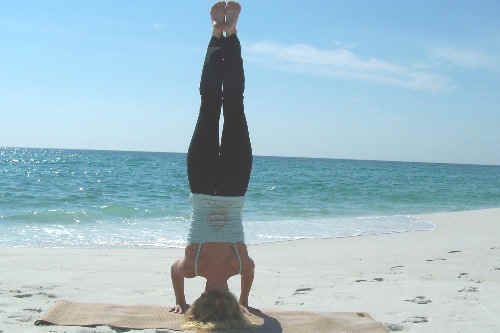
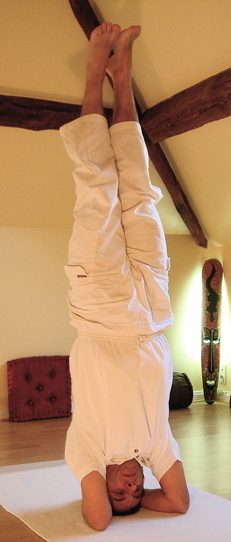
Supported
Headstand
This is easily my favorite inversion because it calms the
brain and helps relieve stress and mild depression, strengthens the arms, legs,
and spine, strengthens the lungs, tones the abdominal organs, and improves
digestion. It also makes me feel very good when I come out of the pose, even if
I only held it for a minute. Make sure that in practice, most of the pressure
rests on your arms and not on your head.
Handstand
Handstands strengthen the shoulders, arms, and wrists, stretch
the belly, improve sense of balance, calms the brain, and helps relieve stress
and mild depression. The use of a strap around your arms above the elbow can be
used to bring your focus to keeping your arms straight.
Resources:
YogaJournal
– Inversion 101
| 


 Re: Introduction to Yoga – Inversions