|
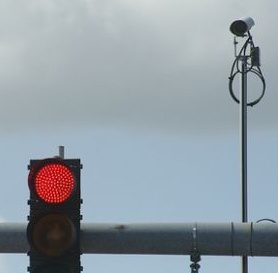 Red light cameras tend to create a bit of a controversy
whenever they are considered. Here in New York, if you stay out of the Big
Apple itself, it's unlikely you'll encounter one since they are prohibited in
cities with a population of less than one million. And if you are driving in NYC,
you're crazy rich anyway so what's a few red light tickets? Red light cameras tend to create a bit of a controversy
whenever they are considered. Here in New York, if you stay out of the Big
Apple itself, it's unlikely you'll encounter one since they are prohibited in
cities with a population of less than one million. And if you are driving in NYC,
you're crazy rich anyway so what's a few red light tickets?
While red light cameras were first enacted in Israel in 1969,
New York was actually home to the unfortunate incident which seriously spurned
the development and popularity (and subsequent unpopularity) of red light
cameras. In 1982 a careless motorist hit a toddler in a stroller and a media
firestorm ensued. Politicians advocated that technology could provide an
ever-watching eye over busy intersections, and one thing to know about New York
City is this: they want to monitor you all the time forever. Just in the past
two years they've prohibited large fountain sodas and selling tobacco to anyone
under 21.
 Anyway, these cameras are typically placed at intersections
where there have been pedestrian accidents in the past, or where red light
running can be a frequent occurrence. The cameras utilize induction loops
embedded in the asphalt to estimate the car's speed. Based on this measurement,
if the software believes a car is unlikely to stop for the light, it takes two
photos: one right before the car enters the intersection, and one as it
crosses. This is forwarded to a police department for review, who issue
violations or citations. Anyway, these cameras are typically placed at intersections
where there have been pedestrian accidents in the past, or where red light
running can be a frequent occurrence. The cameras utilize induction loops
embedded in the asphalt to estimate the car's speed. Based on this measurement,
if the software believes a car is unlikely to stop for the light, it takes two
photos: one right before the car enters the intersection, and one as it
crosses. This is forwarded to a police department for review, who issue
violations or citations.
But red light cameras have many, many drawbacks. Let's see:
- Sometimes a bug, a bird, fog, or any other
object can obscure the photo, meaning it's impossible to accurately identify a
license plate. Some jurisdictions require a photo of the driver as well. When
not enough photo evidence exists, some places resort to "snitch tickets." An
affidavit, which resembles a ticket but is my no means a citation, is mailed to
the presumed vehicle owner. If they're dumb enough, or exceptionally honest,
the owner will admit the infraction, and this confession develops into a fine
and ticket.
- Traffic fines are a reliable source of income
for small governments. When these governments come to expect revenue from
traffic fines, and begin to notice shortfalls, red light cameras are liable for
abuse. A town in Italy synchronized light cameras at adjacent intersections to
coax drivers into either speeding or running the light.
- Small towns and cities may choose to have a
third party review red light camera reports if the local police do not have the
manpower to do so. The legitimacy of infractions issued by these
contract-services is often disputed.
- In California, 7,600 traffic tickets that were
issued using intersection cameras were dismissed, rescinded, or refunded
because studies showed the duration of the yellow light was not enough warning
to brake and stop the vehicle before the light turned red. In this instance,
basic physics principles were ignored. As of 2014, a new U.S. national
requirement states all yellow lights must have a minimum duration of 3 seconds
and a maximum duration of 6 second.
- Finally, and most importantly, hundreds of
studies have been inconclusive about the safety effects of red light cameras.
The consensus seems to be that how much they improve safety varies intersection
to intersection. Most studies have found a reduction in injury-causing and
t-bone car collisions, but an increased in rear-end collisions. While driver
safety has improved, sometimes the result is a higher number of vehicle
accidents overall.
 Some studies and agencies have promoted other mechanisms:
improve traffic light visibility and conspicuity; improve signage around
intersections; program the light to have a brief all-red cycle; and monitor
neighboring traffic lights and traffic frequency to eliminate unnecessary red
lights. Ultimately, these concepts require some infrastructure redesign, and
don't offer the revenue stream that red light cameras do. Some studies and agencies have promoted other mechanisms:
improve traffic light visibility and conspicuity; improve signage around
intersections; program the light to have a brief all-red cycle; and monitor
neighboring traffic lights and traffic frequency to eliminate unnecessary red
lights. Ultimately, these concepts require some infrastructure redesign, and
don't offer the revenue stream that red light cameras do.
So here we have one instance where a technologically
advanced monitoring system hasn't made our processes noticeably safer or more
efficient. Is it a problem with how it's been implemented, or have we finally
found a task that our systems can't adapt to because there as just too many
specifications?
Resources
Wikipedia - Red light camera
Federal Highway Administration - Making Intersections Safer...
| 

 2
2

 Re: Red Light Cameras: Is It Time To Admit Mistakes?




Good Answers:
"Almost" Good Answers: