|
For the good of everyone, major combat operations by a military navy haven't occurred in decades. Though expeditionary exercises in support of air and ground campaigns have occurred in recent years, overall, the three countries with legitimate claims to a 'blue-water' navy (U.S, U.K, France) have done their best to keep the world's oceans peaceful.
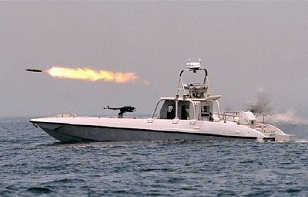 However, away from these blue-water ships exist other serious 'brown-water' threats- small, fast ships that operate in coastal areas that outmaneuver destroyers and frigates, but still have the weapons to sink the most seaworthy of vessels. These threats largely consist of pirates, as well as small navies such as Iran and North Korea, which use them to control straits, seas and other waterway chokepoints. They're also cheap, and when enabled with swarming tactics, these so-called fast attack craft can overwhelm many targets. However, away from these blue-water ships exist other serious 'brown-water' threats- small, fast ships that operate in coastal areas that outmaneuver destroyers and frigates, but still have the weapons to sink the most seaworthy of vessels. These threats largely consist of pirates, as well as small navies such as Iran and North Korea, which use them to control straits, seas and other waterway chokepoints. They're also cheap, and when enabled with swarming tactics, these so-called fast attack craft can overwhelm many targets.
The U.S. Navy needed a new type of ship to protect commerce in these contested situations, and began development of a littoral combat ship (LCS) in the late 1990s. Of course, many of the first programs were crushed due to political misgivings and reconfigured military budgets. When the first two LCSs arrived in U.S. fleets in 2010, they were too late to help combat renewed piracy off the African coast, before a 2012 Navy review that found the LCSs were underpowered, undermanned, had poor survivability and communications, prone to cyber-attacks, and found several other problems. While the 20 LCSs in service will remain, the Navy needs a new, more inventive brown-water vehicle, and Juliet Marine Systems of Portsmouth, N.H., may offer it.
About 20 months ago, the Ghost prototype was briefly mentioned in a blog post as it used supercavitation to increase knot speed. More details about Ghost have emerged since. To enable supercavitation (the world's first supercavitating ship) the catamaran hull is enveloped in gas to reduce friction. Four propellers are mounted on the front of the submerged hulls and these propellers pull the boat through the water and infuse the boundary layer with air bubbles, resulting in 900 times less hull friction compared to an LCS. Gas turbine engines supply 2,000 HP to each propeller and are mounted in the submerged hulls, meaning they're practically inaudible above surface. The result is a sea-based weapons platform that exceeds 50 kt.
Between the hulls, the cabin is supported by two serrated struts that can cut through the water as well as coastal debris. A gyroscopic stabilization mechanism keeps the cabin at the same height through wave weights of 10 ft., meaning weapons are more accurate and crew are more sure-footed. Fuel and steering systems are also located in the hulls, providing a low center of gravity and protection for essential systems. Weapons systems include a 20 mm rotary cannon, surface-to-surface missiles, and torpedoes. The ship is piloted via a joystick input similar to a helicopter, but can also be unmanned for deadheading.
Juliet Marine Systems, the builder of the Ghost, likens the design to a hybrid stealth airship and helicopter on a marine platform. It is primarily aluminum and stainless steel in construction. Superstructure design minimizes radar cross section and radar-absorbent coatings can make the ship nearly impossible to identify via electronic means. The Ghost can insert troops onto beachheads, penetrate blockades and perform a variety of reconnaissance tasks without ever being detected.
Perhaps most importantly, current Ghost vessels sell for $10 million each, and a larger, LCS-replacing variant costs $50 million-a bargain considering original LCSs were manufactured for an average of $300 million. Currently the U.S. Navy is evaluating how it could implement Ghosts and the owner of Juliet Marine, Greg Sancoff, is confident in the Ghost's capabilities, though he knows he has a tough sell ahead.
"As you know, the Navy likes big ships. Admirals want to stand on bridges of big ships. Our country has not readily adapted to new technologies in hydrodynamics," said Sancoff.
Here's to hoping the Navy opens its eyes, closes the checkbook and buys a few dozen Ghosts. At the very least, we'll have the first in-production supercavitating ship ever.
| 


 Re: Will the U.S. Navy Build the World's Only Supercavitating Ship?


"Almost" Good Answers: