|
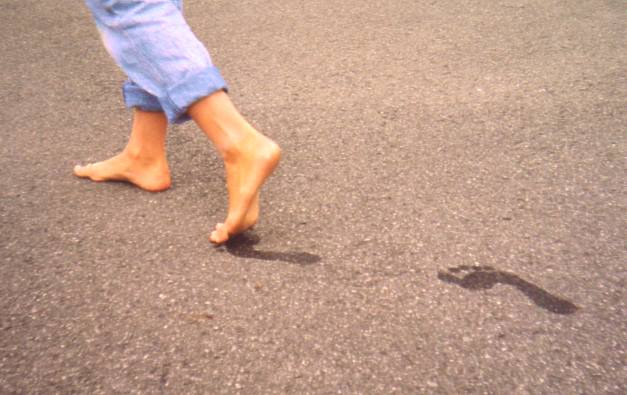
There are many shoes on the market today that boast "arch support," "heel stabilizers," and "gel cushioning," but is any of it really necessary? Are all of these bells and whistles essential to running safely and avoiding injury? Many say that running barefoot, or with shoes that emulate running barefoot, is healthier for your body than using running shoes.
Differences in Shoes versus Barefoot
There are benefits to running with shoes and going barefoot. Running barefoot boasts stronger calf muscles, less deformed toes, improved balance, and reduced occurrences of ankle sprains. Shoes can prevent injuries to the foot from glass, rocks, and other hazardous materials.
When wearing shoes, your posture is often compromised from padding that elevates the heels. This can eventually cause your toes to become deformed, creating a narrow base that is relatively unstable when compared to the wide base of barefoot walkers.
A study published in the December 2009 issue of Physical Medicine and Rehabilitation (PM&R) set out to determine the result of running shoes on the body. Sixty-eight healthy young runners who normally wear shoes were evaluated as they ran both barefoot and with shoes. The researchers found an increase in joint torques at the ankle (38%), knee (36%), and hip (54%) in running in shoes versus barefoot. These results suggest that the increased torques may make shoed runners more likely to experience knee osteoarthritis and other injuries.
Biomechanical Differences Between Different Foot Strikes
One of the biggest arguments in the shoes versus no shoes debate has to do with what part of the foot hits the ground first. When running barefoot, the outer middle or ball of your foot strikes the ground first. As your foot starts to head toward the ground, your ankle is plantarflexed (toes pointed down). As your foot starts making contact, the ankle begins to dorsiflex and the heel moves toward the ground. The arch of the foot is loaded and begins to flatten.
Compare this to running in shoes where the heel lands first, causing the shoe to absorb the impact of every step. Your ankle is dorsiflexed in this position (the toes are pointed upward). As your foot starts landing just below the ankle joint, the ankle starts to plantarflex (toes move towards the ground) and the arch of the foot is not loaded. It is at the time when the forefoot comes down (well after initial impact) that the arch just begins to flatten.
Is running barefoot better, worse, or the same as running with shoes?
Resources
Barefoot Running Shoes – Barefoot Running: Running Barefoot is Still the Way to Go
Wired Science – To Run Better, Start by Ditching Your Nikes
The Blog of Tim Ferriss – Vibram Five Fingers Shoes: The Barefoot Alternative
PM&R Journal – The Effect of Running Shoes on Lower Extremity Joint Torques
| 


 Re: Should You Be Running Barefoot?


